

SK Hynix's Sharp Decline Highlights Memory Sector Challenges
Thursday, August 20, 2026
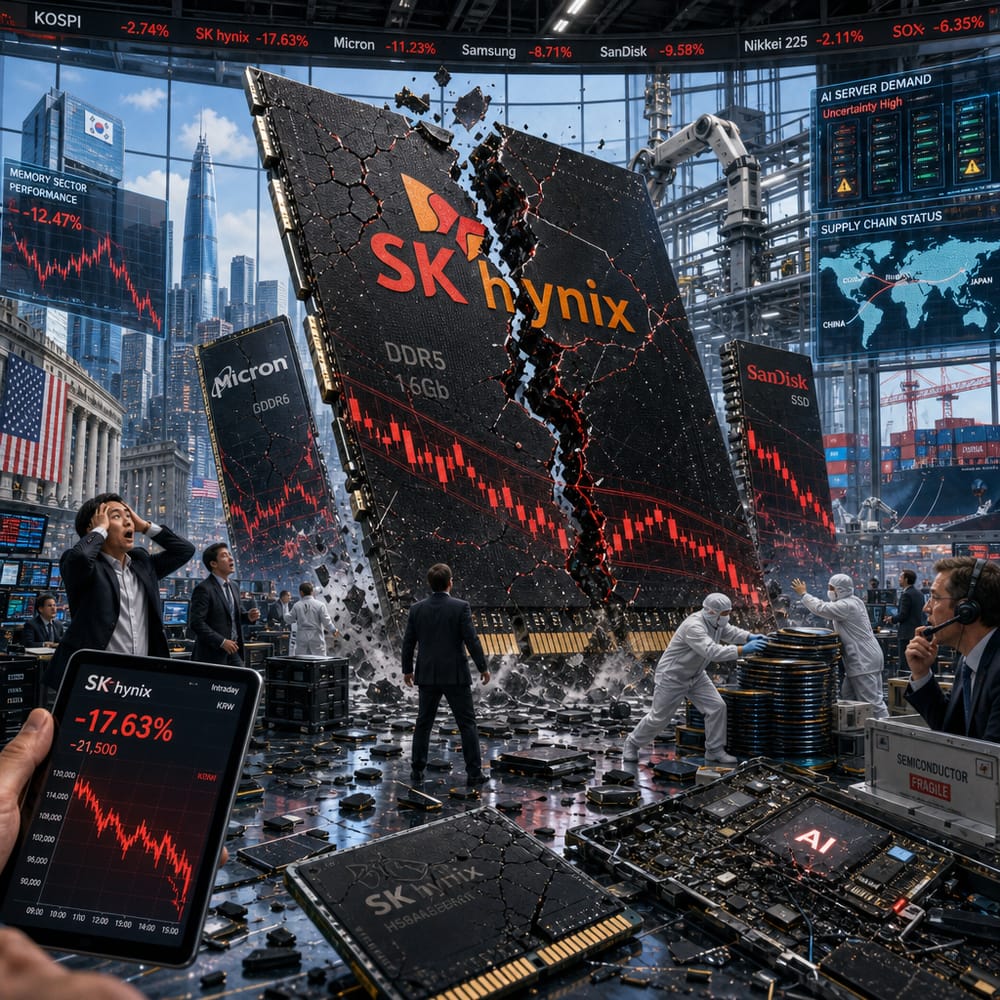
SK HYNIX'S SHARP DECLINE HIGHLIGHTS MEMORY SECTOR CHALLENGES
In the fickle world of tech stocks, SK Hynix's recent nosedive isn't just a stock market blip—it's a red flag for the global memory market. Think of it as a wake-up call with a side of cold water to the face, snapping investors to attention as they scroll for morsels of fiscal drama. Let's dig into what has investors sweating and what lies ahead for memory makers like SK Hynix.
THE GREY CLOUDS HOVERING OVER MEMORY CHIPS
Memory chips: the unsung heroes of your favorite gadgets, from smartphones to sophisticated AI. They store data faster than that annoying guy at the office store can say "out of stock." Yet, lately, they've been stuck in a quagmire of challenges that'd make even the most patient investor twitchy.
First off, let's chat about supply chain snags. You'd think we'd have figured out how to ship silicon by now, but no. The pandemic may have started the supply chain circus, but geopolitical tensions and good ol' fashioned market saturation have kept it going. Companies like SK Hynix have to dance around these issues while trying to keep production lines humming.
And then there's the elephant in the room: AI. The world is all agog over artificial intelligence, and rightly so. But the surge in demand for AI hardware (cue the dramatic drum roll) means memory makers are under pressure like a single scoop of ice cream on a blazing summer day. AI's voracious appetite for memory chips and computing power is making the cost of production a real budget-buster.
SK HYNIX AND THE ART OF ADAPTATION
So, how is SK Hynix rolling with the punches? Imagine you're trying to juggle flaming torches while riding a unicycle—this is the corporate equivalent. They're diving into R&D like it's the last donut at the morning meeting, aiming for innovations that could make chips faster, cheaper, and more efficient.
The company's also eyeing diversification like a savvy investor on a spending spree. While traditional memory products are still crucial, SK Hynix is pushing into the burgeoning AI market with newfound enthusiasm. They know if you can't beat the AI revolution, you might as well join it and sell them the hardware they crave.
But will these strategies be enough? The memory market isn't just a local pond; it's an ocean with titans like Samsung and Micron angling for dominance. SK Hynix is betting on strategic partnerships and innovations, but it'll need to keep its product line-up sharper than your grandma's best kitchen knife to stay afloat.
THE RIPPLE EFFECTS AND WHY YOU SHOULD CARE
Why does all this matter to you, savvy reader? Because the memory sector is the backbone of tech innovation. A shortage or disruption could slow down advancements in everything from the latest smartphone to the AI assistants that are increasingly taking over our lives (and maybe ordering groceries without asking first).
When a company like SK Hynix stumbles, it sends tremors through the entire tech landscape. Investors need to pay attention, not just to stock prices, but to the broader implications. A hiccup here could mean a headache for anyone who relies on technology—so basically everyone.
THE ROAD AHEAD: CHALLENGES AND OPPORTUNITIES
So, what's next for the world of memory chips? Challenges will remain, no doubt about it. But there's also a silver lining. Innovations in chip technology, a more stable geopolitical climate (we can dream, right?), and increasing demand from new tech sectors could turn things around.
For retail investors, the key is to stay informed and nimble. Watch for signs that companies like SK Hynix are making tangible progress in overcoming today's challenges. If they can crack the code on costs and supply chain woes, there might be a golden opportunity on the horizon.
Bottom line? Keep your eyes peeled and your investment strategies as flexible as a gymnast at the Olympics. Because in the wild, wild world of tech stocks, fortune favors the prepared.
This article is for informational purposes only and is not investment advice. Always do your own research or consult a licensed financial professional before making investment decisions.
© Copyright 2024. All Rights Reserved.
© Copyright 2024. All Rights Reserved.