

Signs of Divergence at the Fed: Warsh Hints at Internal Doubts on Policy Path
Sunday, July 26, 2026
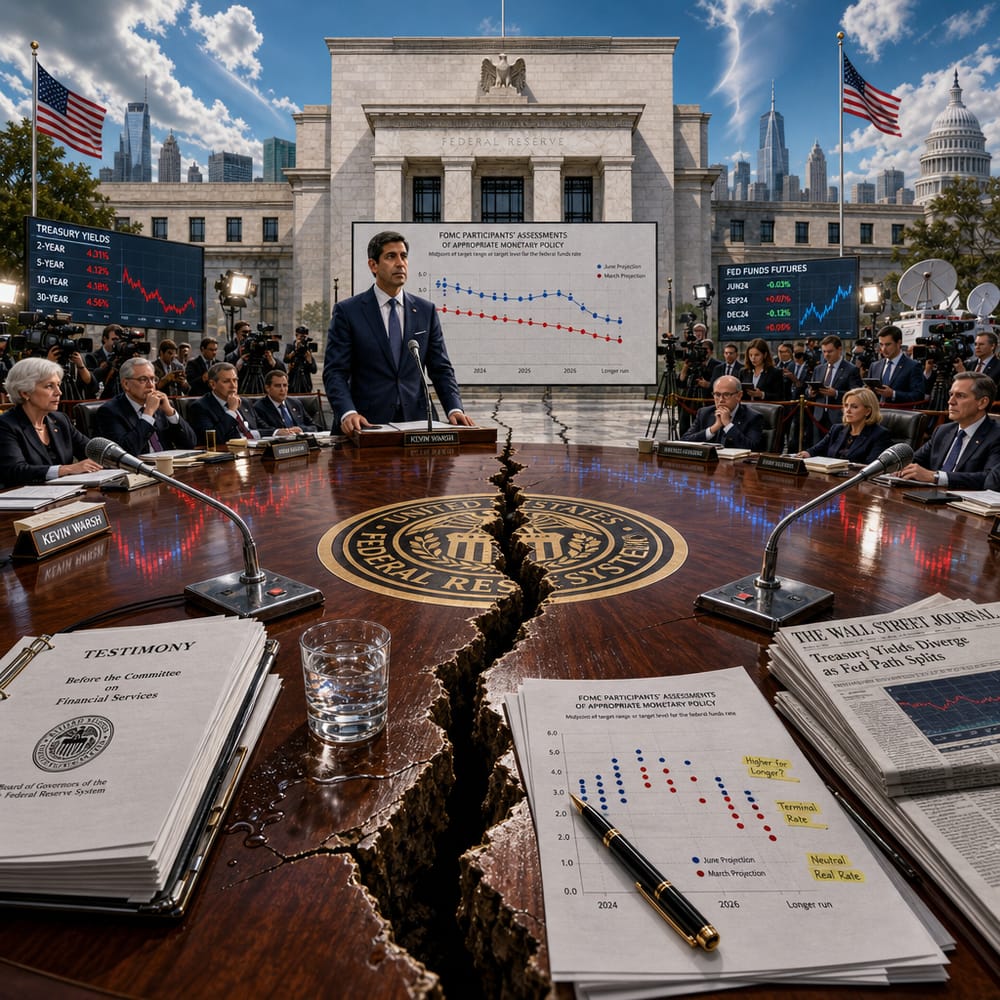
FED'S INTERNAL DRAMA: HOW KEVIN WARSH’S TESTIMONY COULD SHAKE YOUR WALLET
It’s not often you hear about drama behind the closed doors of the Federal Reserve, but when you do, it’s like discovering a hidden subplot in your favorite thriller. Recently, Fed Chair Kevin Warsh dropped hints that there's a rift within our beloved central bank. You could practically hear the internal gears grinding as he spoke. But why should you care? Well, if the Fed’s internal dissent sounds like a dull snooze, think again—it could directly impact your finances, from mortgage rates to the stock market.
WHAT'S COOKING IN THE FED'S KITCHEN?
Imagine trying to bake the perfect economic pie with a group of chefs who can’t agree on the ingredients. That’s what’s happening at the Fed right now. Warsh’s recent testimony revealed this cooking chaos: the Fed’s top brass aren't seeing eye to eye on how to whisk the American economy into shape. While some members are advocating for more interest rate hikes to curb inflation, others want to pump the brakes, fearing it could slam the economy into a recession.
It’s a classic policy tug-of-war, and it’s happening at perhaps the most influential financial institution in the world. Warsh’s testimony all but confirmed that the Fed is in two minds about the current policy path—and this division is worth paying attention to because it can lead to a seismic shift in the economic landscape.
THE RIPPLE EFFECTS ON INTEREST RATES
Now, here comes the million-dollar question: how do these disagreements at the Fed impact you, dear reader? Let’s break it down. If the hawkish, or more aggressive, members win the argument, expect interest rates to climb. This means loans become pricier. Your mortgage? More expensive. Your car loan? Up it goes. Even your credit card APR could climb higher than a cat stuck in a tree.
On the flip side, if the doves, or the more cautious members, have their way, the Fed might put a pause on rate hikes. This could mean lower interest rates, making borrowing cheaper but also potentially allowing inflation to inch up a tad more. It’s a tightrope walk where missteps could either send the economy soaring or spiraling.
THE MARKET'S CRYSTAL BALL
The stock market is no stranger to the Fed's mood swings. Traders hang onto every word out of the Fed like it’s the latest plot twist in a hit TV series. Internal disagreements within the Fed make markets jittery because uncertainty is like kryptonite to investors. If Wall Street senses indecision or a lack of a clear path, you can bet on some market turbulence ahead.
Investors will have their ears peeled for any further breadcrumbs dropped by Warsh or any other Fed official. Any hint of policy shifts will send stock prices swaying as traders adjust their strategies faster than you can say “rate hike.”
KEEPING AN EYE ON THE PRIZE
So, what’s the takeaway? While the Fed's disagreements might seem like a minor squabble, they have far-reaching implications. Keeping an eye on the Fed's next move is crucial for everyone, not just policy wonks and financial analysts. After all, the Fed’s decision can influence everything from your savings account to your retirement portfolio.
In a world where a single sentence from Warsh can send shockwaves through the financial world, it’s crucial to stay informed. Next time you hear that the Fed is meeting, know that it’s more than a group of people in suits talking numbers. It’s a conversation that could ripple through your life in ways you never imagined.
So grab your popcorn, because the Fed’s internal drama isn’t just another episode of boring fiscal policy—it’s a plotline that could directly impact your wallet. And like any good story, you’ll want to stay tuned to see how it unfolds.
This article is for informational purposes only and is not investment advice. Always do your own research or consult a licensed financial professional before making investment decisions.
© Copyright 2024. All Rights Reserved.
© Copyright 2024. All Rights Reserved.