

Short-End Bond Selloff: Two-Year Yield Spikes on Warsh’s Hawkish Tone
Friday, August 28, 2026
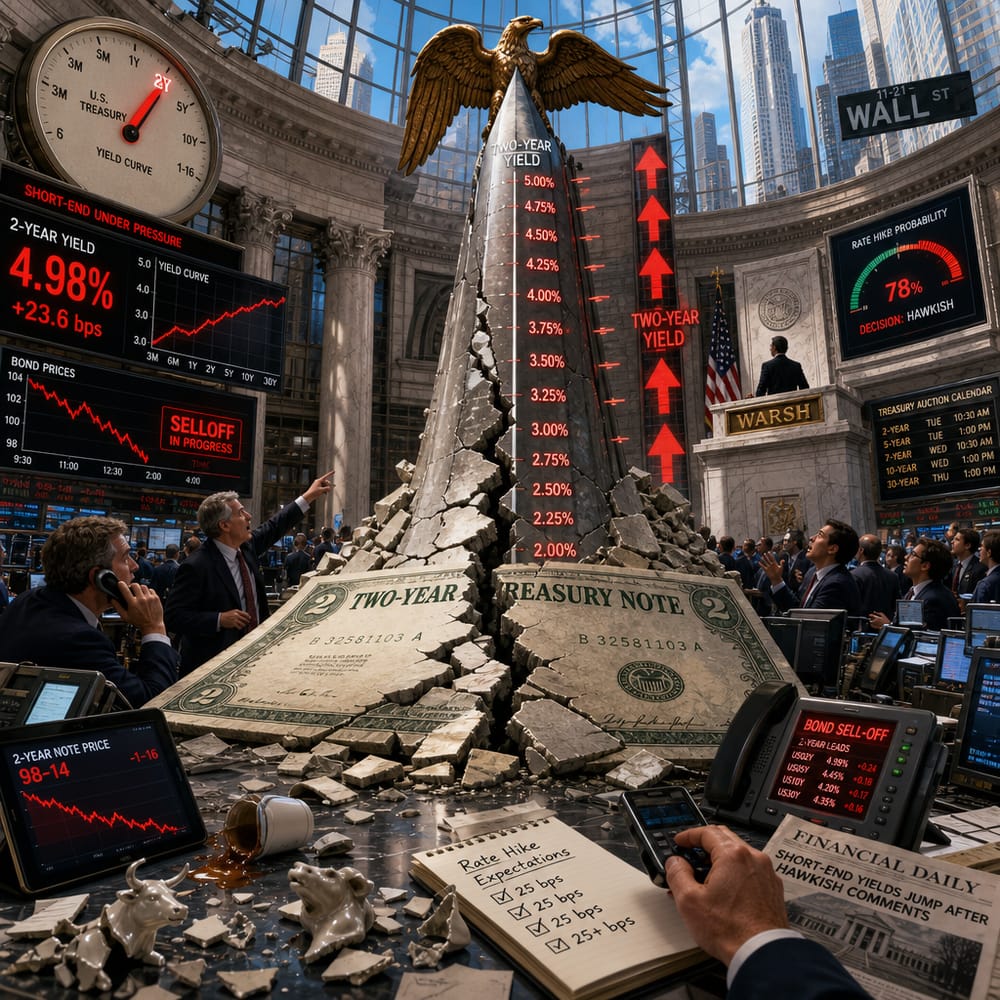
SHORT-END BOND SELLOFF: TWO-YEAR YIELD SPIKES ON WARSH'S HAWKISH TONE
Wall Street might need a new playbook. Welcome to the wild world of bond markets, where nothing screams drama quite like a Fed speech. And Fed Chair Kevin Warsh just delivered a plot twist worthy of prime-time TV. Following his recent remarks, the two-year Treasury yield shot up like a caffeinated squirrel, leaving investors to wonder what comes next.
Warsh, speaking with the kind of gravitas that only a Federal Reserve Chair can muster, hinted that interest rate hikes could be lurking around the corner. Translation? He’s not thrilled with inflation’s sticky nature and is signaling to the markets that they should brace for more tightening. His statement at the annual shindig in Jackson Hole sent ripples through the financial world, and bond traders weren't caught napping.
When Fed Chair Warsh casually mentions that the central bank might still have "work to do" on inflation, investors tend to listen. And by listen, I mean they leap into action. The two-year yield, a crucial barometer for interest rate expectations, spiked over 6 basis points to a fierce 4.298%. So, what's got this short-term bond in a tizzy?
In the bond universe, a spike in the two-year yield is like the Bat-Signal for rate hikes. It suggests that the market is expecting higher interest rates, potentially in the not-so-distant future. Higher yields can tighten the screws on short-term borrowing costs, making everything from business loans to mortgages a tad pricier.
For retail investors, this is where things get juicy. Rising short-term yields can reshape investment strategies, pushing savvier investors to scout for opportunities elsewhere. For those holding bonds with lower yields, it might be time to reconsider, as they face potential losses should rates continue climbing.
But let's not forget the domino effect. When short-end yields rise, it sends a message reverberating through the broader economy. Borrowing becomes more expensive, which can dampen consumer spending—a crucial engine of economic growth. Watch out for potential slowdowns in sectors reliant on debt financing, like real estate and consumer goods.
On the flip side, what does this mean for your portfolio? Well, fasten your seatbelt. Rising yields can present a challenge for equities, especially growth stocks that thrive in low-rate environments. Companies with hefty debt piles might face increased financial pressure, affecting their bottom lines and, ultimately, their stock prices.
So, should investors hit the panic button? Not quite. While Warsh’s words were hawkish, they weren't downright terrifying. The Fed's dance with inflation is a delicate one, and there's still room for maneuvering. The silver lining is that while short-term pain might loom, it doesn't spell doom for all sectors.
In fact, financial stocks often benefit from rising rates, as banks can pocket higher interest rates on loans. This might be a good time to take a fresh look at financials, which could capitalize on this trend.
Still, the broader economic picture is a patchwork of uncertainties, from global oil prices to geopolitical tensions. Remember, the bond market is just one piece of the puzzle—and a rather unpredictable one at that. As always, it's crucial to stay informed, diversified, and ready to pivot as the landscape evolves.
In the meantime, keep an eye on upcoming economic data releases—they’ll likely hold the next clues to the Fed's game plan. As Warsh takes a firmer stance on combating inflation, the market will remain on edge, ready to react to any fresh signals.
In conclusion, while Fed Chair Warsh has set the stage for a potential rate hike, the drama is far from over. Whether you're a seasoned bond trader or a casual investor, understanding these market moves is key. Keep your wits about you, listen for cues, and navigate the twists and turns of this financial thriller with savvy and strategy.
This article is for informational purposes only and is not investment advice. Always do your own research or consult a licensed financial professional before making investment decisions.
© Copyright 2024. All Rights Reserved.
© Copyright 2024. All Rights Reserved.