

September PPI Surge: Implications for Inflation and Fed Policy
Thursday, October 15, 2026
SEPTEMBER PPI SURGE: IMPLICATIONS FOR INFLATION AND FED POLICY
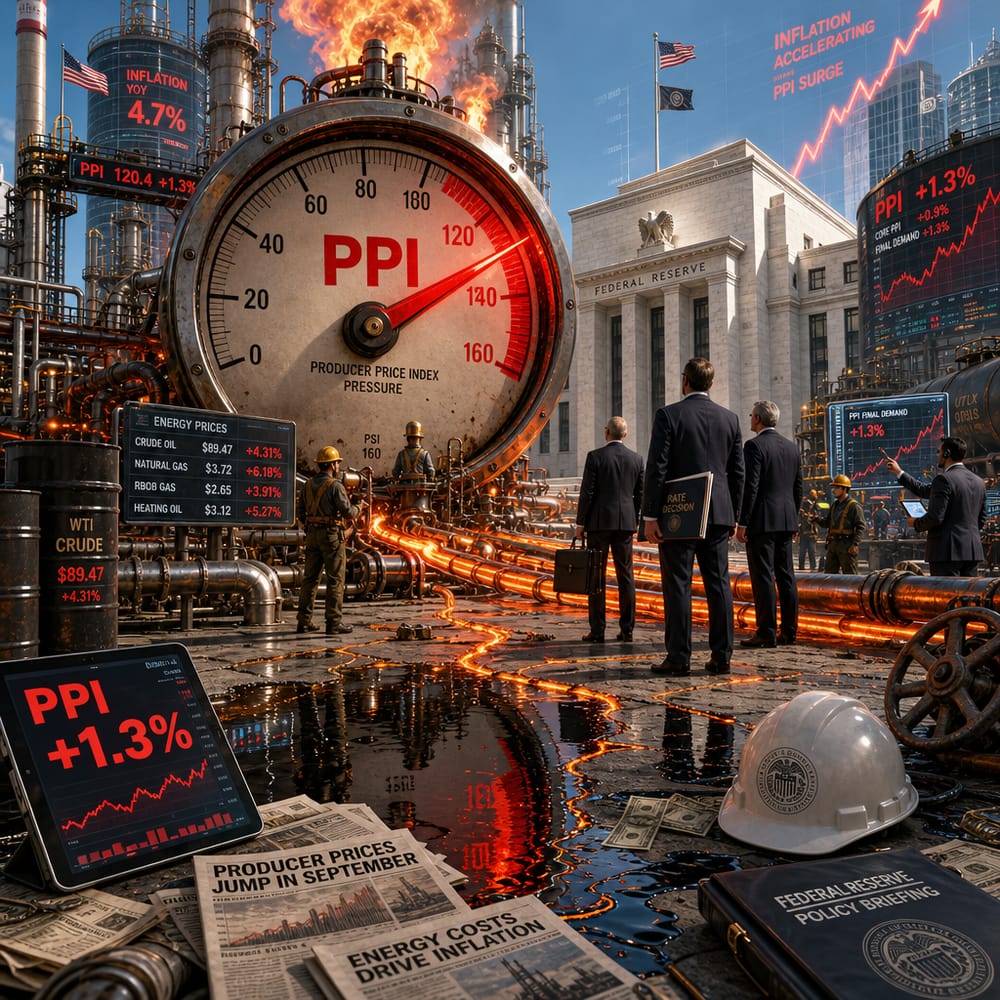
Forget everything you think you know about the economy because September just threw a wrench in the works. The Producer Price Index (PPI) jumped a whopping 1.3% from the previous month—the kind of leap we haven't seen since 2022 when everyone was panic-buying toilet paper. While you were busy scrolling social media, wholesale prices were on a rollercoaster, driven mainly by—you guessed it—those ever-volatile energy prices.
WHAT'S FUELING THE FIRE?
The elephant in the room is energy costs. Thanks to a complicated tango of geopolitical tensions in the Middle East, oil prices have shot through the roof. It's not just your gas tank feeling the pinch; it's the trucks, trains, and cargo ships that keep America running. When fuel costs soar, so does everything else. But this isn't just about oil; the supply chain hiccup has sent ripples through the economy, making everything from shipping a package to buying a loaf of bread that little bit pricier.
HOW DOES THIS HIT YOUR WALLET?
We all know the drill: rising PPI is the canary in the coal mine for consumer prices. If wholesale costs continue their climb, you can bet your bottom dollar that those costs will eventually trickle down to the average Joe. Inflation, the specter that never quite went away, may rear its ugly head once more, making those dollar slices of pizza feel more like a distant memory.
The recent consumer price index didn't do us any favors either, showing an increase of 0.6% from the month before. While that's a far cry from the PPI's explosive jump, it's still an indication that prices on the shelf are inching their way upward. Expect your wallet to feel a little lighter when you're picking up groceries or checking out at your favorite retail store.
WHAT ABOUT THE FED?
Here's where things get spicy. The Federal Reserve has been caught in a balancing act, trying to cool down an overheating economy without sending everything crashing. Rising PPI figures throw a spanner in the works and could nudge the Fed toward more hawkish monetary moves. In plain speak, that means we might see higher interest rates sooner rather than later.
For context, the Fed’s been walking a tightrope, trying to keep the economy chugging along while battling inflation. If this PPI surge continues, it could force the folks at the Fed to hit the brakes harder by hiking those rates. And for those dreaming of buying a home or refinancing, brace yourself for mortgage rates that seem to climb by the day.
SECTORS TO WATCH
Now, if you've got some skin in the stock market game, the energy sector could be your golden goose. With oil prices sky-high, energy companies are likely to ride the wave of increased revenue. On the flip side, if you’re invested in interest-sensitive sectors like real estate or tech, the potential rise in rates could rain on your parade.
You can't ignore how this affects monetary policy globally either. U.S. Treasury yields have already taken a dip as investors seek the safety of bonds amidst inflation jitters. It's a classic case of risk-off sentiment, with investors fleeing volatile stocks for the stability of fixed-income assets.
WHAT'S NEXT?
This latest PPI report throws a new layer of intrigue into an already complex economic landscape. Keep your eyes peeled on the Fed's upcoming meetings for any hint of rate hikes. The markets will be watching, and so should you, especially if your portfolio is stacked with stocks vulnerable to interest rate shocks.
In the meantime, tighten your belt and keep an eye on those gas prices. The economic rollercoaster shows no signs of slowing down. Who knows? By next month, we might all be tuning in to watch the Fed’s next move like it’s the Super Bowl.
This article is for informational purposes only and is not investment advice. Always do your own research or consult a licensed financial professional before making investment decisions.
© Copyright 2024. All Rights Reserved.
© Copyright 2024. All Rights Reserved.