

September Jobs Report Weakness Raises Doubts About October Fed Hike
Saturday, October 03, 2026
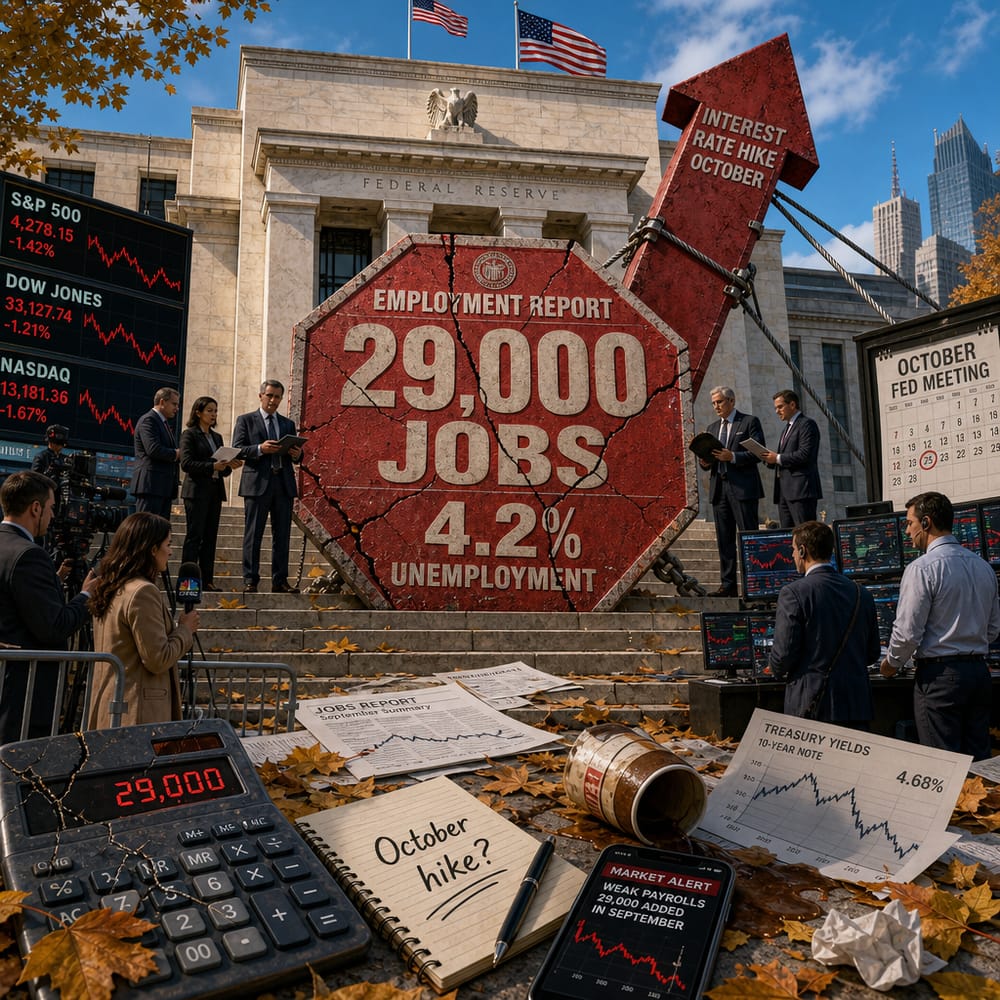
SEPTEMBER JOBS REPORT WEAKNESS RAISES DOUBTS ABOUT OCTOBER FED HIKE
Grab your popcorn, folks. The September jobs report has dropped, and it’s the financial equivalent of a surprise season finale twist. The plot? The U.S. economy added a measly 29,000 jobs, turning analysts into frowning emoji experts overnight. With the unemployment rate creeping up to 4.2%, everyone’s wondering if the Federal Reserve will finally hit the pause button on its relentless rate hikes at the upcoming October meeting.
The drama is as thick as it gets. Picture this: just when inflation seemed to be the villain of the economy, it’s now the lack of jobs stealing the limelight. The Fed has been the economy’s strict disciplinarian, raising interest rates to curb inflation. But with the labor market acting like it’s in a post-holiday slump, the central bank might have to rethink its strategy.
So, what happens when the Fed decides to pause or even cut back on rate hikes? It's like guessing who’ll take home the rose on a dating show. If they ease up, we might see a boost in borrowing and spending, potentially reinvigorating economic growth. But it’s a double-edged sword. Less aggressive rate hikes could let inflation linger longer, pinching wallets nationwide.
Financial markets are having a field day with this ambiguity. Investors, always on the lookout for any sign from the Fed, are now more jittery than a cat at a dog convention. The S&P 500 and Dow Jones took a hit as the jobs report stirred anxiety over economic stability—because nothing says “confidence” like fewer jobs and higher unemployment. And let's not forget the Nasdaq, where the tech-heavy index saw investors playing musical chairs, not wanting to hold onto bets that could fall flat if the Fed changes course.
The labor market’s unexpected frailty has left many questioning if the economy is teetering on a cliff or just adjusting its balance. Remember, a weaker jobs landscape means fewer people with money to spend, which can throw a wrench into economic growth. But there's a catch: the Fed’s primary weapon to combat inflation is interest rates, and if job creation is weak, raising rates could make borrowing more expensive, further slowing things down.
It's a fine line the Fed must walk, and to add to the circus, inflation is not sitting quietly backstage. With ongoing global tensions—from trade wars to energy crises—prices are still as stubborn as ever. Inflation is that uninvited guest who doesn’t seem to leave, forcing the Fed to decide whether to keep hiking rates and risk slowing the economy or to ease up and potentially let inflation dance longer.
Now, you might wonder, how did we get here? The job numbers were supposed to be robust, a sign of an economy on the mend. Yet, various factors—aging populations, tech advancements, and even the lack of immigration—are causing what experts call a “low-hire, low-fire” market. This means fewer people are being hired and fired, which sounds stable but isn’t ideal for ramping up job creation.
As the October 28–29 FOMC meeting hovers like an impending plot twist, everyone’s speculating. Will the Fed stick to its guns, or will the weak jobs report persuade it to ease up? The markets are poised for either scenario, but with the unpredictability of the current economic climate, nothing is set in stone.
For everyday investors, this is your cue to keep an eye on all the financial channels. If the Fed pauses its rate hikes, there could be opportunities for growth in sectors sensitive to interest rates, like real estate and construction. On the flip side, if they surprise us with another hike, defensive stocks and bonds might become the go-to shelters.
So, stay tuned, keep that popcorn handy, and don’t blink. The Fed’s next move could be the market’s next big plot twist, and as any good drama goes, it’s best to be prepared for anything.
This article is for informational purposes only and is not investment advice. Always do your own research or consult a licensed financial professional before making investment decisions.
© Copyright 2024. All Rights Reserved.
© Copyright 2024. All Rights Reserved.