

September Jobs Report: Implications for Fed Policy
Sunday, October 04, 2026
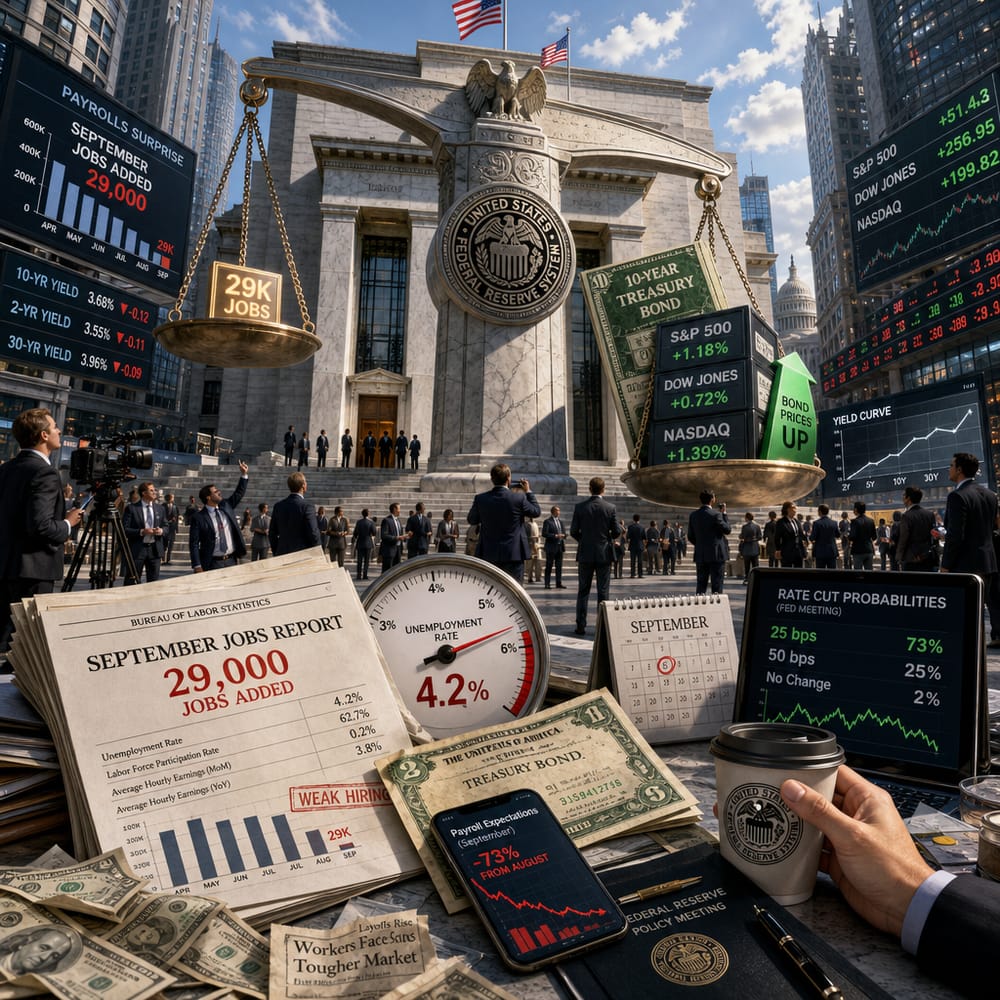
THE SEPTEMBER JOBS REPORT: AN UNEXPECTED CURVEBALL FOR THE FEDERAL RESERVE
It’s like showing up to a blockbuster film premiere expecting fireworks, only to find out it’s a black-and-white silent film with subtitles. The U.S. jobs report for September landed with a thud, offering a mere 29,000 jobs added to the economy, and nudging the unemployment rate up to 4.2%. This is not exactly the strong showing the Federal Reserve might have hoped for in its ongoing battle against inflation.
So, what do these lukewarm job numbers mean for the Fed’s interest rate plans?
THE FED'S DELICATE DANCE
The Fed, our beloved overlord of interest rates, has been in a bit of a bind lately. It’s been trying to cool inflation without pushing the economy into a frosty recessionary chill. Imagine trying to dance on a tightrope in skates. This weak jobs data certainly throws a wrench into their already tricky choreography.
Typically, fewer job gains and rising unemployment could suggest the economy is slowing down, which might encourage the Fed to ease off on future rate hikes. After all, higher unemployment and fewer jobs could dampen consumer spending, which in turn, might help tame inflation. But, as always with the Fed, it’s not quite that simple.
WHY THIS MATTERS NOW
The job market acts as a window into the broader economic landscape. When employers are hiring, it’s generally a sign of confidence in the economic future. Conversely, a slowdown in hiring might signal worry and caution among businesses about what's on the horizon.
This jobs report is particularly concerning because it reveals a significant slowdown in the pace of hiring. What’s more, it’s the last major data point before the midterm elections, and no one wants to go to the polls with doom and gloom hanging overhead.
WHICH SECTORS TOOK A HIT?
So, where did the hiring slowdown hit hardest? Well, it seems like no sector was immune. The usual suspects like retail and hospitality, which have struggled with post-pandemic shifts, still aren’t bouncing back as hoped. Manufacturing, which had been clawing its way back, also showed signs of retreating. The tech sector, often seen as a resilient stalwart, faces its own set of challenges like AI-driven job automation that has employers pondering more about algorithms than adding to headcount.
Meanwhile, financial markets are reacting with their typical brand of anxiety. U.S. Treasury bonds, often a safe haven in times of uncertainty, saw a slight rally as investors recalibrated their expectations about future rate hikes. Stock indices, however, weren’t exactly popping champagne bottles, as the prospect of a slower economy doesn’t typically inspire bullish behavior.
SO, WHAT’S NEXT?
The Fed now has a real puzzle on its hands, akin to a Rubik’s cube where all sides seem to keep changing color. With inflation still above their comfort zone, but the job market showing signs of fatigue, how do they strike the perfect balance?
A pause in rate hikes might see markets breathe a sigh of relief, but it risks allowing inflation to simmer on. On the other hand, another rate bump could stifle spending and investment further, potentially leading to greater economic sluggishness.
In short, the coming months are likely to keep analysts and investors alike glued to their screens, parsing every word out of Federal Reserve meetings and chair speeches for clues on their next move.
THE BIGGER PICTURE
Amidst this uncertainty, one trend remains clear: the U.S. economy is undergoing significant shifts. From an aging workforce to technological disruptions like AI, the landscape is changing rapidly. The Fed’s decisions in the coming months are more critical than ever in ensuring we don’t veer off course into uncharted economic territory.
Ultimately, much like our old friend “Avengers: Endgame,” which reclaimed its spot at the top of the box office, it all comes down to the numbers. But unlike a superhero movie, there’s no predefined script or guaranteed happy ending. The Fed's job is to navigate these unpredictable waters, steering the economy toward stability, even as the winds of change blow ever harder.
Grab your popcorn, folks. The coming months promise to be an intriguing economic spectacle.
This article is for informational purposes only and is not investment advice. Always do your own research or consult a licensed financial professional before making investment decisions.
© Copyright 2024. All Rights Reserved.
© Copyright 2024. All Rights Reserved.