

September Inflation Reaccelerates — Gasoline Surge Drives CPI to 3.7%, Pressuring Fed Pause
Wednesday, October 14, 2026
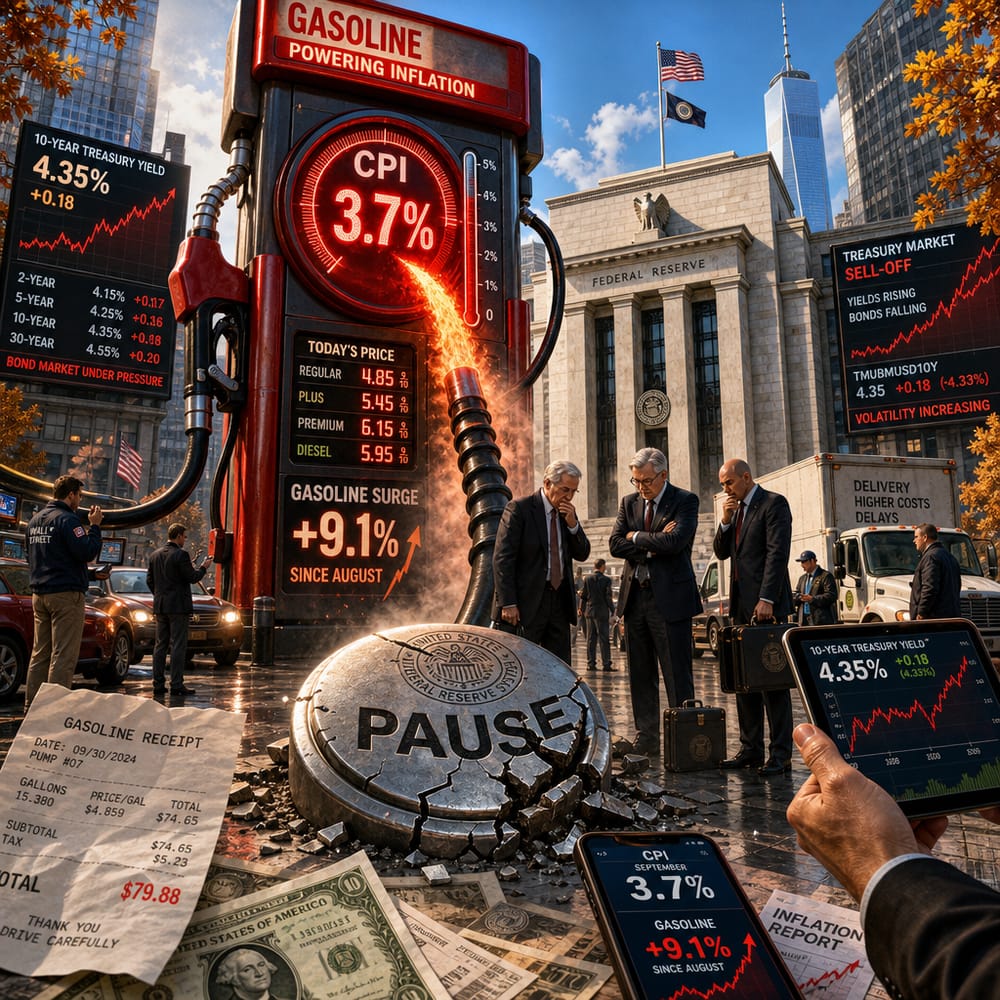
SEPTEMBER INFLATION REACCELERATES — GASOLINE SURGE DRIVES CPI TO 3.7%, PRESSURING FED PAUSE
Here we go again, folks. Inflation is back on the rise, and it’s not exactly the kind of comeback we were hoping for. The Consumer Price Index (CPI) jumped 0.6% in September, with the annual rate hitting a toasty 3.7%. The culprit? A wild surge in gasoline prices — pumping up by 9.1% and reminding us all why carpooling was ever invented.
This inflation surge smells like gasoline — literally and figuratively — and it couldn’t have worse timing for the Federal Reserve. Just when Chairman Jerome Powell thought he could enjoy a pumpkin spice latte with a side of policy pause, the inflation boogeyman has crashed the party. So, what will the Fed do now? Let’s dive into the market mayhem sparked by this inflation fireworks show.
FEDERAL RESERVE'S ROCK AND A HARD PLACE
The Fed’s been trying to play it cool with all this rate hike drama, signaling a potential pause in interest rates. But with this latest CPI data, it might have to rethink its script. Inflation’s stubbornness, largely fueled by those sweaty gasoline numbers, could push the Fed to consider another rate hike at the next Federal Open Market Committee (FOMC) meeting.
If the Fed decides to bump up rates, it’ll be like squeezing the brakes on an already slow-moving economy. Higher rates mean more expensive borrowing, and that has a ripple effect, slowing down everything from housing to consumer spending. But if they do nothing, inflation could spin out like a broken record, hitting everyone where it hurts: the wallet.
TREASURY YIELDS: IT'S GETTING COMPLICATED
Treasury yields tend to dance to the Fed’s tune, and they’re doing a jitterbug right now. With inflation on the rise, the 10-year Treasury yield shot up more than 7 basis points after the CPI report. Higher yields usually mean bond prices fall as investors demand more return for their money. It’s a bit like asking for more marshmallows on your hot cocoa — you’re not getting the same cozy feeling without them.
For the bond market, which is already feeling the heat from previous Fed hikes, this is not exactly comforting news. Rising yields could mean trouble for everything from mortgages to personal loans, making it more expensive to borrow money. And with mortgage rates forecasted to skyrocket, it might be time to get creative with your living arrangements — how about a cozy yurt in the backyard?
CONSUMER SPENDING AND ECONOMIC GROWTH: WHO'S PAYING THE BILL?
With inflation creeping up, consumer spending could take a hit. Sure, gasoline might be leading the charge right now, but other costs are following suit. When prices go up, people tend to hold on to their cash a little tighter. That could spell trouble for economic growth if consumers decide they’d rather save than spend.
Let’s not forget about the ripple effect. When consumers spend less, businesses earn less, and that can lead to layoffs or reduced hours. It’s a domino effect that nobody wants to see, especially as we’re heading into the holiday season. Nothing like inflation to pull the Grinch out from under the bed.
LOOKING AHEAD: THE INFLATION WILD CARD
Everyone’s watching and waiting to see what the Fed will pull out of its hat next. Will it press the pause button or hit the rate hike gas pedal? Either way, it’s a tricky path to navigate. The Fed needs to balance cooling inflation with not stalling the economy, all while the market holds its breath.
For retail investors, this is the time to stay sharp. Keep an eye on how these inflation shifts impact your portfolio, especially if you’re heavy into bonds. The winds of change are blowing — are you ready for the ride?
So, as we brace for the next Fed meeting, stock up on patience (and maybe some cheaper gas alternatives) because this inflation rollercoaster isn’t over yet. In the meantime, keep your wallets close and your investment strategies closer. Who knows, maybe that yurt in the backyard idea will catch on.
This article is for informational purposes only and is not investment advice. Always do your own research or consult a licensed financial professional before making investment decisions.
© Copyright 2024. All Rights Reserved.
© Copyright 2024. All Rights Reserved.