

Semis Take Multiple Hit: OpenAI Efficiency + Meta’s Compute Strategy
Thursday, July 02, 2026
SEMIS TAKE MULTIPLE HIT: OPENAI EFFICIENCY + META’S COMPUTE STRATEGY
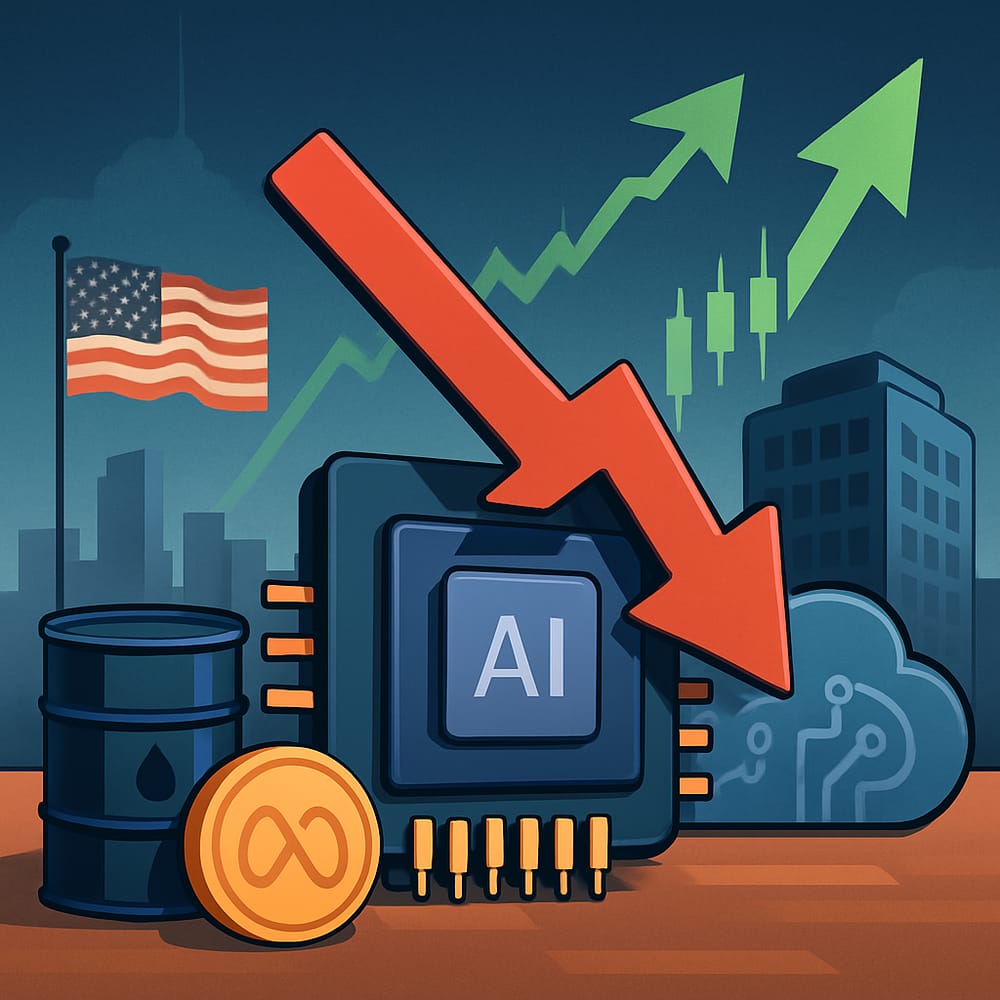
The world loves a good plot twist, but Wall Street? Not so much. When OpenAI and Meta dropped their bombshells about efficiency and compute power, respectively, the semiconductor market didn’t just flinch; it tumbled. The PHLX Semiconductor Index, better known as SOX, took a nosedive sharper than a rollercoaster's first drop. So what’s the story behind this dramatic slide, and why should you care if you own even a sliver of a tech ETF?
Here’s the scoop: OpenAI, the cool cats behind AI models like ChatGPT, just got a lot more efficient at running their algorithms. Efficient AI models mean fewer servers, which means fewer chips. And chips? Well, they’re the bread and butter of companies in the SOX index like SanDisk and Micron. Suddenly, what seemed like a semiconductor utopia—a future filled with endless AI-driven demand—now looks more like a mirage.
Why does AI efficiency ding chip demand? Think of it this way: If a car gets double its usual mileage, you’re not hitting the gas station half as often. Similarly, if AI models become more efficient, the need for semiconductors to power these models shrinks. Efficiency is fantastic news for tech giants looking to cut down on operational costs, but it spells trouble for the semiconductor firms that rely on high demand for their chips to keep the lights on.
And it’s not just OpenAI throwing a curveball. Enter Meta, which decided to flip its AI overload problem into a business opportunity by selling its excess compute power. This strategic pivot is like discovering you have too many eggs after a Costco run and selling your extras at the local farmers market. Meta’s move to monetize its AI infrastructure surplus tells us one thing: Even tech giants are starting to rethink the insatiable demand for semiconductors.
Now, the million-dollar question: Are semis over-capitalized? Financial analysts and Wall Street wizards have been pondering this for a while. The massive investments that companies like Micron, SanDisk, and their chip-making cohorts have pumped into production capacity might now seem a little overzealous. If AI and tech companies need fewer chips to do the same amount of work, then maybe, just maybe, some of that shiny new production capability was a tad excessive.
But don’t start panic-selling your semiconductor stocks just yet. The industry isn’t going to roll over without a fight. Chipmakers are already strategizing to weather this storm. You'll see them shifting focus from general-purpose semiconductors to specialized, high-performance chips that cater to the latest tech trends like quantum computing, advanced gaming graphics, and even space technology—sectors where efficiency isn't the primary concern.
Another strategy? Diversification. Semiconductors are crucial in everything from smartphones to smart cars. As the world becomes more interconnected and reliant on digital solutions, the demand for chips won’t fade away entirely—it’ll just shift. Think of it as the industry trying to find its footing in a world where the dance floor keeps changing.
So, what does this mean for you, the retail investor scrolling through your phone? Keep an eye on the semiconductor space, and don't write off chip stocks just yet. The landscape is changing, but change often breeds opportunity. Companies that can pivot and innovate will find ways to capitalize on new markets, even as demand for traditional applications wanes.
In the end, the semiconductor saga is far from over. It's a market that’s reeling, yes, but not knocked out. Remember this little piece of wisdom: In every crisis, there’s a chance for reinvention. As AI models become more efficient and tech companies like Meta forge new paths, the chip sector will likely find new ways to thrive. Stay sharp, stay curious, and, most importantly, stay invested. The next chapter could be the most exciting yet.
This article is for informational purposes only and is not investment advice. Always do your own research or consult a licensed financial professional before making investment decisions.
© Copyright 2024. All Rights Reserved.
© Copyright 2024. All Rights Reserved.