

Semiconductor Supply Crisis: Helium Shortage Threatens Chip Production
Sunday, October 11, 2026
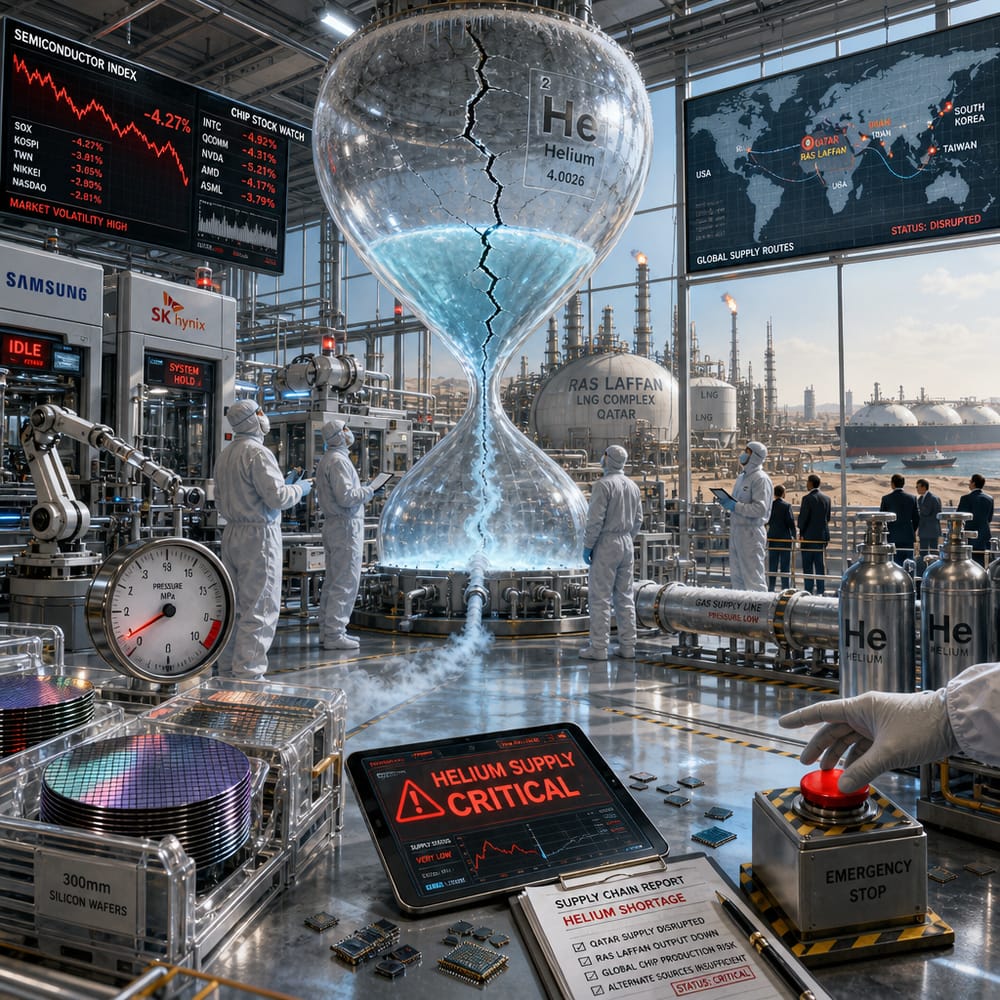
HELLO, SEMICONDUCTOR CRISIS: THE PLOT TWISTS WITH HELIUM SHORTAGE
Picture this: You're minding your own business, considering whether to splurge on the latest tech gadget, when suddenly, the world gets hit with a helium shortage. Yes, helium—the stuff that makes party balloons float. But before you dismiss this as a party-planning emergency, let’s pause. This isn't just child’s play; it's a serious hiccup that could turn the semiconductor industry on its head.
Here's the lowdown: A strike in Iran has caused a shutdown at Qatar's Ras Laffan LNG complex, a major source of helium. This has sent shockwaves through the tech world, because helium is critical in making semiconductors—the tiny chips that power everything from your smartphone to your smart fridge. Without it, tech production might just become the real-life version of a horror movie.
WHO'S FEELING THE HEAT?
The chip-making giants like Samsung and SK Hynix are biting their nails. They rely on helium to keep their production lines cool and prevent overheating. Without enough helium, these companies could see a significant hike in production costs, or worse, a slowdown in their operations. And if you think this sounds like a tech problem, guess again—it's an everybody problem. Fewer chips mean more expensive electronics, and nobody wants to pay more for their gadgets just because they’re in short supply.
The big question on everyone’s mind is: How long is this helium drought expected to last? Experts are mumbling estimates, but no one’s daring to put a firm date on the calendar. It could be weeks; it could be months. What’s clear is that the longer it lasts, the more ripple effects we'll see throughout the tech industry and beyond.
A GLOBAL GAME OF DOMINOES
But why, you may ask, is helium in such short supply? Helium isn’t just floating around waiting to be scooped up; it’s a byproduct of natural gas extraction. When geopolitical tensions flare up in the Middle East, as they often do, production hiccups like the one we’re seeing can throw a wrench in the works.
This isn’t just about semiconductors, either. Helium is used in healthcare, scientific research, and even space exploration. So, in a way, it's the connective tissue of many industries. When the supply shrinks, it’s like pulling out a key domino in a long chain—things start to topple over.
WHAT DOES THIS MEAN FOR THE FUTURE?
It's hard not to wonder: Could this be a wake-up call for the semiconductor industry to find a helium alternative or bolster reserves? The industry might need to rethink its supply chain strategies, focusing on building robust backup systems.
And then there's the broader impact on innovation. If semiconductor production takes a hit, we might see a slowdown in tech advancements. Could this mean fewer cool gadgets hitting the shelves in the near future? Possibly. For tech enthusiasts, it’s like someone just hit the brakes on the future we’ve been waiting for.
THE WALL STREET ANGLE
For investors, this situation sets the stage for some serious market moves. Semiconductor stocks might experience turbulence in the short term, creating both risk and opportunity. Companies that find a way to navigate the helium shortage and maintain production could come out as heroes in this crisis.
KEEPING AN EYE ON THE CLOCK
In the coming months, all eyes will be on how the situation unfolds. Will geopolitical tensions ease to resume helium production? Can chipmakers innovate their way out of this bind? It's a high-stakes waiting game with potentially far-reaching consequences.
So, what's the moral of this helium tale? Sometimes, it’s the small, seemingly trivial things that have the biggest impact. Today it’s helium; tomorrow, who knows? As investors and consumers alike, we’re just along for the ride in this ever-unpredictable world of tech and geopolitics. Here's hoping the helium shortage is just a passing blip, not a permanent dent in the semiconductor scene.
This article is for informational purposes only and is not investment advice. Always do your own research or consult a licensed financial professional before making investment decisions.
© Copyright 2024. All Rights Reserved.
© Copyright 2024. All Rights Reserved.