

Semiconductor Stocks at a Crossroads After Nvidia CEO Exit & SOX Slide
Friday, November 20, 2026
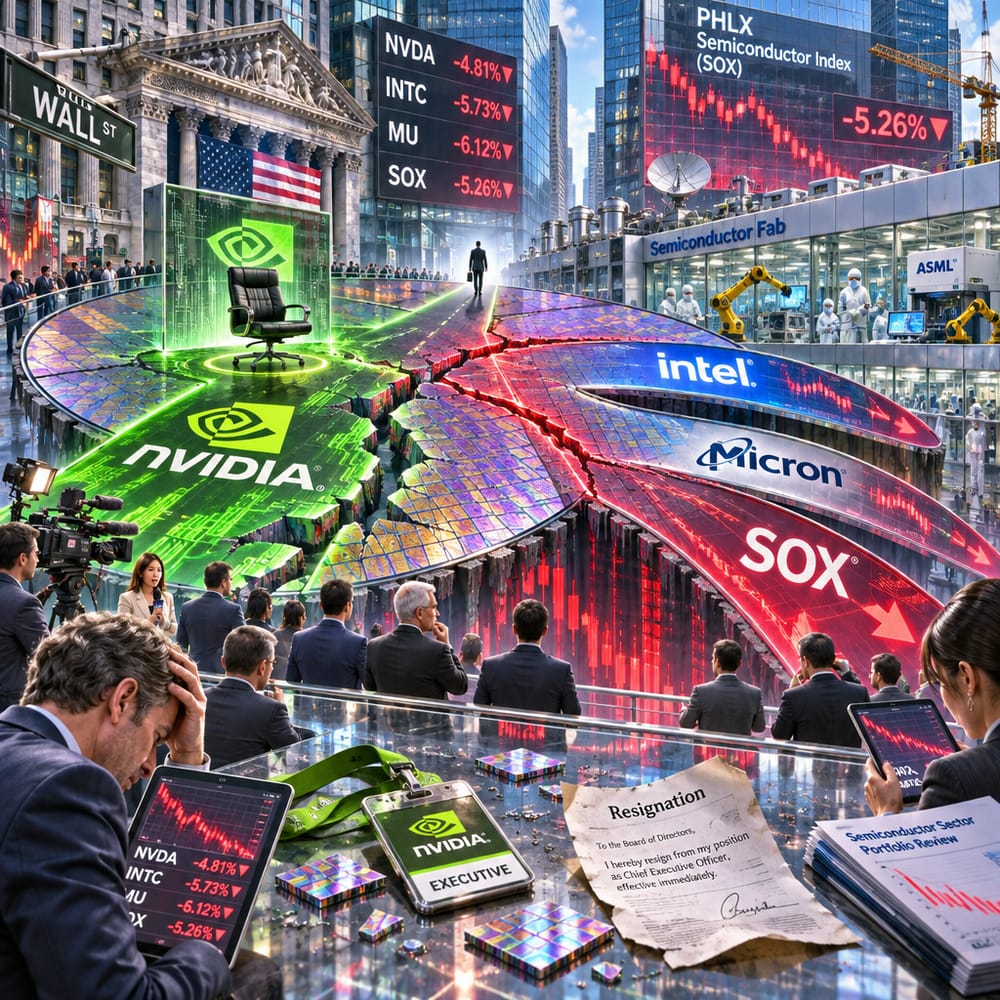
Semiconductor Stocks at a Crossroads: Nvidia CEO Exit Rattles Market
In the world of semiconductors, drama is unfolding faster than you can say "circuit board." Nvidia, the chip behemoth that has been almost single-handedly propping up the tech industry's dreams of AI dominance, took a gut-punch this week. Jensen Huang, the charismatic co-founder and CEO, abruptly resigned, sending shockwaves through the market that left semiconductor equities looking as shaky as your Internet connection during a thunderstorm.
What followed was a swift and brutal sell-off. The PHLX Semiconductor Index, the benchmark for chip stocks, took a nosedive, dropping over 5% as investors collectively gasped and hit the sell button. This isn't just another routine blip on the radar. It's a moment of reckoning for an industry that's been riding high on the AI hype train.
THE JENSEN HUANG EFFECT
Jensen Huang has been the Steve Jobs of the semiconductor world — minus the turtleneck. His exit was like taking the lead guitarist out of a rock band: the music's still there, but it just doesn't have the same magic. Huang's vision had catapulted Nvidia to the forefront of AI-driven growth, with the company's chips becoming the brains behind everything from gaming graphics to neural networks.
His departure raises a big, blinking neon question: Can Nvidia maintain its rhythm without its lead guitarist? The market clearly has its doubts. With Huang gone, Nvidia's stock didn't just stumble; it tripped and fell face-first onto the trading floor, dropping more than 3% in a single day.
RIPPLE EFFECT ON CHIPMAKERS
The mood in the broader semiconductor sector is about as cheerful as a rainy Monday morning. Intel, another giant in the chip universe, hasn't been immune to the malaise, while Micron Technology felt the pinch, slipping more than 6%. It's as if investors suddenly remembered that the semiconductor industry is not just about dazzling AI demos and virtual reality headsets. It’s also about the gritty, complex reality of manufacturing and supply chains.
This sell-off in the semiconductor world is not happening in a vacuum. It's part of a larger tech market mood swing, where Anthropic, the shiny new AI company, made a splashy public debut only to belly-flop in its first days of trading. The broader market jitters have been exacerbated by this, as tech stocks across the board have taken a hit, compounding the semiconductor sector's woes.
CAN THE SEMICONDUCTOR SECTOR RECOVER?
So, what happens when the dust settles? Can the semiconductor sector climb out of this trench and start the uphill march again? While it's easy to get caught in the current turbulence, there are a few glimmers of hope.
Firstly, the world is still running on semiconductors. From your smartphone to the newest Tesla, chips are the heartbeat of the modern digital economy. And despite the current sell-off, the demand for these little slices of silicon is not going anywhere.
Secondly, Nvidia itself is still a powerhouse. Huang may have left some big shoes to fill, but the company is not without leadership and innovation. Investors are likely to cool down and reassess the fundamentals, possibly finding renewed confidence in Nvidia’s deep-rooted capabilities.
THE ROAD AHEAD
In the short term, the semiconductor sector is likely to see more volatility. Investors are skittish, and any further negative headlines could send them diving for cover. But let's be real: tech stocks have weathered storms before. Once the market adjusts to new leadership at Nvidia and digests the tech market's recent hiccups, semiconductors are poised to rebound.
In the meantime, keep an eye on Intel and Micron — they might just surprise you by capitalizing on Nvidia's momentary stumble. The tech sector thrives on innovation and resilience, and while we might be in the eye of the storm right now, the semiconductor industry has the tools to weather it.
So, for those retail investors scrolling through this rollercoaster of semiconductor news, take heart. The path may be rocky, but the underlying trends driving chip demand are solid. Keep your portfolios diversified, stay informed, and remember: in the world of tech, change is the only constant.
This article is for informational purposes only and is not investment advice. Always do your own research or consult a licensed financial professional before making investment decisions.
© Copyright 2024. All Rights Reserved.
© Copyright 2024. All Rights Reserved.