

Semiconductor Selloff Driven by Rising Bond Yields and Geopolitical Tension
Thursday, August 20, 2026
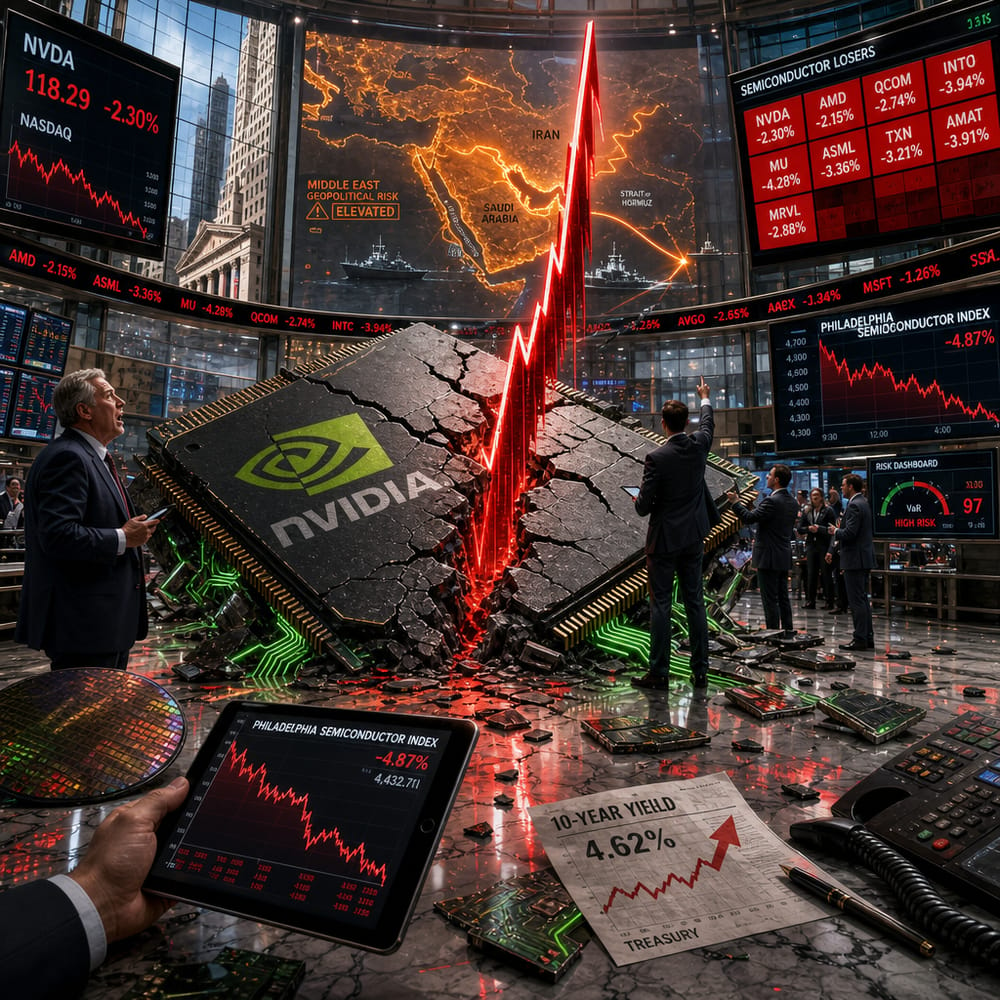
When it rains, it pours—and lately, the forecast for semiconductor stocks is stormy with a chance of chaos. Picture this: you're at a party, happily enjoying some chips. Suddenly, someone turns on the news, and you hear that chip stocks are having a meltdown. What gives? Well, it's a bit like the semiconductor market got caught in a perfect storm, with rising bond yields and geopolitical tensions whipping up quite the frenzy.
Let's break this down. Rising bond yields are like that annoying relative who hogs the conversation at dinner; they make borrowing more expensive and can seriously kill the vibe for tech companies that thrive on cheap credit. Those yields are going up because the U.S. Treasury has decided it's time to buy back long-term bonds. They’re aiming to push down interest rates, but so far, it's more like trying to put out a fire with a garden hose.
Now, mix in geopolitical tensions, particularly the drama from the Middle East, and you've got a recipe for disaster. With the global stage resembling a tense chess game, investors are jittery. Each move from major players like the U.S. or China could be like a grandmaster's checkmate—or a blunder.
Enter Nvidia, the crown jewel of the semiconductor world. The company saw its stocks dip about 2.3% recently, and that's no small potatoes. Nvidia, which powers everything from your gaming laptop to sophisticated AI systems, is a bellwether for the tech sector. When it stumbles, people notice. It's been a darling of the AI boom, but right now, the broader market conditions feel like an anchor tied to its high-flying ambitions.
The Philadelphia Semiconductor Index, which tracks the performance of major semiconductor companies, has been leading losses. It's as if the whole party of tech stocks decided to take a collective nosedive. And why not? Bond yields rising faster than a helium balloon and geopolitical tensions that make Game of Thrones look like a kids' show are enough to spook even the most seasoned investors.
The question on everyone's lips: which semiconductor companies are built to weather this storm? Here's the scoop. Companies that have diversified their supply chains and have deep pockets might come out stronger. Think of them as the cockroaches of the tech world—resilient, tough to kill, and able to thrive in adverse conditions. Those heavily dependent on cheap credit or single regions for their supply are like houseplants left out in the frost—likely to wither and die.
Geopolitical tensions don’t just affect the price of oil or your morning news cycle; they disrupt entire industries. The Middle East tensions are particularly worrisome because any escalation could send oil prices skyrocketing. Higher oil costs mean higher operational costs for tech companies dependent on global shipping and manufacturing.
And then there's the China factor. The country is rapidly advancing in the AI race, and this could be both a challenge and an opportunity for U.S. semiconductor companies. On one hand, competition could force innovation. On the other, geopolitical tussles might lead to more market restrictions, making it harder for companies to operate smoothly.
So, what should the everyday retail investor do while semiconductor stocks are feeling the heat? Keep an eye on companies with strong fundamentals and diversified operations. Those are likely to be less affected by the turbulence. And remember, the tech sector is a long game. Short-term hiccups in the market are like bad weather—unpleasant and sometimes disruptive, but not the end of the world.
In the meantime, watch the bond market closely. It's the invisible puppeteer pulling the strings behind much of the financial market's moves. And while geopolitical dramas unfold like a soap opera, remember that in investing, patience isn’t just a virtue—it’s a strategy.
Strap in, investors. The semiconductor saga is far from over, and who knows what twists await in the next episode. Keep your eyes peeled, your apps updated, and your portfolio diversified. After all, in the world of investing, the only constant is change.
This article is for informational purposes only and is not investment advice. Always do your own research or consult a licensed financial professional before making investment decisions.
© Copyright 2024. All Rights Reserved.
© Copyright 2024. All Rights Reserved.