

Semiconductor Sector Under Pressure: Intel Leads Decline
Wednesday, August 19, 2026
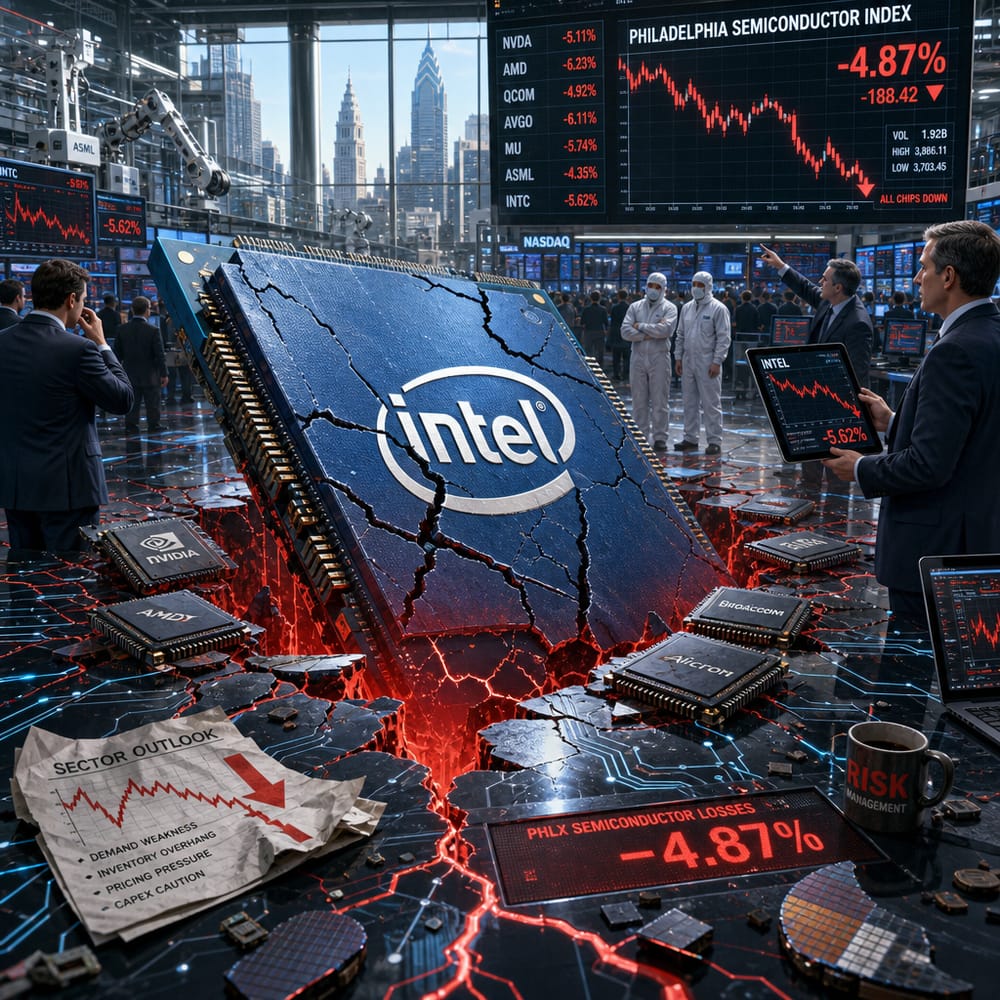
CHIPS TAKE A DIVE: WHY SEMICONDUCTOR STOCKS ARE SLUMPING
If you thought your Friday was tough, spare a thought for the semiconductor industry. The Philadelphia Semiconductor Index just took a nosedive, dropping over 5% faster than you can say "Silicon Valley." At the forefront of this chip charade is Intel, plummeting more than 7%. Investors are understandably jittery, wondering if this is a hiccup or a harbinger of more significant economic hiccups to come.
So, what's going on? Is this a one-off market blip or a sign of deeper issues in the semiconductor sector — or perhaps the economy at large? Let's unpack the semiconductor sell-off that's got everyone from Wall Street whizzes to basement day traders scratching their heads.
UNDERSTANDING THE SELLOFF
First off, let's talk about why the semiconductor stocks are suddenly so unpopular. The industry, once riding high on pandemic-fueled demand for gadgets, seems to be hitting a rough patch. It's like semiconductor stocks have gone from the life of the party to the awkward cousin everyone's avoiding at family gatherings.
One possible reason is shifting demand dynamics. As the initial tech boom subsides, demand for chips in consumer electronics is cooling. The semiconductor sector has always been cyclical, and as the pandemic-induced tech frenzy fades, so does the wind beneath its wings. Investors are now fretting over weaker guidance and softer demand forecasts, which have put growth expectations on ice.
But it's not just this immediate demand lull causing the selloff. At the macroeconomic level, things are looking murky. The Federal Reserve's persistent inflation worries have stirred the pot, leaving investors uneasy about future interest rate hikes. Higher rates can make borrowing more expensive, potentially slowing down economic growth and sliming profit margins like a bad reality TV show for the semiconductor industry.
CHIP DEMAND AND PRICING: WHAT'S NEXT?
Here's the big question: How might this affect future chip demand and pricing? While demand might be taking a breather, chips are like the digital heartbeats of modern life. They power everything from your smartphone to your futuristic smart fridge that you swear is plotting against you.
Expect prices to start reflecting this shifting demand. If the industry finds itself with surplus inventory — think of it as chips sitting in warehouses like last year's holiday sweaters — prices might drop to stimulate sales. But don't start dreaming of dirt-cheap tech gadgets just yet. Global supply chain challenges and geopolitical tensions (hello, China-Taiwan) mean any price corrections might be more of a slow shuffle than a rapid descent.
WHO'S MOST AT RISK?
Not all semiconductor companies are created equal, and the chips are falling unevenly across the board. Some sectors within the semiconductor industry are more exposed than others. Companies heavily reliant on consumer electronics, like Intel, are feeling the pinch more acutely. When people aren't splurging on new laptops and gaming consoles, those companies notice.
On the flip side, sectors tied to cloud computing and data centers might weather the storm better. As businesses continue their digital transformations, demand for data center chips remains robust. The silver lining, if you can call it that, is that not all semiconductor stocks are singing the blues.
WHAT THIS MEANS FOR INVESTORS
For retail investors, this semiconductor shake-up serves as a wake-up call to revisit and reassess portfolios. It's a reminder that stock markets are closer to a rollercoaster than a lazy river. One minute, you're climbing, heart pounding with anticipation; the next, you're plunging.
This sell-off might signal broader market trends, hinting at more than just a semiconductor slowdown. Investors need to keep an eye on macroeconomic indicators, especially actions by the Federal Reserve. If interest rates rise, borrowing becomes costlier, which could ripple across the economy.
In the meantime, take a good look at your investment strategy. Diversification remains crucial. Instead of putting all your chips in one basket, spread them across sectors. Maybe consider investing in those semiconductor companies pivoting toward innovative fields like artificial intelligence and electric vehicles — areas with promising growth potential.
Semiconductor stocks might be down now, but they're far from out. As with any market correction, there will be opportunities for those willing to look beyond the panic and see the potential for a turnaround. Just keep your eyes peeled, your research thorough, and your wits sharp.
This article is for informational purposes only and is not investment advice. Always do your own research or consult a licensed financial professional before making investment decisions.
© Copyright 2024. All Rights Reserved.
© Copyright 2024. All Rights Reserved.