

Semiconductor Sector Swings Pre- and Post-Nvidia Earnings
Wednesday, August 26, 2026
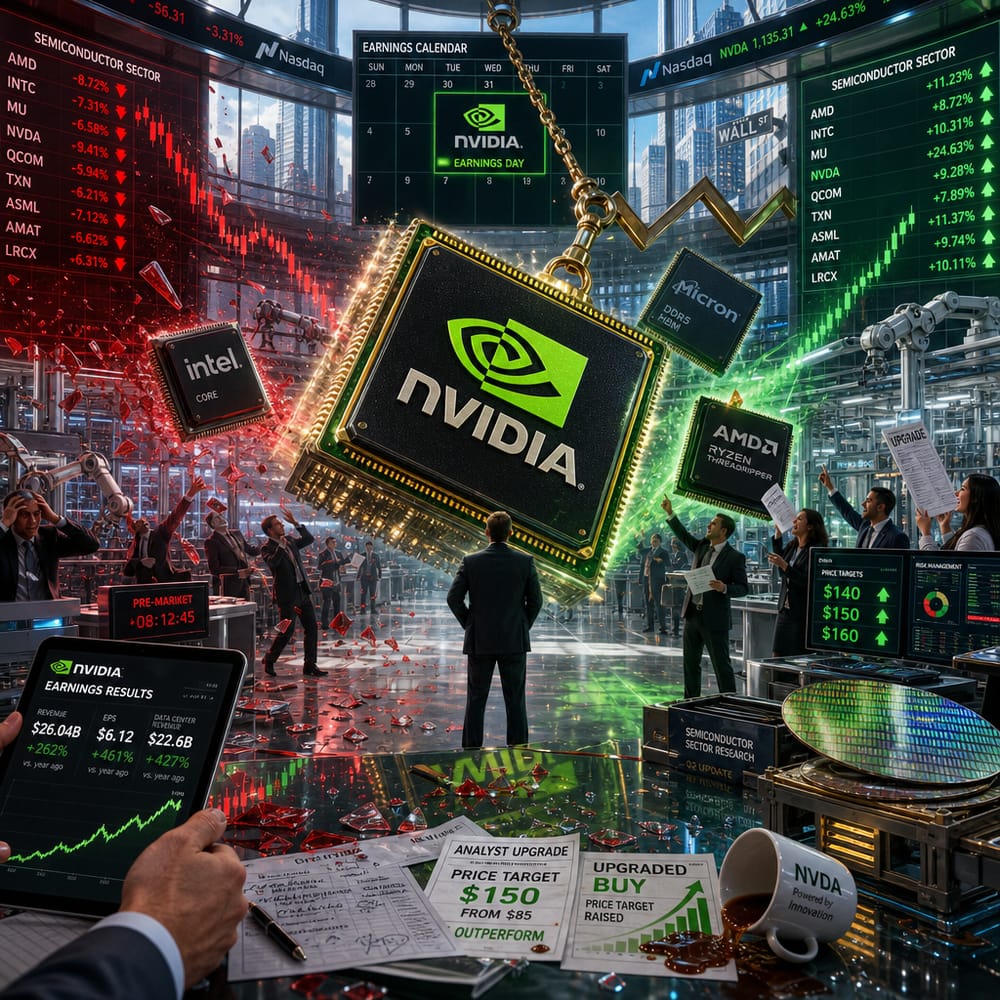
SEMICONDUCTOR SECTOR SWINGS PRE- AND POST-NVIDIA EARNINGS
If the stock market were a high school dance, semiconductor stocks would be the teenagers swinging wildly between the punch bowl and the dance floor. Recently, we saw them twirling with market mood swings — diving just before Nvidia's earnings and then busting a move upward after some well-timed analyst upgrades. Who knew semiconductors could be so dramatic?
So, what sent these chip stocks on a rollercoaster ride that had investors clutching their portfolios like a safety harness? Let’s break it down.
THE INITIAL TUMBLE
Before Nvidia took center stage with its latest earnings report, semiconductor stocks were in a bit of a funk. Imagine the nervous shuffle before a big dance-off; everyone’s eyeing the competition and wondering who’s going to nail it and who’s going to flub. For Nvidia, AMD, and their peers, this pre-earnings slide was set to the tune of rising inflation worries and the Fed’s relentless waltz with interest rates. The latest PCE (Personal Consumption Expenditures) report showed inflation being annoyingly persistent, which, like an uninvited DJ, had traders hitting pause on semiconductor stocks.
Adding to the tension, whispers about potential cooling in AI demand created an ominous soundtrack. AI has been the golden child, the Semiconductors Valedictorian, driving up demand for more chips than a poker table’s snack tray. But with some investors fretting over a slowdown, the market sentiment soured as they played it safe.
THE POST-EARNINGS REBOUND
Then Nvidia stepped up to the mic with its second-quarter results, and it was like someone switched the playlist from elevator music to a high-energy dance hit. Nvidia didn’t just meet expectations; it moonwalked right past them. The company reported strong data center performance, solidifying its role as the semiconductor superstar riding the AI wave. Confidence is contagious, and Nvidia's optimistic guidance spread through the semiconductor sector faster than a viral TikTok dance challenge.
But the real pep in the step came from the analysts. Soon after Nvidia's report, a chorus of “buy” ratings and raised price targets started echoing through Wall Street. These upgrades acted like a shot of espresso for investors, invigorating stock prices and reigniting the bullish sentiment. Suddenly, the feared AI slowdown seemed like yesterday’s news, and investors were back on the dance floor, ready to boogie.
WHY IT MATTERS FOR INVESTORS
The semiconductor sector's recent gyrations underscore how sensitive these stocks are to external factors — from economic reports to analyst opinions. They’re like the market’s mood ring, instantly reflecting where sentiment stands. For retail investors, this volatility offers both opportunities and risks.
If you’re an investor considering a spin in the semiconductor sector, timing is critical. Understanding how macro signals — such as inflation data and interest rate announcements — sway market sentiment can help you decide when to dive in or step back. Additionally, keeping an eye on industry-specific catalysts like AI demand forecasts and analyst ratings can provide insights into where the sector might twirl next.
Of course, risk management remains key. The semiconductor sector's high volatility means that while the upside can be tantalizing, the downside can be equally jarring. Whether you're waltzing with Nvidia, tangoing with Intel, or doing the cha-cha with AMD, make sure your risk tolerance is in sync with the market's rhythm.
So there you have it, the semiconductor sector's latest dance through the stock market. Whether they continue to rise to crescendo or stumble into another slump, one thing's for sure: these stocks are always up for a dramatic performance. Keep your eyes on the floor — and your portfolios ready to pivot.
This article is for informational purposes only and is not investment advice. Always do your own research or consult a licensed financial professional before making investment decisions.
© Copyright 2024. All Rights Reserved.
© Copyright 2024. All Rights Reserved.