

Semiconductor Sector Plunges Amid AI Sell-Off and Geopolitical Risks
Friday, November 20, 2026
SEMICONDUCTOR SECTOR PLUNGES AMID AI SELL-OFF AND GEOPOLITICAL RISKS
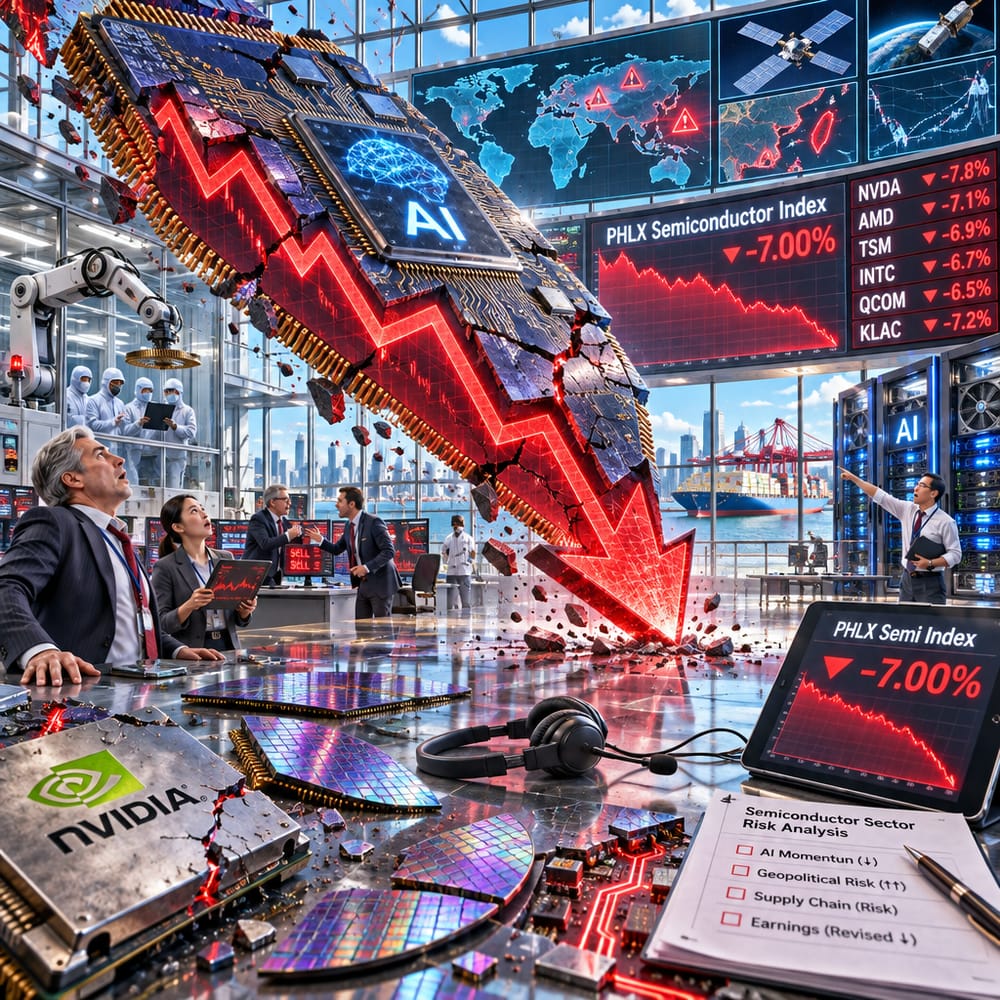
Hold onto your hats, investors, because the semiconductor sector just took a nosedive. The PHLX Semiconductor Index plummeted a gutsy 7%, dragging tech stocks down the rabbit hole of uncertainty. But what's causing this whirlwind plunge? Let's dissect the drama behind the scenes.
First, if you're thinking AI was supposed to be everyone's golden ticket, think again. The recent sell-off in AI-related stocks, like the hotly anticipated Anthropic IPO, has investors wondering whether the AI hype train is running out of steam. As Anthropic’s stock wobbled close to its IPO price right after a blockbuster debut, nervous investors hit the brakes. It’s like buying a sports car only to realize you still have to deal with traffic jams. The excitement was high, but now reality is checking in with its usual skepticism.
The semiconductor industry, the backbone of AI tech, felt the tremors. NVIDIA, a titan in chip-making, was caught in the crossfire as its shares were hit hard. This is a company that found itself sandwiched between political dramas and market jitters. Geopolitical tensions are stirring the pot too, as U.S.-China relations remain icy over tech prowess and chip sales. When the former CEO of NVIDIA, Jensen Huang, wasn’t even mentioned in the high-stakes talks between the U.S. and China, it left investors reading between the lines about how the policy playbook might affect big tech.
What’s adding fuel to the fire are whispers of the U.S. potentially putting the kibosh on chip sales to China. Despite assurances that NVIDIA's H200 chips could still be sold to China, the market isn't convinced. Such geopolitical chess games have a nasty habit of making investors jittery, especially when the word "sanctions" could be looming around the corner.
And let's talk about the soaring costs of data centers, which are part and parcel of the AI boom. Construction costs for these digital fortresses have shot up by 13% this year alone. For anyone keeping score, that's more than double the global rate. It's a classic case of demand outstripping supply, and it’s stretching tech giants’ budgets thin. It’s like trying to throw a lavish party with champagne dreams on a beer budget.
But what does all this hullabaloo mean for the future of AI investments? In a nutshell, it's complicated. The market's current hiccup doesn't spell doom, but it does highlight the hurdles ahead. AI, for all its shiny promises, has to navigate a maze of regulatory hurdles, geopolitical chess moves, and economic realities like everyone else. The game isn’t over, but it's clear the players will need to be nimble, savvy, and maybe pack a little patience.
For retail investors like you and me, it's a reminder to keep our eyes peeled and our ears attuned to the market’s whispers. This isn’t a time to panic-sell or jump ship, but rather to stay informed, be strategic, and perhaps indulge in a little market meditation. Remember, volatility is just part of the package deal when playing in the tech sandbox.
The semiconductor dip is a stark reminder that while the promise of AI is bright, the path is anything but straightforward. Investors will need to stay light on their feet, ready to pivot as new developments unfold. And who knows? With a bit of luck, and a lot of savvy, that wild ride might just pay off after all.
This article is for informational purposes only and is not investment advice. Always do your own research or consult a licensed financial professional before making investment decisions.
© Copyright 2024. All Rights Reserved.
© Copyright 2024. All Rights Reserved.