

Semiconductor Sector Jitters
Monday, November 16, 2026
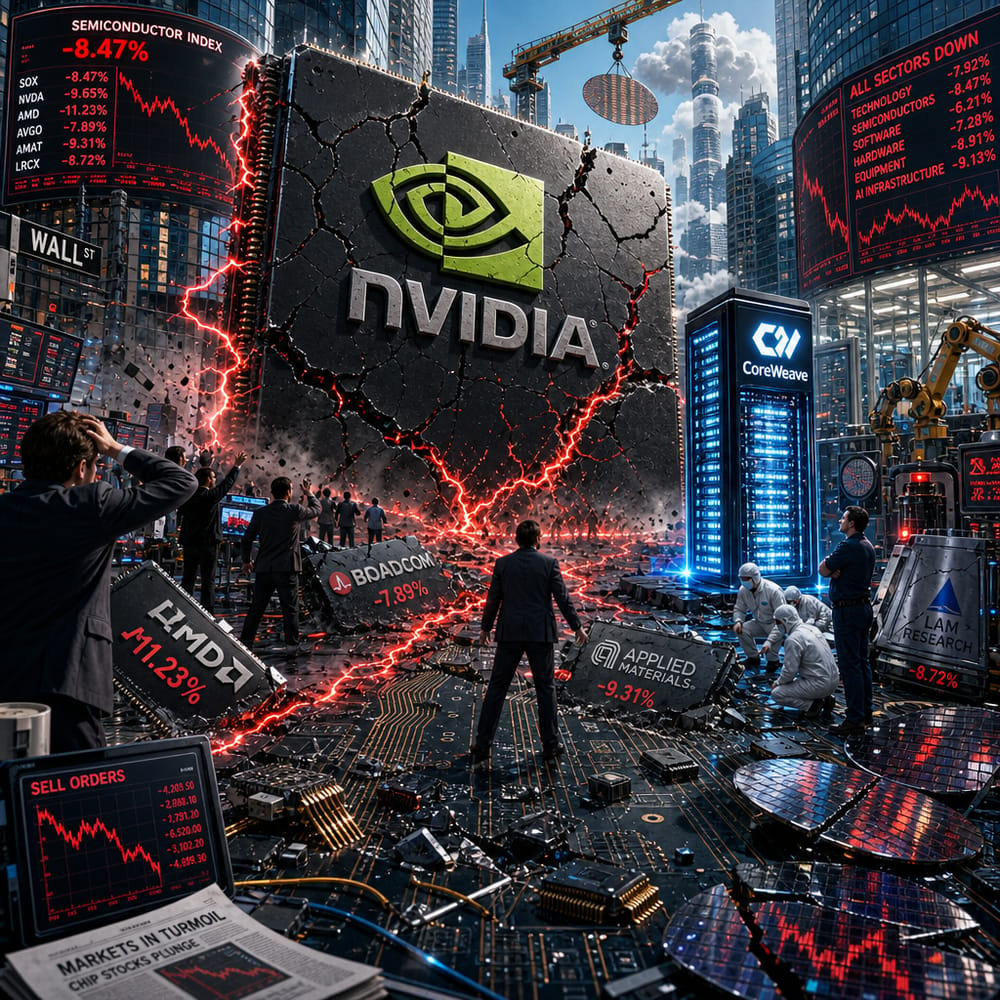
SEMICONDUCTOR SECTOR JITTERS
Hold onto your silicon chips, folks! The semiconductor sector is in the middle of a tempest, and it's all thanks to the mammoth that is Nvidia. Recent tremors in the market shook the semiconductor world like a geeky version of Jenga, with stocks like AMD and Broadcom taking the plunge. Meanwhile, CoreWeave, the dark horse of AI infrastructure, is riding high above the stormy seas. What on earth is going on?
First, let's dish about Nvidia. The chip giant's got its knickers in a twist after CEO Jensen Huang decided to step down amidst some eyebrow-raising headlines. With Huang's exit, Nvidia finds itself in a bit of a pickle, and the whole sector's feeling it. It's like the kid that brings the whole class down when they throw a tantrum in the sandbox. Nvidia's earnings report was supposed to be a slam dunk, but instead, it left investors biting their nails as they await the next move in Nvidia's leadership game of thrones.
You see, Nvidia's been the golden goose of the semiconductor world, leading the charge in AI applications and setting trends that others scramble to follow. When it sneezes, the entire sector catches a cold. AMD and Broadcom have been no exception, tumbling in sympathy like they're on a synchronized swimming team. Applied Materials and Lam Research didn't escape unscathed either, showing declines that make seasoned investors wince.
But this shakeup isn't just about Nvidia's throne drama. It's a cocktail of factors making investors jittery, from tight chip supplies dating back to the pandemic bottlenecks, to geopolitical tiffs that make sourcing raw materials feel like pulling teeth. Throw in some concerns about interest rates and global economic wobbles, and you've got a recipe for a semiconductor salad of woe.
Enter CoreWeave, the unlikely hero of this tale. While others are licking their wounds, CoreWeave is flexing its muscles. This company isn't your run-of-the-mill semiconductor stock. It's elbow-deep in the nitty-gritty of AI infrastructure, providing cloud computing that's tailor-made for the data-hungry demands of AI and machine learning. The catch? They've somehow managed to sidestep the drama and thrive. In times when everything seems chaotic, CoreWeave's impressive growth and robust performance are like a soothing balm for frazzled investors.
So, what magic beans has CoreWeave been munching on? For starters, they're not directly tied to the ferocious ups and downs of the mainstream semiconductor market. Instead, they're laser-focused on an area that's booming: AI infrastructure. With AI becoming less of a sci-fi dream and more of an everyday reality, companies like CoreWeave are cashing in big time. They've carved out a niche that lets them surf above the madness, capitalizing on the massive demand for more computing power to fuel AI endeavors.
CoreWeave's success also highlights a broader trend in the tech world. As the AI wave sweeps over industries faster than you can say "deep learning," infrastructure players like CoreWeave are positioned to make bank. They provide the backbone on which AI applications run, and in a world increasingly run by algorithms and machine intelligence, that's a pretty sweet spot to be in.
So, what's an investor to do in these topsy-turvy times? Keep a keen eye on Nvidia's next move, sure, but don't overlook the underdogs. CoreWeave's success story shows that there's still gold to be found if you know where to look. Maybe it's time to broaden the horizons beyond the usual suspects like AMD and Broadcom and consider diving into the infrastructure that supports the AI revolution.
While Nvidia sorts out its boardroom drama, the smart money might just be on those who see beyond the short-term jitters and focus on the long-term potential. As always, in the land of semiconductors, fortune favors the bold — and maybe, just maybe, those who keep a watchful eye on the unsung heroes of AI's rise.
This article is for informational purposes only and is not investment advice. Always do your own research or consult a licensed financial professional before making investment decisions.
© Copyright 2024. All Rights Reserved.
© Copyright 2024. All Rights Reserved.