

Semiconductor Sector Faces Pressure from Rising Yields
Monday, August 24, 2026
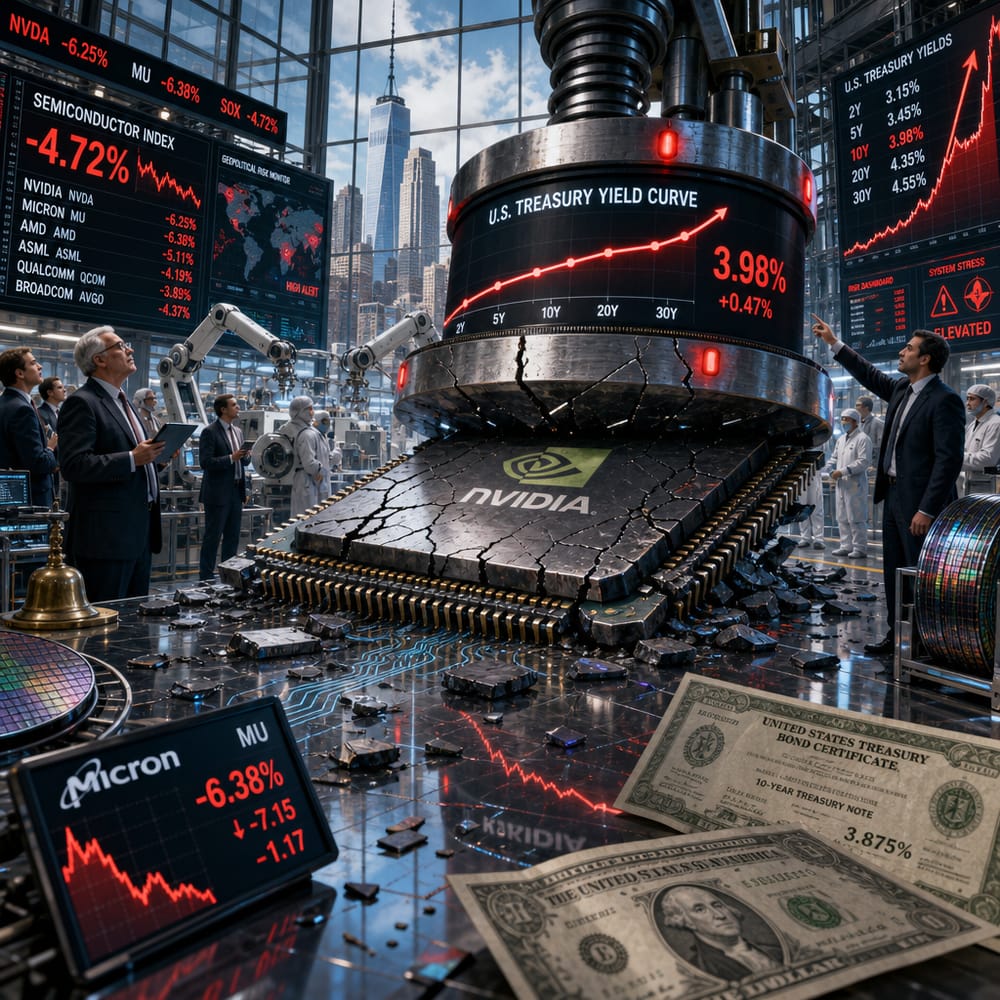
WHEN BOND YIELDS RISE, SEMICONDUCTORS FEEL THE SQUEEZE
Imagine you’re at a summer barbecue. The sun's shining, the grill’s sizzling, and suddenly, a gusty wind rushes in, scattering plates and sending napkins into the neighbor's yard. That gust of wind? Rising bond yields. And among the guests losing their hats are our chip-head honchos, Nvidia and Micron.
Why all the fuss about bond yields now? Well, in the world of finance, it's the equivalent of pulling a fire alarm and calmly walking to the exit. Rising yields make borrowing more expensive, and that's a cold shower for companies needing a cash splash for growth. Cue the semiconductor sector, where companies like Nvidia and Micron are nervously eyeing their balance sheets and bracing for bumps in their stock prices.
Nvidia, the darling of gaming, AI, and all things cutting-edge, recently found itself in a bit of a slump. The company is positioned at the epicenter of the AI revolution, and while its GPUs are hotter than a midsummer day in Nevada, investors are skittish about what higher yields might mean for future growth. With capital-intensive operations, companies like Nvidia aren't thrilled when borrowing costs creep up like a cat on a hot tin roof.
Micron, on the other hand, is wrestling with its own set of challenges. Specializing in memory chips, Micron has already been feeling the heat from escalating geopolitical tensions. Trade tiffs and tariffs are like pesky flies at a picnic, particularly those between the U.S. and China, which have put Micron in the crosshairs. Rising bond yields just sprinkle more salt into the wound as the company contemplates its investment strategies.
So, what are the key risks squeezing the semiconductor sector harder than your uncle’s handshake? First off, the macroeconomic environment isn't looking too friendly. Rising bond yields signal that investors expect higher inflation or a stronger economy. But for tech companies, which thrive on cheap money and big bets on the future, this is akin to a tightening chokehold. Add to that the geopolitical jitters, and you have a two-pronged attack that could put the brakes on the sector's go-go growth.
But before you think all is lost, let’s talk technicals. These may not be the Spidey senses of Peter Parker, but they sure are insightful. Nvidia and Micron have both seen their stocks slide, but technical indicators suggest there might be a silver lining. Support levels—think of them as safety nets—might be lurking around the corner for these stocks. Analysts are closely watching moving averages and RSI (Relative Strength Index) to see if these stocks have hit oversold territories. If they have, savvy investors could be looking at a potential rebound.
For those wondering if there’s a rainbow after the storm for Nvidia and Micron, it’s not all doom and gloom. Nvidia’s future still looks bright, thanks to its GPU leadership and burgeoning AI business. Despite the current headwinds, the company remains a top player in emerging tech landscapes. Meanwhile, Micron's innovations in memory technology and its strategic partnerships could help it weather the geopolitical tempest and emerge unscathed on the other side.
In this whirlwind of rising yields and trade tensions, semiconductor investors need to keep their wits about them. While the short-term outlook might be as cloudy as an English summer, the long-term potential remains robust. Strategically, investors should weigh the risks of rising borrowing costs and geopolitical strains against the growth opportunities in AI, 5G, and beyond.
So, as you mull over whether to dig deeper into your pockets for Nvidia or Micron stocks, remember that the semiconductor sector, much like life, is a mix of risks and rewards. Until the winds of finance calm and the sun shines once more on the chips of the future, stay sharp, stay informed, and keep your portfolio diversified. After all, balance is key—whether it’s in semiconductors or on a seesaw.
This article is for informational purposes only and is not investment advice. Always do your own research or consult a licensed financial professional before making investment decisions.
© Copyright 2024. All Rights Reserved.
© Copyright 2024. All Rights Reserved.