

Semiconductor Sector Faces $2 Trillion Market Value Erosion Amid AI and Interest-Rate Pressures
Thursday, October 15, 2026
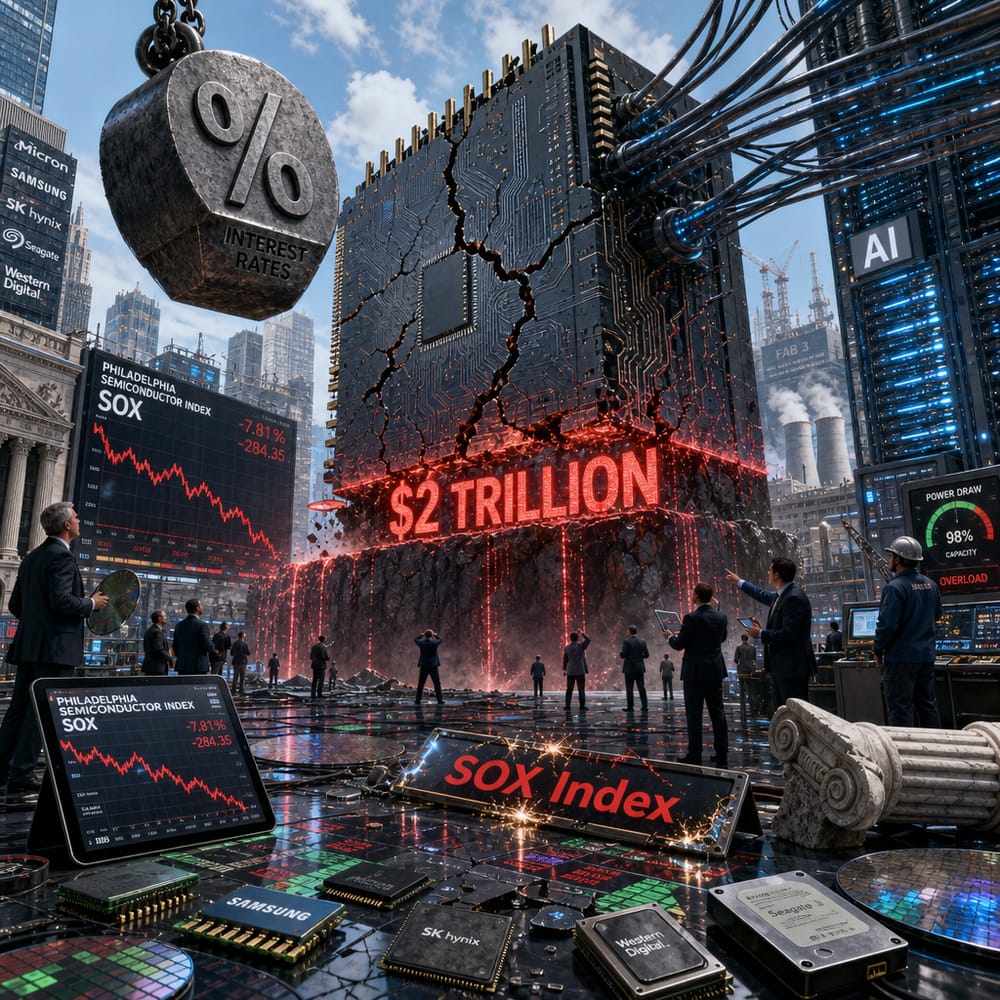
If you thought semiconductors were your ticket to ride the tech boom, buckle up because the ride just turned bumpy. The semiconductor sector, often hailed as the backbone of the modern tech world, is fretting as it braces for a $2 trillion market value nosedive. With the Philadelphia Semiconductor Index taking a plunge, what’s spooking investors, and how are chip giants planning to bounce back?
THE SPINNING WHEELS OF INTEREST RATES
First on the blame list is the pesky specter of rising interest rates. Just like a cat on a hot tin roof, investors are skittish when it comes to parting with their cash in a high-interest environment. When borrowing costs climb, businesses—much like anyone with a hefty credit card balance—get squeamish about spending. For semiconductor companies, that means putting expansion on hold, delaying hefty AI infrastructure investments, and potentially slamming the brakes on innovation.
THE AI INFRASTRUCTURE CONUNDRUM
Speaking of AI, it’s been the tech world’s glittering promise—a digital gold rush with dreams of self-driving cars, smart cities, and the like. But building the infrastructure needed for these AI dreams is burning holes in pockets faster than you can say "big data." Investors are now eyeing the whopping costs of AI infrastructure like a hawk, and they're not liking the view.
Recent sell-offs among tech giants like Nvidia, AMD, and Intel show just how jittery the market is. As these companies pour billions into AI and compete for Taiwan Semiconductor Manufacturing Co.’s sought-after chip-making capacity, investors are wondering if the AI gravy train might be running on borrowed time—and money. TSMC’s own woes about meeting the insatiable demand only add fuel to the fire.
SECTOR RESPONSES: STAYING AFLOAT IN CHOPPY WATERS
All the gloom doesn’t mean semiconductor companies are sitting on their hands. They're navigating these turbulent waters with strategic maneuvers. Companies like Micron and Samsung are re-evaluating their spending and focusing on efficiency. They’re playing a game of “how low can you go” with costs while keeping innovation alive. The challenge? Balancing the books without stifling the very creativity that keeps them relevant.
Then there’s the strategy of diversification. Companies are casting wider nets, exploring avenues beyond traditional chip manufacturing. They’re tapping into the demand for memory devices and getting creative with storage solutions to stay ahead of the curve.
THE BIGGER PICTURE
Let’s zoom out a bit. The semiconductor sector isn’t just another cog in the tech wheel; it’s the engine itself. Chips are in everything from your phone to that fancy electric car your neighbor just bought. A stumble in this sector can send ripples across the entire tech market, affecting everything from consumer electronics to cloud computing.
In the broader market, we’re seeing something of a tech exodus. Investors, lured by the siren call of stable, higher yields from bonds, are rotating their portfolios away from tech-heavy stocks. It’s like swapping a thrill ride for a Sunday drive—not as exciting, but a more comforting prospect in uncertain times.
PREDICTING THE BOUNCEBACK
So, where does this leave retail investors like you and me who are scrolling through updates, trying to make sense of it all? Well, the semiconductor sector has weathered storms before. The current challenges might dampen growth in the short term, but the demand for tech, chips, and AI is unlikely to disappear overnight.
For the hopeful, the dip could just as well be an opportunity. Keep an eye on how companies manage their AI investments and interest rate exposures. Watch for innovations in chip technology—they’ll be the bread and butter for a recovery. Meanwhile, remember that in investment, as in life, a little patience and a lot of strategy can go a long way.
In the end, the semiconductor saga is far from over. It’s a story of resilience, innovation, and the relentless pursuit of progress. So, stay tuned and keep your portfolios as nimble as a cat, ready to pounce on the next opportunity.
This article is for informational purposes only and is not investment advice. Always do your own research or consult a licensed financial professional before making investment decisions.
© Copyright 2024. All Rights Reserved.
© Copyright 2024. All Rights Reserved.