

Semiconductor Sector Bifurcation: Recent Snapback vs. Lingering AI Hype
Wednesday, August 19, 2026
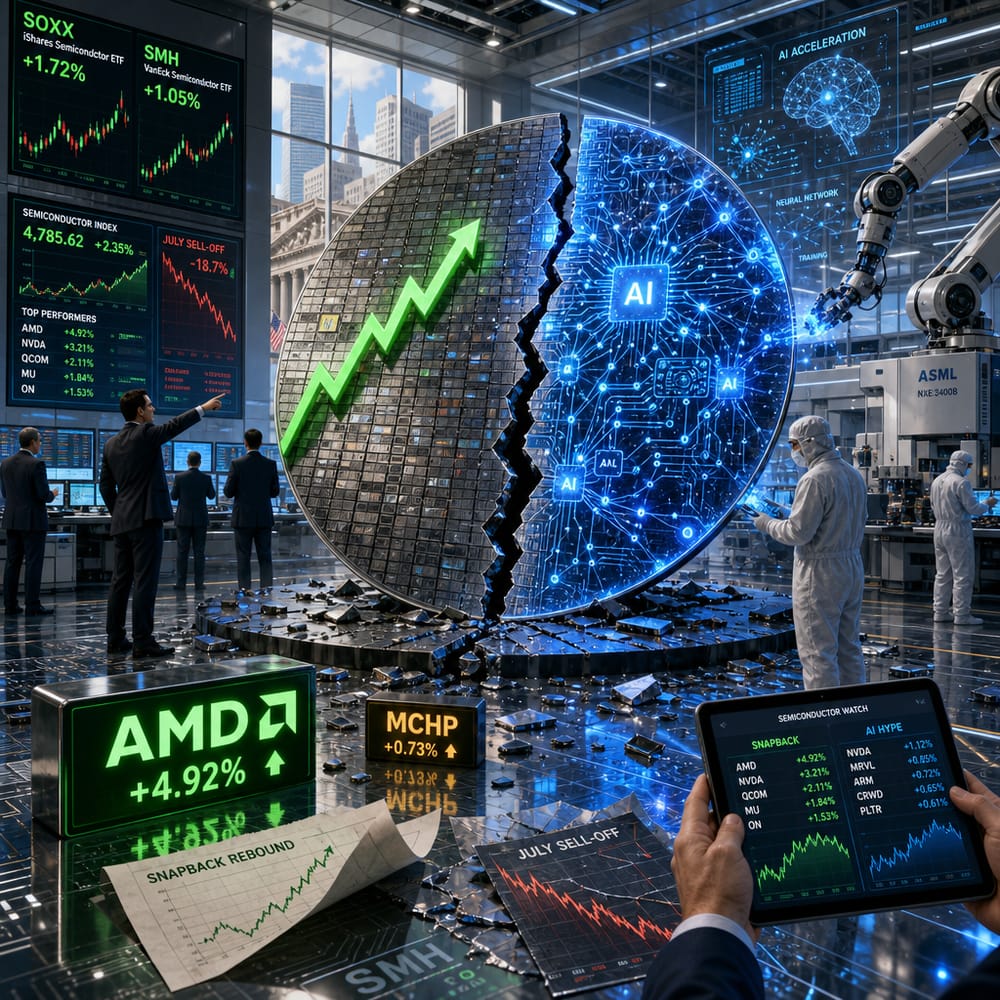
SEMICONDUCTOR SECTOR BIFURCATION: RECENT SNAPBACK VS. LINGERING AI HYPE
In the world of finance, few things swing as wildly as tech stocks—just ask anyone invested in a semiconductor company. One minute you're riding high on a wave of optimism, the next you're clutching your pearls as valuations tumble. But here's the latest twist: semiconductor stocks are back, sort of. Some players are snapping back like rubber bands, while others are still stuck in the post-July mud. The reason? All signs point to AI—yes, the same tech darling that’s been making headlines for months.
So, what’s cooking in the semiconductor kitchen? Let’s get into it.
AMD HAS THE MAGIC AI TOUCH
If you’ve been eyeing AMD, you’re probably in a good mood. The company’s stock has jolted back to life, driven by a glaringly optimistic outlook on artificial intelligence. While some might call it wishful thinking, there’s a method to this madness. AMD's chips are central to the AI revolution, which means they stand to benefit as demand skyrockets for machine learning capabilities. Investors are betting big that AMD is ready to ride the AI gravy train to new heights. It’s not gambling if you’re playing with the house’s chips, right?
But AMD isn’t alone on this ride. The iShares Semiconductor ETF (SOXX) and VanEck Vectors Semiconductor ETF (SMH) have also picked up momentum. However, they’re not quite hitting AMD’s pace. These broader ETFs tie their fortunes to the whole semiconductor sector—not just the AI stars. That's where selective optimism comes in.
THE HYPE MACHINE: NOT EVERYONE GETS A TICKET
While AMD and friends are lapping up the AI excitement, not every semiconductor stock is invited to the party. Microchip Technology Inc. (MCHP), for example, has been less sprightly. The reason? It’s all about visibility. Companies like AMD have the benefit of clear demand and a well-lit path forward. Investors can see how AI-related products will boost their bottom line. But for others, the AI boom is still shrouded in mist.
The semiconductor sector is splitting into haves and have-nots, with investor dollars flowing like water toward those with a clear AI strategy. It’s not that the rest are doomed—far from it. But they might need to restructure their roadmaps to grab a piece of the AI pie.
WHY IT MATTERS: THE BIGGER MARKET PICTURE
The semiconductor shake-up isn’t just a story about chips. It’s a microcosm of broader tech market dynamics. Artificial intelligence is the new gold rush, and everyone wants a piece. While companies scramble to position themselves as AI-friendly, investors are getting picky, backing only those showing promise and a solid strategy.
The situation reflects broader trends in AI spending across tech sectors. Businesses are willing to throw money at AI like it’s the last slice of pizza at a frat party. But they want assurance that what they’re getting is more than just flashy buzzwords—there needs to be substance. This selective approach is shaping the next wave of tech investments.
WHAT’S NEXT FOR INVESTORS?
So, where should you focus if you’re not already in the game? Look for companies that are not just capable of riding the AI wave but those that can do so profitably. Watch how these companies adapt and market their AI capabilities in an ever-crowded field. The ones that can clearly demonstrate their value proposition will likely see continued interest from investors.
And let's not forget about the bigger market backdrop. With government debt levels sky high and interest rates in flux, investor appetite is unpredictable. Companies that can pivot and leverage AI for sustainable growth will be the stars of tomorrow.
In this semiconductor drama, the final act is far from over. Keep an eye on the movers and shakers, and keep your investment strategy as flexible as the tech itself. After all, in the ever-evolving world of semiconductors, change is the only constant—and AI is their new leading role.
This article is for informational purposes only and is not investment advice. Always do your own research or consult a licensed financial professional before making investment decisions.
© Copyright 2024. All Rights Reserved.
© Copyright 2024. All Rights Reserved.