

Semiconductor Pricing Surge and Revenue Growth
Sunday, October 04, 2026
THE GREAT CHIP PRICE ROLLERCOASTER AND WHAT IT MEANS FOR YOUR WALLET
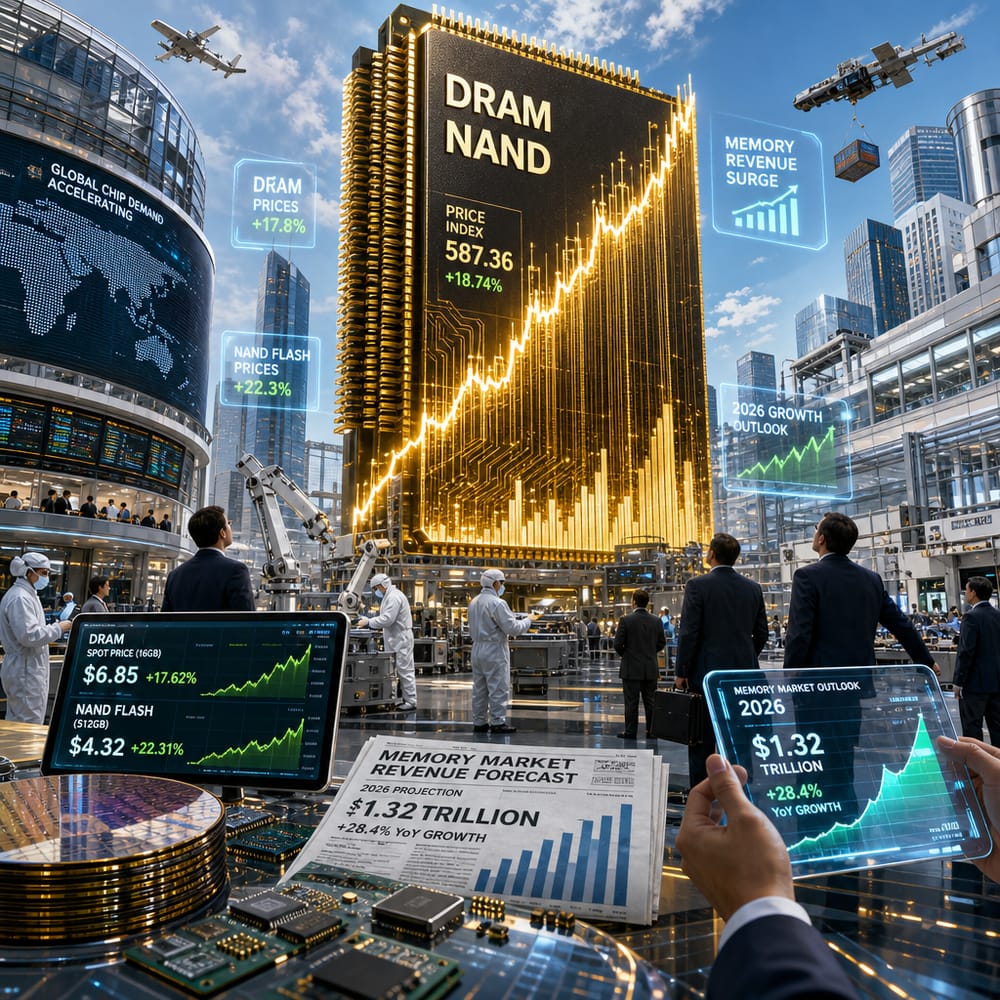
Stop whatever you're doing and take a deep breath — the semiconductor market is about to take you on a wild ride. Picture this: by 2026, not too far from now, the market is projected to swell by a jaw-dropping 64% to reach $1.32 trillion. But before you start polishing off your piggy bank to invest, let’s hack through the semiconductor jungle to see what’s really going on behind those eye-popping numbers.
DRAM AND NAND: THE DYNAMIC DUO DRIVING UP COSTS
The semiconductor stage is currently dominated by two headliners: DRAM and NAND flash. This dynamic duo is where the money is at, with their prices shooting skyward faster than a rocket loaded with Elon Musk’s dreams. Think triple-digit growth in memory revenue — it’s like finding out your penny stocks have sprouted into dollars overnight. But while chipmakers like Samsung and Micron are popping the champagne, the rest of the tech world is clutching their wallets.
Why the price surge? Blame it partly on the relentless rise in demand for AI and data centers. These massive corporate brainiacs are gobbling up memory chips like there’s no tomorrow. Add in a splash of supply chain snags and voilà: you've got a perfect price storm.
TECH COMPANIES: STRATEGY MEETS SCRAMBLE
Now, you might wonder, how are tech companies adjusting to this semiconductor sticker shock? Well, for players like Apple, Microsoft, and their peers, it’s a tightrope walk. Passing the costs onto consumers is tempting, but Jack and Jill from Main Street aren’t likely to shell out more for their gadgets without a fuss.
Some companies are getting crafty, cutting costs elsewhere, or even considering producing some chips in-house. This vertical integration may sound like a jargon-laden corporate fantasy, but it’s a legitimate long-term strategy to cushion against unpredictable price swings. Think of it as bringing your own lunch to work to avoid that pricey café next door.
IMPLICATIONS: MORE THAN JUST NUMBERS
Beyond the immediate chaos, these semiconductor shenanigans hold broader implications for the tech industry. For one, the price hike could deter innovation in smaller firms. If you're a startup trying to bootstrap your way to the next big thing, exorbitant chip prices can be a hard pill to swallow.
Moreover, with the tech landscape evolving at warp speed, the long-term outlook for many industries could shift. Automakers, gaming companies, and consumer electronics brands that rely heavily on chips might have to rethink their product strategies. Will your next car be a little less smart? Will gaming consoles hit pause on their evolution? Only time will tell.
LOOKING AHEAD: A TRILLION-DOLLAR QUESTION
So, where does this leave us? It's a trillion-dollar question looming over investors and tech firms alike. Yes, there’s a promise of monumental growth by 2026 and beyond, but the road is paved with potholes. Prices are expected to stabilize — but not before late 2027. Until then, those who can ride the wave might reap significant rewards, while others may find themselves paddling against the current.
The takeaway? Keep a keen eye on the semiconductor market. Whether you’re a retail investor looking to cash in or a tech enthusiast concerned about the price tag on your next gadget, these shifts could affect your plans. The semiconductor saga is far from over, and we’re all just along for the ride.
So, buckle up and stay sharp, because if this semiconductor rollercoaster has taught us anything, it’s that the only constant is change.
This article is for informational purposes only and is not investment advice. Always do your own research or consult a licensed financial professional before making investment decisions.
© Copyright 2024. All Rights Reserved.
© Copyright 2024. All Rights Reserved.