

Semiconductor Market Faces Volatility Amid Oil Price Surge
Sunday, August 16, 2026
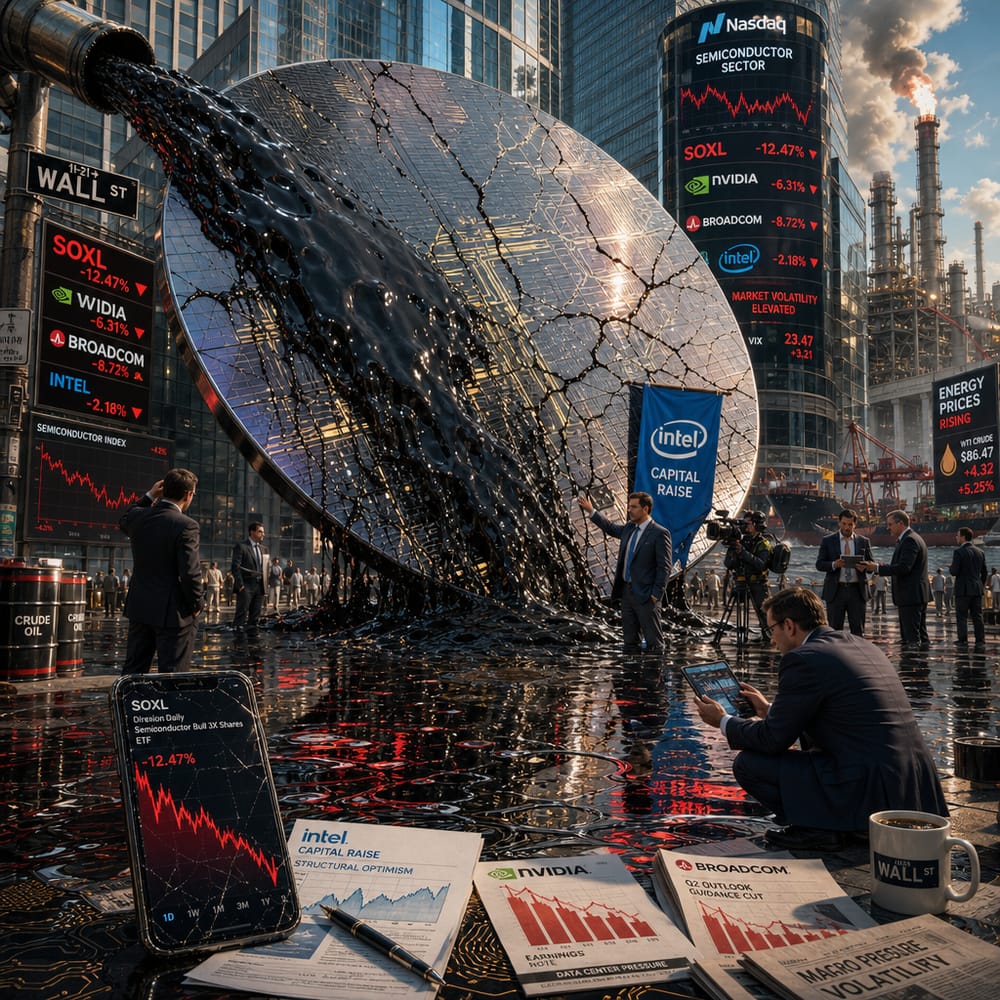
THE SEMICONDUCTOR MARKET'S OIL-INDUCED WHIPLASH
Just when you thought the semiconductor market was on a steady path, oil prices crash the party, sending shockwaves through the tech sector. It's like showing up to a black-tie event wearing flip-flops—awkward, disruptive, and definitely turning heads.
The world's insatiable thirst for oil has always had a peculiar way of trickling down into unexpected corners—like your favorite semiconductor stocks. Rising oil prices are now throwing cold water on what was a hot streak for semiconductors. Sure, this might sound like a head-scratching connection at first, but let’s break it down: when oil prices climb, transport and manufacturing costs take a hit. Add in the ripple effect on consumer prices, and you’ve got a cocktail of economic pressures that makes investors jittery faster than a double espresso.
WHAT'S OIL GOT TO DO WITH IT?
It's all about the domino effect. High oil prices lead to increased costs for shipping and production—think of the sheer volume of goods that need to get from point A to B. Semiconductor companies, like Intel and their friends Nvidia and Broadcom, are not immune. Their global supply chains can start to look a little shaky when fuel costs surge. The SOXL ETF, which bundles together a bunch of these semiconductor players, experienced a bit of a hiccup when oil prices decided to play hardball. Investors in tech stocks are suddenly seeing their portfolios react as if they’re on a roller coaster designed by an engineer with a twisted sense of humor.
It doesn’t help that these price hikes come packaged with broader macroeconomic pressures. With inflation flirting with uncomfortable highs, central banks are forced to wield interest rate hikes like they’re going out of style. More expensive borrowing and less consumer spending can create a tech sector slowdown, despite the fact chips are more in demand than ever (AI isn’t going to power itself, after all).
WHAT ABOUT INTEL'S BIG MOVE?
Then there's Intel, whose latest move is like the plot twist you didn’t see coming in a summer blockbuster. They pulled off a capital raise that’s got everyone talking—raising billions like they’ve discovered a secret stash of Monopoly money. This is stirring up optimism within industry circles. The company aims to pour this new capital into technological advancements, potentially easing some of the jitters surrounding the semiconductor landscape.
But what does this really mean for the industry? Think of it as a beacon of hope in a sometimes murky pool. If Intel can successfully leverage this capital to innovate and improve efficiency, imagine a world where those pesky manufacturing costs don’t sting quite so much. It's like when you find out your favorite coffee shop has finally lowered their prices—everyone wins.
But don’t break open the champagne just yet. Intel’s capital raise might stir up some optimism, but it doesn’t magically erase the broader economic pressures at play. It’s a double-edged sword: while investments might safeguard future growth and innovation, they need to be strategically aligned with market conditions that aren’t set to implode.
THE TAKEAWAY FOR INVESTORS
The semiconductor market’s dance with oil prices and macroeconomic pressures is a reminder of just how intertwined global economics can be. For retail investors scrolling through their feeds, this is the time to sit up and take notice. Keep an eye on those capital raises and watch how semiconductor companies maneuver through these volatile waters. Intel’s move could spark more strategic investments, but it won’t be a cure-all for the industry’s woes.
Whether you’re holding on to Nvidia, itching to buy some Broadcom, or eyeing the SOXL ETF, remember that the tech sector is as sensitive as a debutante at her first ball. Stay informed, be nimble, and don’t be afraid to reassess your positions if the market starts looking like it’s headed for a nosedive.
The semiconductor market is a thrilling ride, with all the ups and downs that keep life interesting. Just remember to fasten your seatbelt—it’s going to be one heck of a journey.
This article is for informational purposes only and is not investment advice. Always do your own research or consult a licensed financial professional before making investment decisions.
© Copyright 2024. All Rights Reserved.
© Copyright 2024. All Rights Reserved.