

Semiconductor Investment Credit Extension Moves Forward
Sunday, November 22, 2026
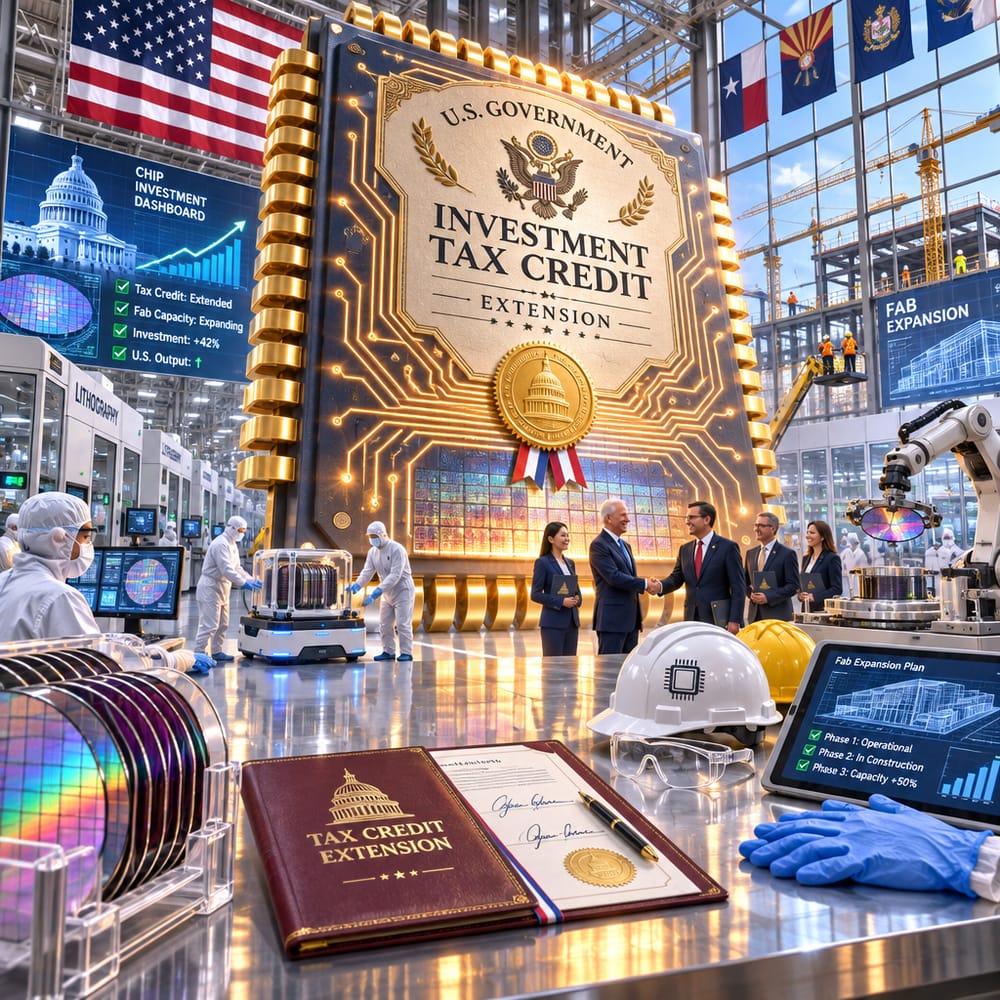
SEMI TO THE RESCUE: CHIP CREDIT EXTENSION POISED TO POWER UP U.S. MANUFACTURING
In a world where our smartphones practically know us better than our pets, and cars are starting to drive themselves, the chips that power these devices are the new oil. Just as the U.S. set its sights on being energy independent in the oil era, today it's all about semiconductors. The big news? A bipartisan group of lawmakers is looking to extend the advanced manufacturing investment tax credit for semiconductors, and it's more than just a policy tweak—it's a move that could turbocharge America's chip-making prowess.
Let's break this down: semiconductors are the beating hearts of every modern gadget. From your morning espresso machine to those fancy AI-driven robots on the factory floor, nothing runs without them. The U.S. has been lagging behind global competitors, especially China, in chip production, but this legislation aims to put America back in the race. How? By making it more enticing for companies to build and expand their semiconductor manufacturing facilities on U.S. soil.
THE MAGICAL TAX CREDIT
Think of this tax credit as the fairy godmother of the semiconductor industry—sprinkling financial incentives like fairy dust to create a thriving domestic chip ecosystem. The extension means companies investing in advanced manufacturing can get a sweet tax break, which often translates into more cash for innovation, expansion, and jobs. This isn't just about cutting corporate taxes; it's about supercharging an industry that's vital to national security and economic competitiveness.
WHAT'S IN IT FOR U.S. CHIP PRODUCTION?
If this extension passes, expect a flurry of activity. Imagine semiconductor companies revving up production, dusting off old plants, and hiring like it's a Black Friday sale. It’s the kind of boost that could help the U.S. regain its footing in the global semiconductor arena. The move is a clear signal to chipmakers: Uncle Sam wants you to stay and play—and he's willing to pay for it.
THE ECONOMIC RIPPLE EFFECT
For the economy, this could mean more than just new fabs (that’s industry speak for semiconductor fabrication plants) popping up. We're talking about a potential wave of job creation, from highly skilled engineering positions to construction jobs for building new facilities. And let's not forget the supply chain—materials, equipment, and even the local diner providing pancakes to early-morning workers—all stand to gain.
Moreover, boosting domestic chip production reduces dependency on foreign imports, which means less susceptibility to global supply chain hiccups. Remember the great chip shortage of 2021 that left car lots bare and frustrated gamers crying over empty shelves? More local production could be the antidote to such crises, providing a buffer against international disruptions and strengthening national security.
INVESTING IN SEMICONDUCTORS: A HOT TIP
For those eyeing the stock market with the intensity of a detective in a noir film, semiconductor stocks just got a brighter glow. Companies like Intel, NVIDIA, and Advanced Micro Devices (AMD) might be worth watching. They could benefit from the tax credit, which might bolster their balance sheets and stock prices.
However, don’t just throw your money at every chip stock that glimmers. Be savvy about which companies are poised to make the most of this environment. Think about who's investing in new facilities or expanding their footprint. The stock market is as unpredictable as a cat in a room full of rocking chairs—but this tax credit could be a tailwind for smart investors.
THE BIGGER PICTURE
Beyond the immediate economic and investment gains, there’s a grander vision at play. It's about securing America's place as a leader in technology and innovation, ensuring the gadgets and systems of the future are "Made in the USA." The future of autonomous vehicles, artificial intelligence, and even the defense sector hinges on having a robust, secure, and homegrown semiconductor industry.
In conclusion, this extension isn’t just a lifeline for semiconductor companies; it’s a strategic play to secure America’s technological future. As lawmakers hash out the details, investors and industry insiders will be watching closely, knowing full well that the stakes are as high as the potential rewards.
So, keep your eyes peeled and your chip stocks close—this could be the start of an American semiconductor renaissance.
This article is for informational purposes only and is not investment advice. Always do your own research or consult a licensed financial professional before making investment decisions.
© Copyright 2024. All Rights Reserved.
© Copyright 2024. All Rights Reserved.