

Semiconductor Export Controls Impact Global Supply Chains
Wednesday, November 25, 2026
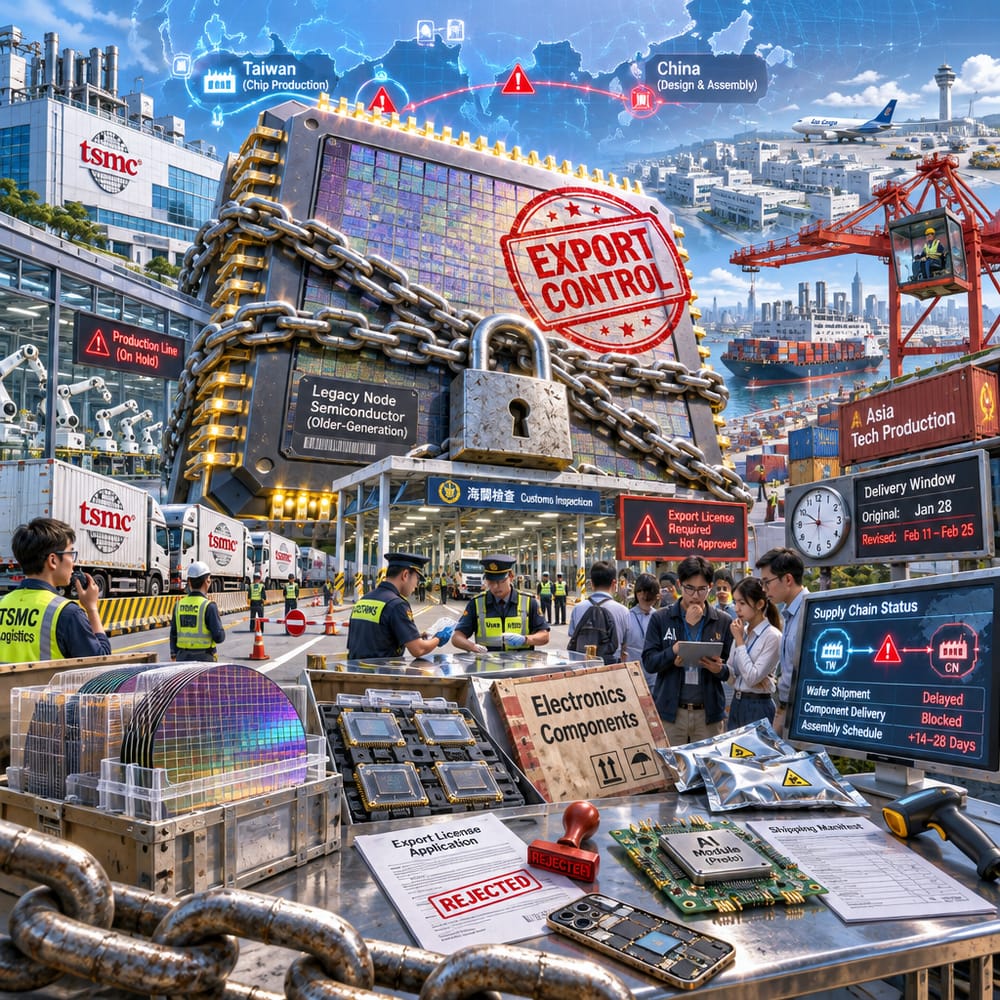
CHIP WARS: HOW NEW U.S. EXPORT CONTROLS ARE SHAKING UP THE GLOBAL TECH SCENE
If you thought the global tech scene was too quiet, buckle up—it’s about to get a whole lot noisier. Uncle Sam has dropped the hammer with strict export controls on older-generation semiconductor chips, and it's not just a pebble in the pond; it’s a boulder.
Picture this: Taiwan Semiconductor Manufacturing Company, or TSMC for short, is the rockstar of the chip world, cranking out silicon wonders that power everything from consumer gadgets to the sleek autonomous vehicles of tomorrow. But now, thanks to these new U.S. export controls, TSMC’s shipments to Chinese tech designers are in a bit of a chokehold. Cue the collective groan from tech startups across Asia.
But wait—why does it matter if these chips are older-generation? Well, not every device needs the silicon equivalent of a Lamborghini. Many tech companies, especially in China, rely on these tried-and-true chips for their products. Now, with the controls in place, the ripple effects could delay tech production across Asia, hitting the pause button on some of the hottest tech toys you didn’t even know you needed.
GLOBAL SUPPLY CHAINS GET A MAKEOVER
So how are these controls shaking up supply chains worldwide? In a word: dramatically. Imagine a giant game of Jenga with supply chains already teetering on the edge thanks to pandemic-related disruptions and geopolitical tensions. The removal of these crucial chips means tech companies might have to scramble to find alternative suppliers or, worse, face potential production slowdowns.
And it’s not just about gadgets and gizmos. If the delay hits consumer electronics, smartphones, and autonomous vehicles, those beloved devices might just get a bit more expensive—blame it on the supply-demand tango.
RIPPLE EFFECTS FOR TECH COMPANIES
For companies that bank on these chips, it’s time to revisit the strategy playbook. A prolonged shortage could mean halted production lines and unhappy customers. In the long term, this might push these companies to invest in R&D to develop alternatives or beef up relationships with other suppliers outside of China's sphere.
For instance, Chinese startups might look to domestic alternatives or neighboring countries for solutions. But that’s easier said than done. Building a robust supply chain takes time, money, and a dash of luck.
U.S.-CHINA TECH RELATIONS ON THIN ICE
This move is more than just a supply chain headache—it's a geopolitical chess match between two tech titans. It’s no secret that the U.S. and China are engaged in a high-stakes tech rivalry, with semiconductors being the jewel in the crown. By tightening the screws on chip exports, the U.S. sends a clear message: tech dominance is not up for grabs.
For Washington, this is about safeguarding national security and keeping cutting-edge tech out of potential adversaries' hands. But for Beijing, it’s viewed as a provocation, a hurdle thrown in the way of its tech ambitions.
So, what happens next? Well, the ripples from this decision are bound to spread far and wide. Companies, investors, and even consumers will be watching the fallout closely.
BOTTOM LINE
In the short run, prepare for some turbulence—and maybe say goodbye to that shiny new gadget you were hoping to unwrap next holiday season. In the long run? The landscape of global tech is shifting, and it will be fascinating to see how the industry adapts to this new normal.
Keep your eyes peeled, because these moves are just the opening salvo in what’s shaping up to be a decade-defining tech tug-of-war. And like all great battles, it’s bound to get a lot messier before it’s over.
This article is for informational purposes only and is not investment advice. Always do your own research or consult a licensed financial professional before making investment decisions.
© Copyright 2024. All Rights Reserved.
© Copyright 2024. All Rights Reserved.