

Semiconductor ETF Faces Unprecedented Losing Streak
Sunday, November 15, 2026
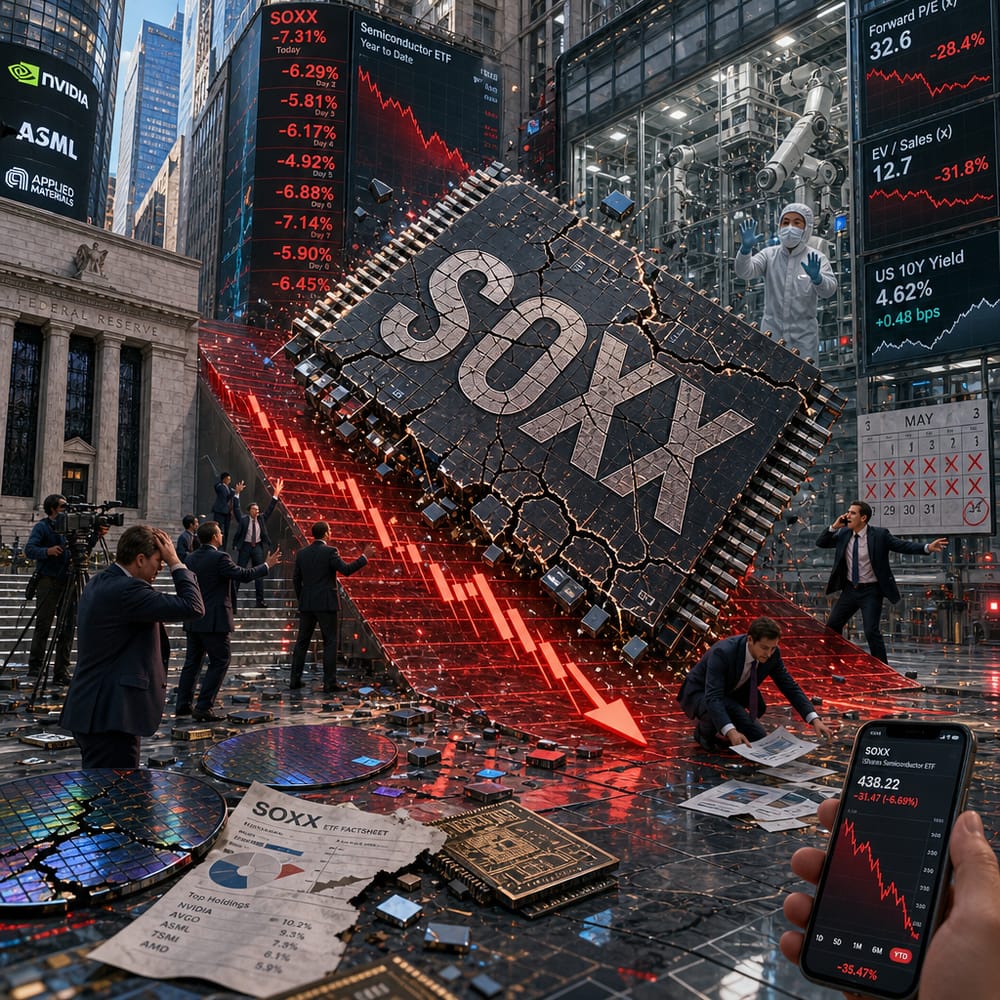
SEMICONDUCTOR ETF FACES UNPRECEDENTED LOSING STREAK
If you're a retail investor who's been riding the semiconductor wave, you might want to hold onto your chips—things are getting a bit shaky. The iShares Semiconductor ETF, ticker SOXX, has hit a rough patch, stumbling into its longest losing streak since the forgettable days of 2015. If this ETF were a trending meme, it would be the “this is fine” dog surrounded by flames. So, why is the semiconductor sector suddenly getting the cold shoulder from investors, and what does that mean for your portfolio?
Let's dive into the reasons behind this downturn, how it might mess with investor sentiment, and whether we're looking at a sector rotation away from semiconductors.
FIRST, THE OBVIOUS: VALUATION WOES
Semiconductor stocks have been on a blastoff trajectory, fueled by the AI boom and our insatiable demand for all things tech. But here's the catch—what goes up must eventually hit the ceiling. With valuations soaring, investors are hitting pause, wondering if they've been caught in a bubble larger than a tech CEO's ego. Prices need to justify the hype, and when they don't, well, that's when the sell-off begins.
The sky-high valuations could mean the end of the semiconductor feeding frenzy. Investors are re-evaluating and, like a first-time skydiver peering over the edge, some are deciding to inch back.
MACROECONOMIC WOES ARE RAINING ON THE PARADE
If the valuation issue wasn't enough, let's sprinkle in some good old macroeconomic uncertainty. Interest rates are rising faster than a TikTok trend, and every tick upward makes borrowing more expensive. With central banks clamping down on inflation like a determined parent confiscating a teenager's phone, the market is feeling the pinch. When money gets tight, tech and semiconductor stocks often get squeezed hardest, as they’ve been the high-flying favorites of the easy-money era.
On top of that, geopolitical frictions are adding drama worthy of a daytime soap opera. Trade tensions and tech export restrictions, especially concerning China, are a major part of the playbook weighing on investor minds. If you thought your last family gathering was awkward, imagine trade negotiations with critical chip supplies at stake.
SEMICONDUCTOR SHUFFLE: TIME FOR A SECTOR ROTATION?
So, are investors ready to ditch semiconductors and move on to the next big thing? It's possible. Sector rotation is the stock market’s version of musical chairs, where investors shift money from one sector to another, usually to find better returns or to dodge incoming storm clouds.
Recent trends suggest a move towards value stocks—think utilities and financials—away from the high-octane, high-risk tech territory. Essentially, it's trading in your sports car for a station wagon; less exciting, but purportedly safer and more reliable.
WHAT DOES THIS MEAN FOR INVESTORS?
If you're holding semiconductors in your portfolio, you might feel like you're riding a rollercoaster that's suddenly experienced a power outage. But before you hit the panic button, remember this: the semiconductor sector is notoriously volatile, and losing streaks, while unsettling, aren’t unprecedented. It’s all about the long game.
Look at the fundamentals. Despite the current downturn, the demand for semiconductors is hardly disappearing. Your smart fridge, electric car, and even your friendly AI assistant aren’t going to power themselves. The sector’s long-term prospects are still solid, even if the short term is giving you heartburn.
That said, diversification is your financial BFF. If your portfolio is too tech-heavy, consider spreading the love across different sectors. That way, when one section of the market trips, you’re not falling flat on your face.
In conclusion, the semiconductor ETF losing streak might be a wake-up call to reassess where the wind is blowing in the investment world. Whether it’s a fleeting hiccup or the start of a sector swap, only time will tell. For now, stay informed, stay calm, and remember: in the investing world, patience often pays off better than panic.
This article is for informational purposes only and is not investment advice. Always do your own research or consult a licensed financial professional before making investment decisions.
© Copyright 2024. All Rights Reserved.
© Copyright 2024. All Rights Reserved.