

Semiconductor Equipment Weakness Sparks Sector Rotation Risk
Friday, August 21, 2026
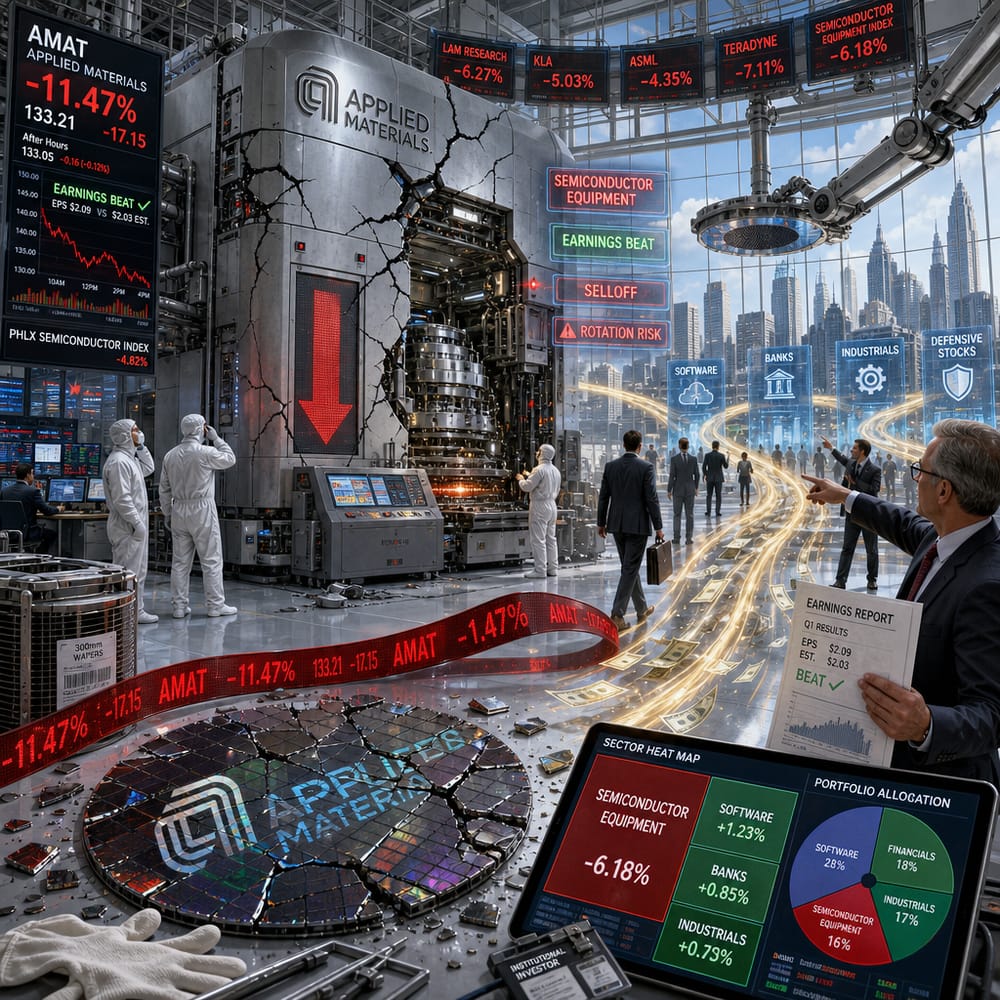
When it comes to Wall Street drama, the recent earnings report from Applied Materials (AMAT) was less "happy ending" and more "plot twist." Imagine you’re at the movies, popcorn in hand, expecting the hero to save the day, only for the film to cut to black. That's what investors experienced when AMAT's shares took a nosedive, even after financial figures beat expectations. So, what's the real story behind this unexpected twist, and what does it mean for the tech sector's future?
THE PLOT THICKENS
To understand the drama, let's recap the tale. Applied Materials, a heavyweight in the semiconductor equipment space, recently released an earnings report that should’ve been a golden ticket. They surpassed Wall Street expectations, but instead of applause, the market responded with a sell-off. Investors dumped AMAT shares faster than you can say "sector rotation." The result? A chilling concern that the semiconductor equipment sector could be heading towards chilly waters.
So what gives? Well, it's a classic case of Wall Street having a "what-have-you-done-for-me-lately" mindset. While Applied Materials delivered better-than-expected numbers, investors were more focused on the forecast. And that's where the worry set in. The outlook hinted at a slowdown in demand for semiconductor equipment, primarily driven by companies pulling back on AI-driven capital expenditures. It seems the love affair with AI might be cooling off, at least for now.
THE RIPPLE EFFECT
Now, if you're wondering whether this is just a single cloud in AMAT’s sky, think again. This sentiment could very well spread across the entire semiconductor equipment sector. Companies like Lam Research and KLA, which share the stage with AMAT, might soon find themselves in the spotlight with the same plot twist. If the sector sees a broader pullback, it could spell trouble for tech stocks that have been riding high on the AI wave.
It's like the domino effect but with more zeros on the balance sheet. If investors start pulling funds from AI-focused stocks, where does the money go? Likely, into non-tech sectors where valuations appear more grounded and less like a tech-fueled fever dream.
IMPLICATIONS FOR TECH
But hold on, before you panic and start reallocating your tech investments, let’s consider the broader implications. This potential sector rotation might sound ominous, but it could be a natural recalibration. Tech stocks have been on a meteoric rise, but gravity always has its say. A rotation might stabilize valuations, allowing for sustainable growth. Think of it as tech stocks getting a chance to catch their breath.
Plus, while the semiconductor equipment sector might be seeing a slowdown, it’s not the end of the road for technology. Companies that pivot and innovate could still come out as winners. The tech sector is historically resilient, known for its ability to adapt and thrive despite shifts in investor sentiment.
WHAT'S NEXT?
For retail investors watching this spectacle unfold, it’s crucial to keep a level head. Remember, market narratives are as changeable as the wind. Today it’s semiconductor equipment, tomorrow it could be biotech or solar energy. Diversification remains the name of the game—spread your investments across various sectors to mitigate risk.
Also, don’t lose sight of the long-term picture. While today’s headlines might seem ominous, the broader tech sector still holds promise. Consider focusing on companies that demonstrate adaptability and innovation rather than getting caught up in short-term noise.
In summary, the AMAT sell-off isn't just an isolated event; it’s a plotline in the grand saga of market movements. As with any good drama, the key is to stay engaged, informed, and ready for the next twist. Whether it's a cliffhanger or a resolution, one thing's for sure: the financial markets will keep us on the edge of our seats.
This article is for informational purposes only and is not investment advice. Always do your own research or consult a licensed financial professional before making investment decisions.
© Copyright 2024. All Rights Reserved.
© Copyright 2024. All Rights Reserved.