

Semiconductor Equipment Stocks Plunge on China Lithography News
Wednesday, July 29, 2026
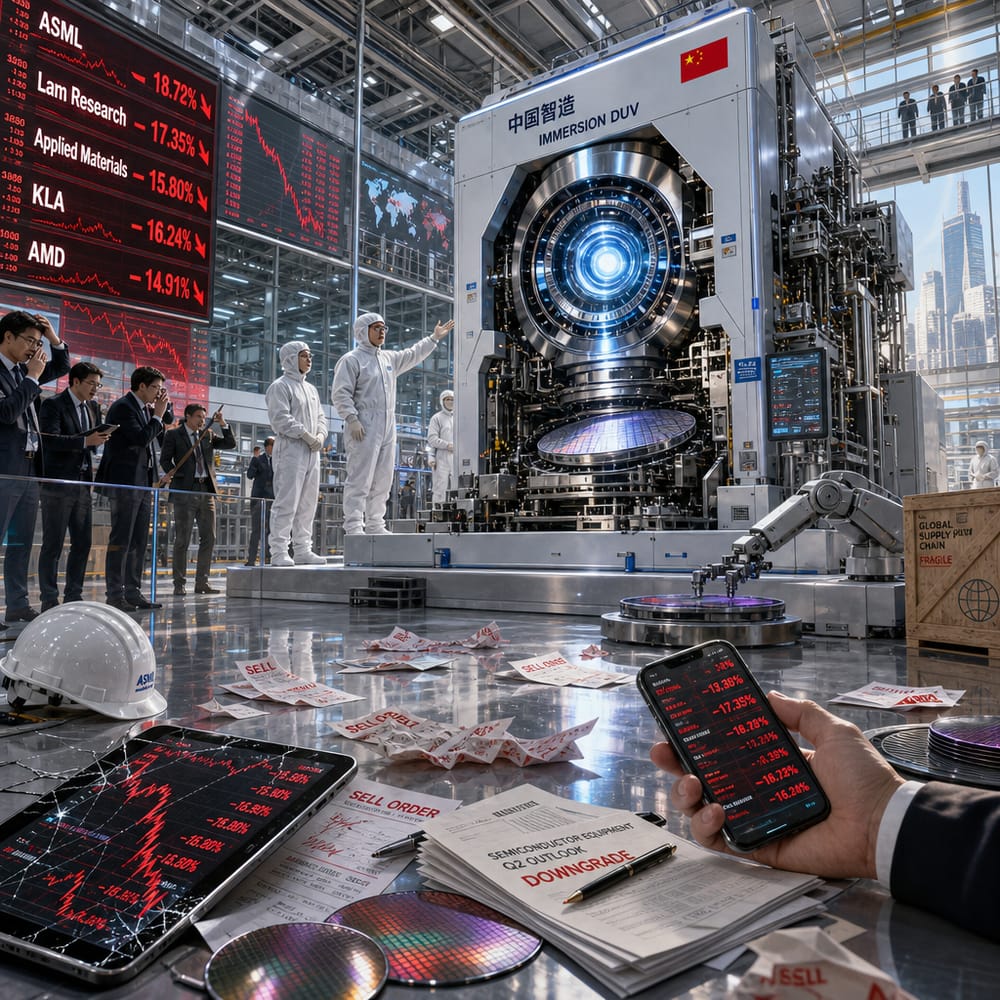
SEMI-CONDUCTORS SHOCKER: WHEN CHINA DECIDES TO PLAY HARD BALL
We all love a good plot twist, right? Well, in the world of semiconductors, the plot just thickened in a big way. China has thrown a massive curveball, leaving major semiconductor equipment stocks, like ASML and Lam Research, scrambling for cover. Here’s the scoop that’s got the tech world buzzing: China has reportedly mastered the art of making immersion DUV (deep ultraviolet) lithography machines. This isn’t just a cool tech tidbit; it's a seismic shift in the global chip game.
China cracking the lithography code is like a rookie team suddenly developing a game-changing playbook—no one saw it coming, and now the big players are a bit on edge. Why, you ask? Because these machines are the golden geese of the chip manufacturing process. They’re crucial for making the advanced chips that power everything from your iPhone to AI robots.
THE STOCK MARKET TREMORS
As soon as this news hit the wires, it was panic stations for some of the big boys in the chip-making business. Stocks of semiconductor equipment companies nose-dived faster than you can say “supply chain disruption.” ASML, the Dutch company known for its cutting-edge lithography machines, took a hit as investors realized China’s new capabilities could mean stiffened competition and potential loss of market share.
Lam Research and Applied Materials, both kings of semiconductor equipment, also felt the burn. Their stocks tanked as investors worried about what this new development means for their lucrative businesses. And let’s not forget KLA, a major player in the semiconductor game, which saw its stock drop as well. It’s clear that Wall Street is sweating bullets over what a China-driven shake-up could entail.
WHAT DOES THIS MEAN FOR GLOBAL SEMICONDUCTOR COMPETITION?
In the tech world, competition is fiercer than a Black Friday sale. Up until now, the U.S. and its allies have held the semiconductor industry's reins, with companies like ASML leading the charge in lithography tech. China's new move into lithography could upend this balance, giving them a strategic edge and potentially disrupting the established pecking order.
For years, China has been trying to become self-sufficient in semiconductor production. This development could be their ticket to not just self-sufficiency but dominance. If China can produce these chips in-house, U.S. companies might find themselves out in the cold, losing a significant chunk of their market.
IMPACT ON U.S. TECH COMPANIES
The ripple effects of China’s lithography leap could be vast and varied. For one, U.S. tech companies that rely on semiconductor imports could face increased costs or even supply shortages. Companies like AMD, which need a steady stream of cutting-edge chips, might have to rethink their strategies. And let’s not forget the broader tech sector, which could see increased costs that might get passed down to consumers—cue the groans.
Moreover, with a new player in the game, U.S. companies might need to ramp up innovation and efficiency to maintain their market positions. This could mean increased investments in R&D or even strategic partnerships with other countries to counterbalance China’s growing influence.
THE LONG-TERM OUTLOOK
Sure, China’s newfound lithography prowess is shaking up the market today, but what about tomorrow? For starters, this could lead to a significant reshuffling in global supply chains. Countries that relied on Chinese semiconductor imports might find themselves at the mercy of Chinese pricing and policies.
On the flip side, this development might spur the U.S. and its allies to double down on their tech and manufacturing capabilities. It could be the push needed to boost semiconductor production within the U.S., something lawmakers and industry leaders have been advocating for years.
In the world of semiconductors, just like in life, the only constant is change. This latest twist adds a layer of complexity and intrigue to the global chip market that will keep investors, companies, and consumers on their toes. Grab the popcorn, because this semiconductor saga is just getting started.
This article is for informational purposes only and is not investment advice. Always do your own research or consult a licensed financial professional before making investment decisions.
© Copyright 2024. All Rights Reserved.
© Copyright 2024. All Rights Reserved.