

Semiconductor Divergence: Broadcom and AMD Rally While Micron and Intel Slip
Wednesday, October 07, 2026
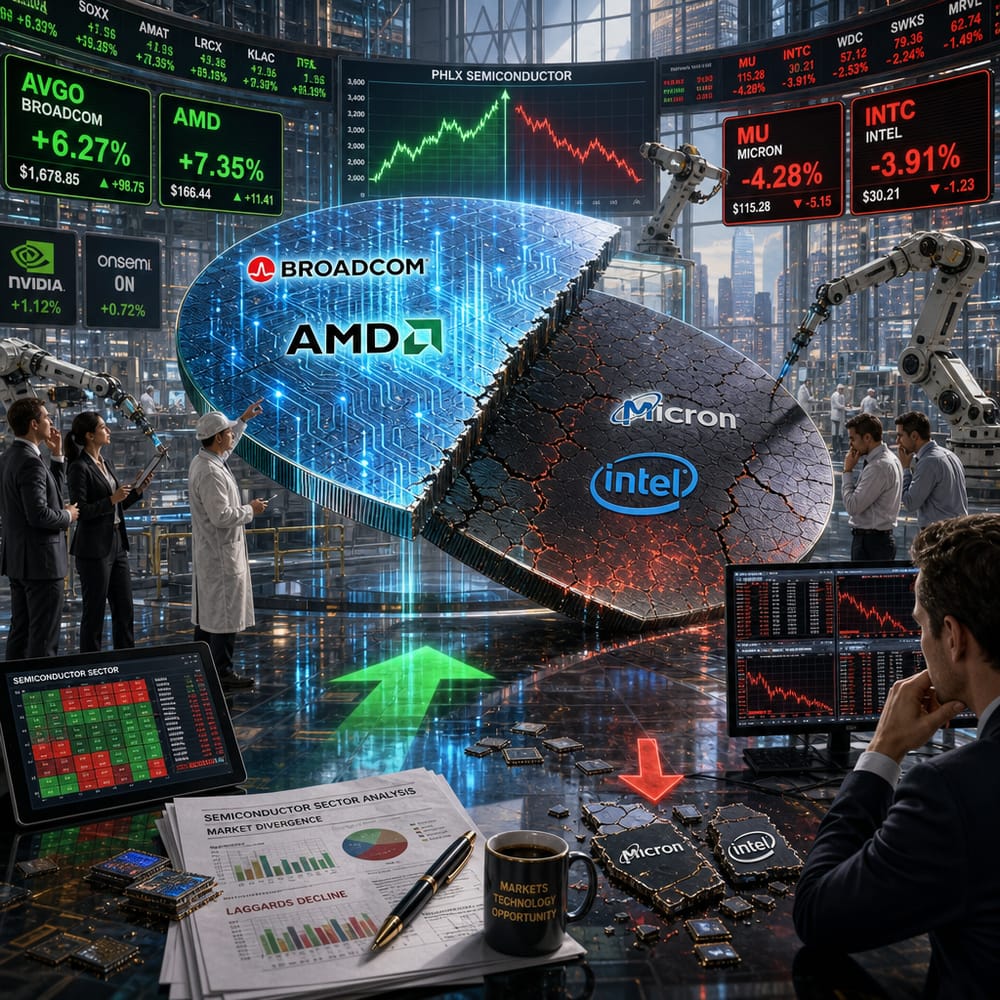
BROADCOM AND AMD'S RAPID RISE: WHY MICRON AND INTEL ARE LEFT IN THE SEMICONDUCTOR DUST
If you thought semiconductors were just tiny, boring chips in your gadgets, think again. They're the heartbeat of the tech world, and right now, two giants are racing ahead while others stumble. Broadcom and AMD are having a moment, basking in Wall Street's spotlight. But Micron and Intel? They're puzzling analysts with performance that's, well, less than electrifying. So, what's driving this split in the semiconductor cosmos? Let's peel back the layers of silicon to find out.
First, let's talk about this semiconductor rally. Broadcom and AMD are living it up like it's 1999. Broadcom's secret sauce? A robust pipeline of hot products, from data center chips to 5G technology. And as the world gets more connected (hello, Internet of Things!), Broadcom's wares are in high demand. This isn't just about riding the tech wave; it's about surfing it with style—with a well-diversified portfolio that's resonating with investors.
AMD, on the other hand, is the comeback kid of the year. Once the perennial underdog to Intel's top dog status, AMD's chips have gained traction across PCs and data centers alike. Their latest products are stealing the show with high performance and efficiency, something businesses can't get enough of, especially with the current buzz around AI and machine learning. It's AMD's renaissance, and they're thriving in the high-stakes poker game that is the semiconductor industry.
Now, let's pivot to Micron and Intel, the underperformers in this chip charade. For Micron, it's a classic case of right product, wrong time. The memory chip maker has been caught in a perfect storm of oversupply and weaker demand. The result? Prices dropping faster than you can say "NAND flash." While Micron’s investments in DRAM and NAND technology are solid, the market dynamics have been less than kind. It's a waiting game for them, and patience is thin in the fast-paced world of tech.
Intel, meanwhile, is wrestling with its own set of challenges. The once-unstoppable juggernaut is struggling to keep pace with the industry's pivot towards high-performance computing. Intel's next-gen chip delays have left the door wide open for AMD to swoop in and snap up market share, which they're doing with glee. While Intel is scrambling to regain its footing with promises of new innovations, the market isn't waiting around, and neither are its competitors.
So what does this semiconductor schism mean for you, the savvy investor? It's a reminder that in tech, not all ships rise with the tide. Individual company performance, not just broad sector rallies, is driving stock movements in this space. This means that investors need to sharpen their focus on company-specific factors rather than leaning on the assumption that all semiconductor stocks will move in unison.
The future is a high-wire act for these semiconductor players. Broadcom and AMD need to keep innovating to stay ahead, while Intel and Micron must strategize and adapt to changing market demands. For investors, it’s about picking the right horse in this high-tech race—a decision that's as much about understanding the market landscape as it is about reading the tea leaves of technological trends.
In the end, whether you're betting on Broadcom's diversified growth or rooting for AMD's underdog triumph, or you're holding out for Intel and Micron to make a comeback, there's one thing that's clear: The semiconductor sector is as dynamic and unpredictable as ever. And that means plenty of excitement—and opportunity—on the horizon for those ready to dive into the details. So buckle up and keep those investment portfolios as nimble as the chips that power your favorite gadgets.
This article is for informational purposes only and is not investment advice. Always do your own research or consult a licensed financial professional before making investment decisions.
© Copyright 2024. All Rights Reserved.
© Copyright 2024. All Rights Reserved.