

Semi Stocks Retreat as AI Capex Concerns Return to Forefront
Sunday, July 26, 2026
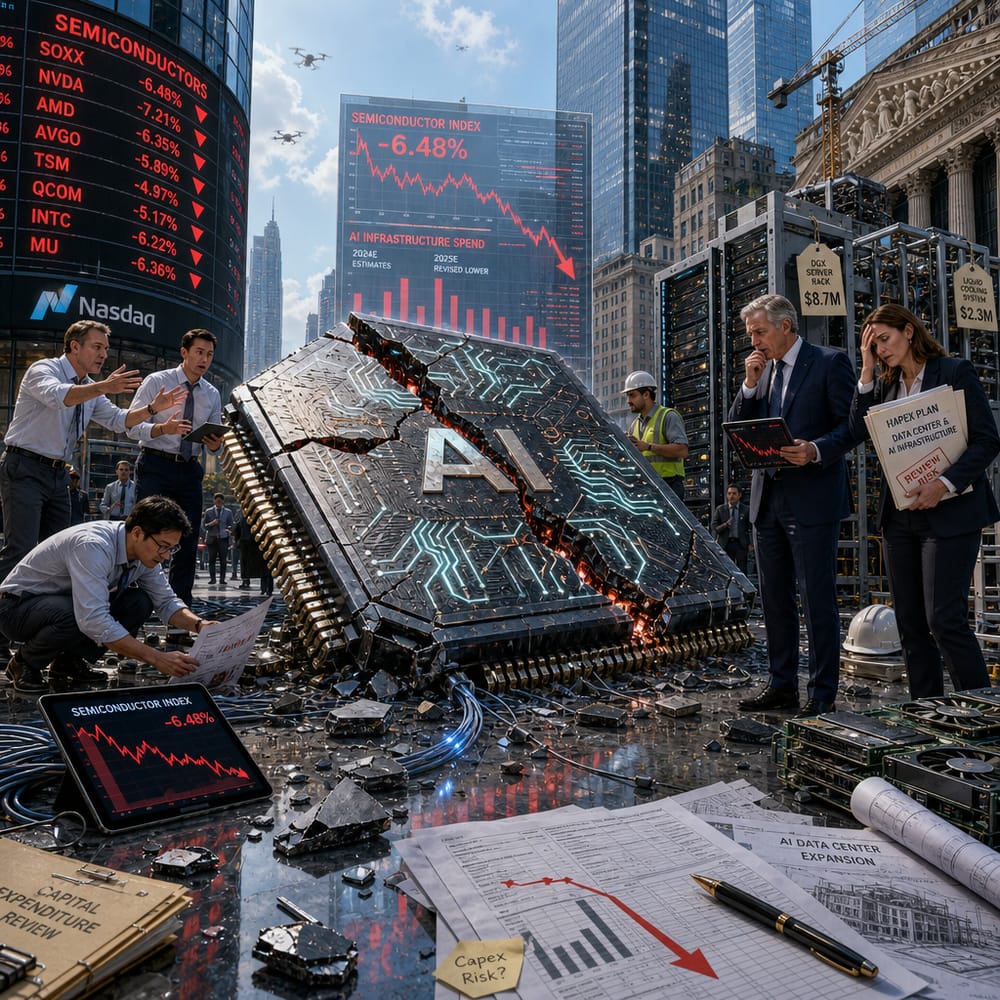
SEMI STOCKS IN A SEMI-PANIC: AI CAPEX SPENDING SENDS SHIVERS THROUGH THE TECH WORLD
If you felt a sudden chill in the tech stock air this morning, you're not alone. Investors in the Philadelphia Semiconductor Index just cranked up the AC on their anxiety settings amid fresh fears surrounding AI capital spending. The chip sector, often seen as the fiery heart of tech's advance into artificial intelligence, is having a bit of a panic attack—and for good reason.
But why does AI spending hold this much power over semiconductor stocks? To understand that, picture the semiconductor companies as the unsung roadies of a grand AI concert. Sure, the AI itself—the flashy frontman—is what gets all the glory. But without the roadies' expertise in setting up, there wouldn't even be a stage to begin with. Semiconductors are those crucial backstage passes, making the AI show possible by powering everything from data centers to the latest machine learning algorithms. If there's hesitation on AI spending, these stocks feel the burn.
Now, the big question: why are the chips down? Picture a cautious gambler's hand hovering over his chips, hesitating to place that next big bet on AI's future. There's a growing concern about how much companies are willing to shell out on AI infrastructure. The tech industry is caught in a tug-of-war between the dizzying potential of AI and the sobering costs of making it a reality. When companies worry about their AI spending, semiconductor stocks break out in a cold sweat.
The broader implications for the tech sector are seismic. Just as a rock band without its roadies would struggle to strum a single chord, the entire tech ecosystem leans heavily on AI's promises and pitfalls. And when semiconductors start to tremble, you can bet the rest of tech starts to listen. After all, these chips are the unsung heroes powering the latest innovations, from self-driving cars to that app on your phone that guesses what you're craving for dinner.
The AI buzzword du jour is "distillation," a process where big AI models are trimmed down to be more efficient without losing their punch. This trend is picking up steam like a beach bonfire but is also prompting some existential questions about AI's future costs and scalability.
Meanwhile, Nvidia, one of AI's star players, just secured a beefy $500 billion commitment from South Korea's SK Hynix to ensure a steady flow of essential components. It's the semiconductor equivalent of a power play, locking in resources to keep their AI ambitions chugging along while the rest of the market clutches their pearls. If Nvidia is any indication, those who can lock in their supply chains are ready to roar past the AI slow lane.
On the political front, you’ve got President Trump firing up tariffs like it’s an Olympic sport, potentially adding more heat to an already volatile tech landscape. Tariffs can drive up costs for the components that semiconductors need, adding another layer of stress to an already jittery sector.
So, what does this mean for you, the retail investor just trying to navigate the wild world of tech? Keep an eye on AI spending and semiconductor stocks as bellwethers for the tech sector's health. Companies might tap the brakes on AI spending or gear up for another colossal push. Either way, the semiconductors will be the first to let you know how much gas is really left in the AI tank.
As you scroll through your investment options, remember that the tech market isn't just about the flashy innovations—it’s also about the crucial groundwork laid by those unsung semiconductor heroes. And when their fortunes sway, it’s time to pause and consider what that might mean for your portfolio.
In the end, the rallying cry is clear: Keep your hitched wagon close to the AI train, but don’t ignore the roadies making the journey possible. That’s where the real action—and potential profit—lies.
This article is for informational purposes only and is not investment advice. Always do your own research or consult a licensed financial professional before making investment decisions.
© Copyright 2024. All Rights Reserved.
© Copyright 2024. All Rights Reserved.