

Sector Rotation: Tech Gains, Defensive Rise
Thursday, August 13, 2026
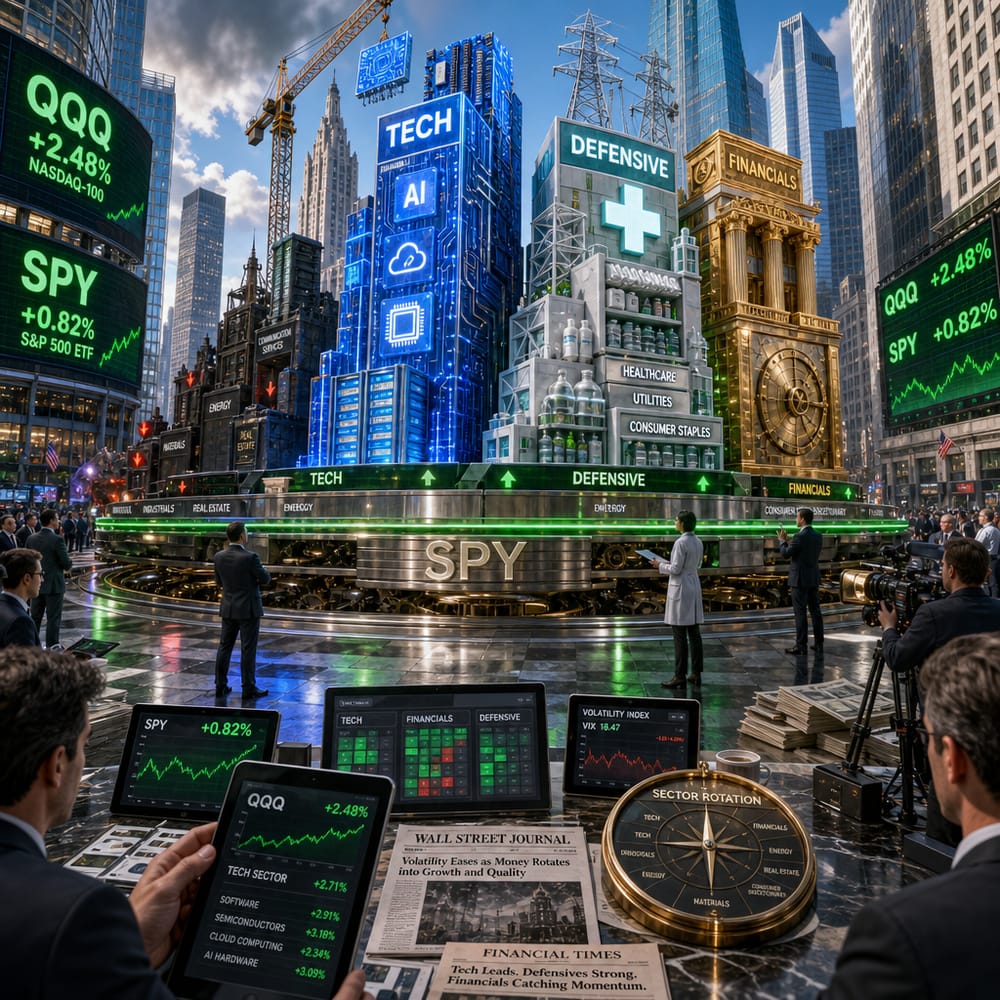
SECTOR ROTATION: TECH GAINS, DEFENSIVE RISE
Picture the market as a giant dance floor at a never-ending party. Investors bust their moves to the beat of the economy, shuffling back and forth as the DJ—Mr. Market—changes the tune. Lately, the DJ has spun a mix that's got everyone talking: a heavy tech beat with a side of smooth defensive vibes. And just when you thought financials were sitting out, they're back on the floor, making their presence known.
So, what's causing this dance of sectors? In simple terms, it's all about the rhythms of risk and reward. Uncertainty has shadowed the global economy like a moody club spotlight, and when investors feel uneasy, they tend to gravitate towards tech—ever the star of the modern market—and defensive stocks that offer stability when the world goes topsy-turvy.
Tech stocks, embodied by giants populating the QQQ ETF, are all the rage. Why? Let's just say it's not because they learned new dance moves overnight. The artificial intelligence boom is turbocharging growth, as companies like Databricks draw in massive investments to fuel their AI ambitions. But don't get too starry-eyed—remember Steve Eisman's warning: the AI bandwagon might be propped up by a couple of big players like OpenAI and Anthropic. If any cracks appear in their glossy facades, it could send the tech party-goers scrambling for the exits.
Then there's the rise of the defensive sectors, your classic party guests who avoid drama and prefer to sip their drinks in peace. These include utilities and consumer staples—think toilet paper and toothpaste—essential goods you need regardless of whether the market's having a good day or a bad hair day. With economic clouds gathering, investors are tucking these stocks into their portfolios for a bit of calm in the storm.
How can you, dear investor, shimmy to this market rhythm? Look at the mix of tech and defensive sectors, and consider adjusting your portfolio to match the market's two-step. Tech offers growth, sure, but it's as volatile as a teenager's TikTok feed. Be strategic—consider exposure through an ETF like QQQ for a diversified tech play. And don't forget about defensive stocks; they might just cradle your portfolio with a safety net when the market decides to throw a tantrum.
Stepping into financials, these Wall Street versions of comeback kids have been gaining traction amid the wider market hullabaloo. The SPY, a proxy for the broader market, reflects this renewed interest. As interest rates linger in the higher zone, banks and financial institutions stand to benefit from the improved lending margins. Keep an eye on these as they pivot into the spotlight.
But remember, no investment dance is without its risks. The market's current playlist is influenced by inflation whispering sweet nothings one moment and screaming alarm bells the next. While the recent data suggests a cooling of price increases, inflation is like that ex who keeps texting—annoying and hard to ignore. The Federal Reserve's next move on interest rates will likely sway investor sentiment, affecting everything from your mortgage to your favorite meme stock.
Then there's the geopolitical backdrop—a never-ending reality show with tension in the Middle East impacting oil prices and economic stability globally. Not to mention, the looming threat of climate disruptions and technology-centric policy shifts could trip up even the most well-choreographed investment strategy.
In navigating these waters, retail investors should stick to a strategy that balances growth potential with stability. The dance floor will always be crowded, and the music ever-changing, but understanding sector rotation gives you the clarity to pick your partners wisely. After all, in the great investment ballroom, it's all about finding the right rhythm and doing the tango with confidence, no matter what tune the DJ decides to play next.
This article is for informational purposes only and is not investment advice. Always do your own research or consult a licensed financial professional before making investment decisions.
© Copyright 2024. All Rights Reserved.
© Copyright 2024. All Rights Reserved.