

Sector Rotation Spotlight: Energy Outperforms, Materials Trails
Friday, November 13, 2026
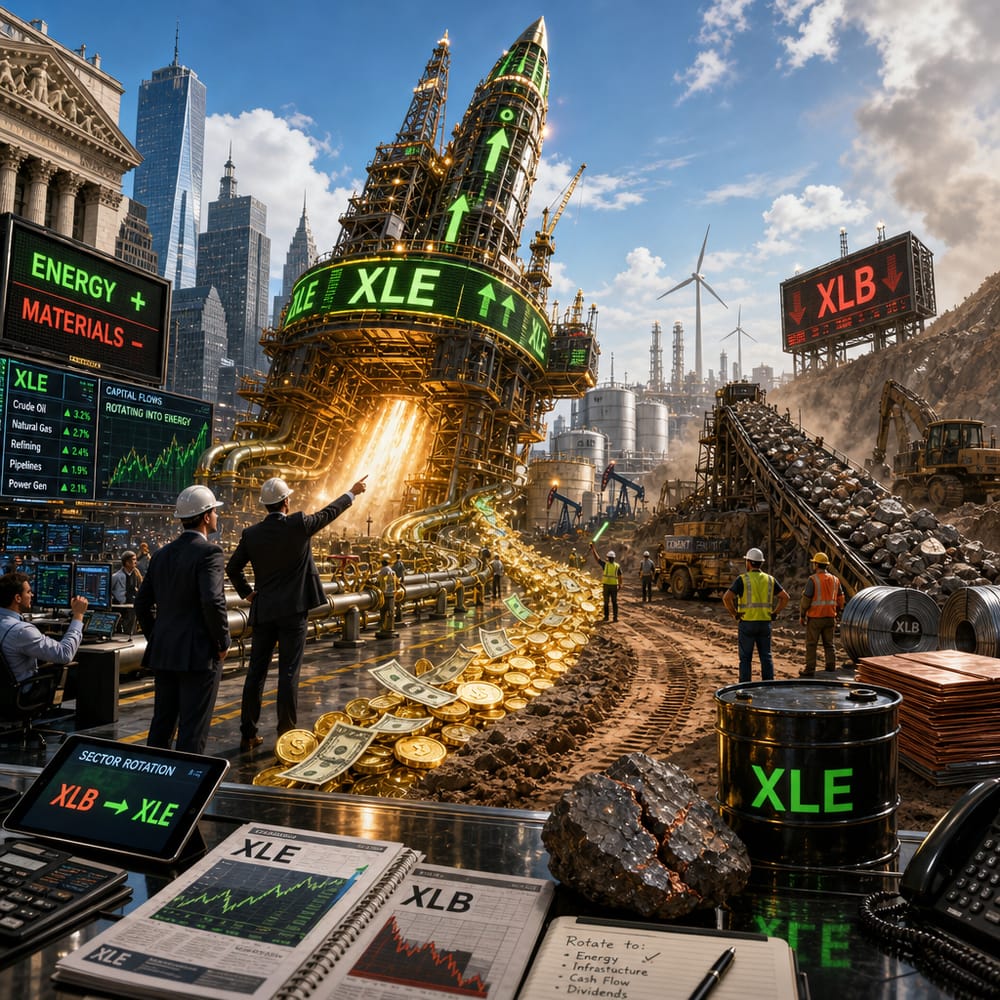
SECTOR ROTATION SPOTLIGHT: ENERGY OUTPERFORMS, MATERIALS TRAILS
In the world of investing, there’s nothing quite like the thrill of the chase—the hunt for the next big sector ready to roar. Right now, the spotlight is shining brightly on energy. But hold your applause, because while energy stocks are basking in the glow, materials are being left in the dark.
CAPITAL FLOWS: THE PLOT THICKENS
So, why is everyone buzzing about energy? Well, it’s all about where the money's moving. Picture this: capital—the lifeblood of markets—is shuffling its way from materials (think metals and mining) into energy (think oil and gas). Some might call it a sector rotation, which is finance-speak for investors shifting their bets to a different industry. But why exactly is energy gaining the upper hand?
THE CASE FOR ENERGY
Let’s peel back the layers. Energy stocks are having their moment, and here’s why. First, stability is sexy. As the global economy grapples with uncertainty—be it geopolitical headaches, inflation jitters, or the ever-loopy interest rates—investors are eyeing energy as a safe harbor. It's the classic "defensive play," in which investors seek out sectors that can weather economic storms. Energy fits the bill because it powers our lives, whether the economy is booming or tanking.
Moreover, oil's price dance also plays a starring role. Despite the International Energy Agency's whispers of a surplus as Gulf exports rebound, energy prices are still juicy enough to draw in investors hunting for yield. When oil prices are up, energy companies rake in the cash, making stocks in this sector more appetizing.
But let’s not polish the apple too soon. There’s always a catch, right? Geopolitical tensions can swing energy prices unpredictably. Not to mention that the push for renewable energy is a long-term trend that could slowly shift the sector's dynamics.
WHO BENEFITS?
Now, if you’re wondering which energy stocks could potentially make your portfolio smile, keep your eyes peeled for stalwarts like ExxonMobil and Chevron. These heavyweights have the broad shoulders to carry the load when the going gets tough. Then there’s the Energy Select Sector SPDR Fund (XLE), a way to hedge your bets across various energy companies without putting all your eggs in one basket.
MATTERS OF MATERIALS
So, what about materials? Why are they yesterday’s news? When the economy slows or wobbles, the demand for materials like metals and chemicals tends to dip. This is because these industries are the building blocks of growth—literally. When growth stutters, there’s less call for constructing new buildings or manufacturing new goods. Plus, with energy prices in the spotlight, the cost of raw materials is another headache for companies in this sector.
THE BIG QUESTIONS
But before you dive headfirst into this energy pool, pause to ponder a few key questions. Is this rotation into energy sustainable? Are we looking at a short-term knee-jerk reaction, or is this a new normal? As tempting as the current returns might be, investors should weigh the risks. Many are drawn to the potential yield, but energy prices can be as fickle as a cat on a hot tin roof.
Moreover, what happens if political winds change? What if the push toward renewables accelerates faster than projected? Energy giants are aware of this shift, with many investing in green alternatives. However, transitioning from oil rigs to wind farms isn’t a quick switch.
FINAL THOUGHTS
For the everyday investor scrolling through their newsfeed, the energy sector’s current performance might seem like an irresistible opportunity. But it’s essential to balance the allure of short-term gains with the awareness of long-term trends. As with any investment, understanding the underlying forces and potential risks is crucial before you put your money to work. So, while energy might be the star of today’s show, keep in mind that in the stock market, the only constant is change.
This article is for informational purposes only and is not investment advice. Always do your own research or consult a licensed financial professional before making investment decisions.
© Copyright 2024. All Rights Reserved.
© Copyright 2024. All Rights Reserved.