

Sector Rotation Potentially Reversing: AI Theme Cooling
Tuesday, August 04, 2026
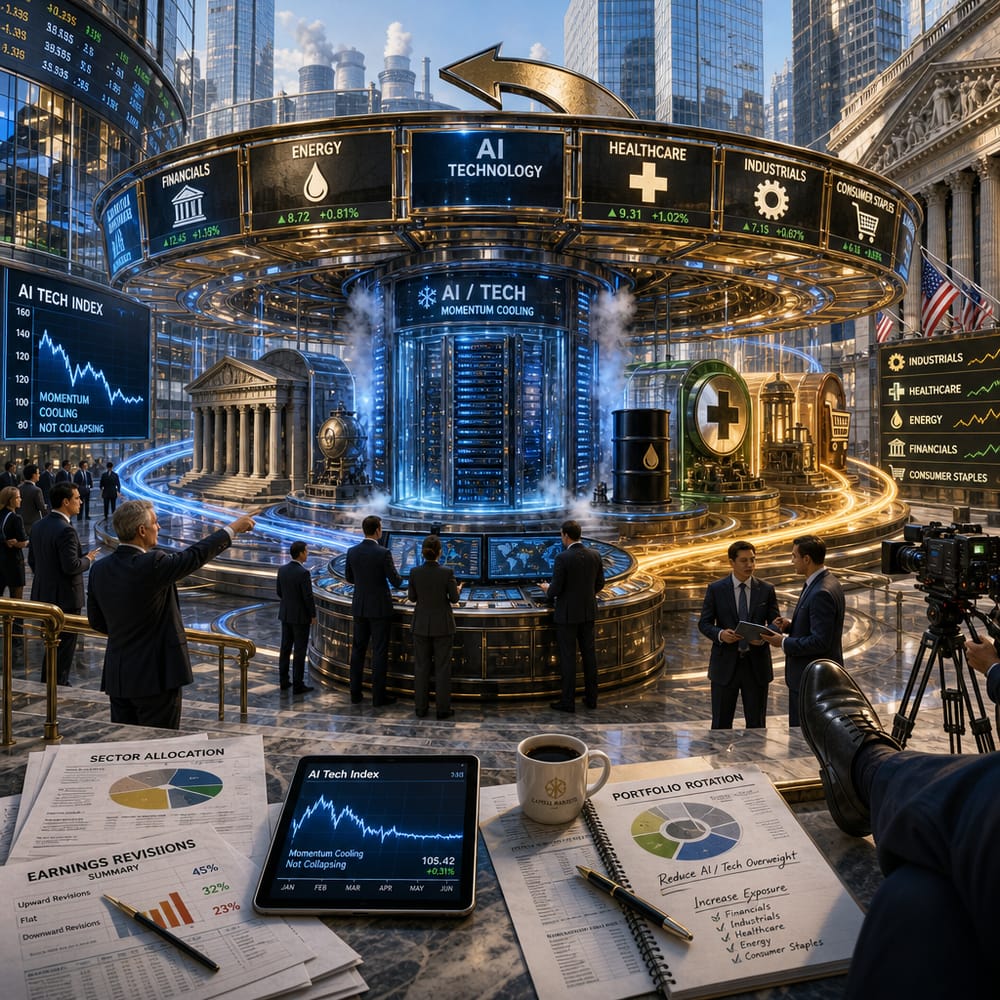
THE AI BUZZ: ARE TECH STOCKS COOLING OFF?
Hot take: If you threw a dart at the stock market this past year, chances are you'd hit something with "AI" in its name. But hang on to your drones and driverless cars, folks—because the AI stock party may be winding down. Yes, the red-hot AI theme that had retail investors' hearts racing and tech stocks soaring is showing signs of cooling. Is it time to swap your tech-heavy portfolio for something a little less glittery? Let's dig in.
Imagine the stock market as a dance floor. For a while, AI-related tech stocks were the only ones busting moves, and everyone wanted to dance with them. But now, just maybe, the DJ's changed the beat, and the tech crowd is starting to lose its rhythm. Recent market commentary suggests that the rotation out of AI-related tech stocks might be winding down. We could be in for a new round of sectoral musical chairs.
SO, IS THE AI THEME REALLY COOLING?
There's no denying AI's been the hottest ticket in town. But as with any trend, what goes up must come down, or at least pause for a coffee break. Palantir's recent surge—up 12% after a blowout quarter—shows there's still fire in the AI engine, but it doesn't paint the full picture. Jim Cramer's observation that Amazon's Andy Jassy managed to calm Wall Street's jangled nerves about AI investments is telling. It reveals a market that might be getting just a little anxious about the vast amounts of cash being sunk into AI, waiting for those promised returns.
The market's skepticism isn't entirely unfounded: Questions linger about whether these tech mega-investments will indeed generate the returns investors are hoping for. If the AI hype dial gets turned down a notch, don't be surprised.
WHO STANDS TO GAIN FROM THE AI COOL-DOWN?
If AI-related tech stocks are stepping off center stage, who might be ready to steal the spotlight? Enter the real world. Energy stocks have been basking in the glow of rising oil prices, thanks to geopolitical tensions like the ongoing U.S.-Iran saga, sending companies like BP and Saudi Aramco soaring. With oil prices shooting up faster than a SpaceX rocket, energy could be a sector ready to take the lead.
And then there's the timeless allure of gold. With Deutsche Bank forecasting a bullish end-of-year scenario, gold is gleaming brighter than ever. If tech's not your jam, shiny metals could be your new BFF.
Meanwhile, consumer staples and utility stocks—those boring but reliable players in your portfolio—might just get their own moment in the sun as investors look for stability amidst the tech turbulence.
WHAT'S THE BIG PICTURE?
Sector rotation isn't just a fancy Wall Street term—it's the market's way of keeping things balanced and fresh. It's like switching up your workout routine so your muscles don't get bored. Understanding these shifts can help investors anticipate who's going to be next in line for the market's spotlight.
Whether you're looking to hedge your bets or pivot your portfolio, paying attention to these sectoral shifts can be a game-changer. If AI's cooling off, don't panic. It could be the perfect time to get in on some undervalued sectors before they're the next big thing.
THE FINAL WORD
The AI theme's potential cooling isn't the end of the world. It's the market's way of telling us that it's time for something new. There's still opportunity in tech, especially for companies like Palantir and Amazon, which are finding ways to showcase meaningful returns on their AI investments. But don't ignore the potential in other sectors that might be ready to shine.
The market is an ever-evolving organism. Keep your eyes peeled and your investment strategy flexible. Whether you're an old hand or a retail newbie, understanding the dance of sector rotation could help you not just survive but thrive in ever-changing market conditions.
This article is for informational purposes only and is not investment advice. Always do your own research or consult a licensed financial professional before making investment decisions.
© Copyright 2024. All Rights Reserved.
© Copyright 2024. All Rights Reserved.