

Sector Rotation: Materials and Industrials Gaining Traction vs. Energy Lagging
Tuesday, October 13, 2026
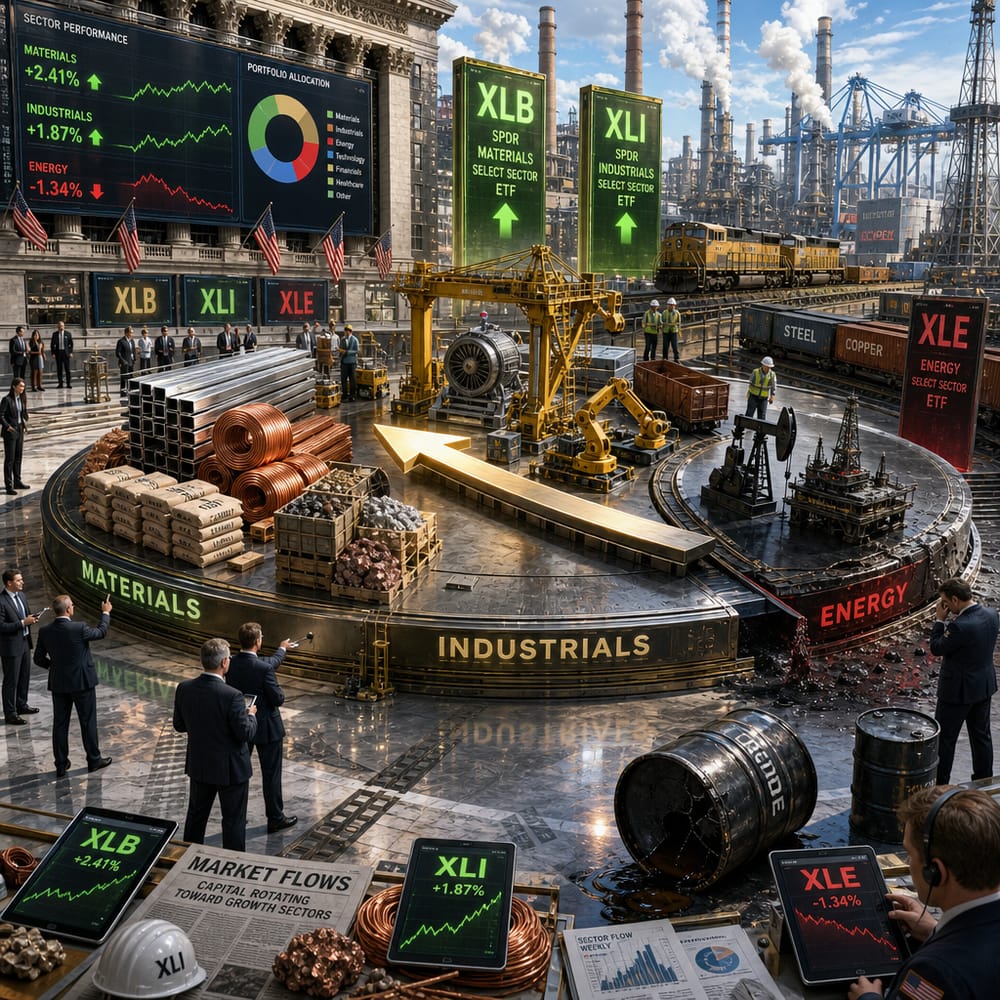
ENERGY’S SLIDE, MATERIALS’ RISE: THE NEW DANCE FLOOR IN SECTOR ROTATION
Grab your hard hat and buckle up! If you’re tired of watching your portfolio fizzle while Energy throws tantrums, it’s time to shake things up. Over the past few months, a dramatic rotation in sector focus has been unfolding, with Materials and Industrials taking the spotlight while Energy lags like a marathoner with a twisted ankle. So why is this happening, and more importantly, how can you hitch a ride on this fresh wave? Let’s dive in.
The story starts with the proverbial winds of change. As oil prices shuffle and trip over geopolitical chess matches — see Saudi Arabia’s oil output dance-off with Iran and murky Russian diesel deals — the Energy sector finds itself left in the dust. Investors are pulling their dollars faster than a magician with a tablecloth trick. But what are they eyeing instead? Enter Materials and Industrials, strutting down Wall Street’s runway like they own the place.
So, what's driving this shift? It all boils down to where we are in the economic cycle. Think of it as an economic version of musical chairs. We’re late in the game, and with interest rates stabilizing after their relentless climb, the stage is set for a cyclical recovery. Materials — the gritty backbone of industries like construction — are often first to feel the love when folks start talking about building and expansion. And let’s not forget Industrials, which swoop in to build the bridges and skyscrapers of our dreams.
Now, let’s talk stocks. For those who like their investments with a side of security, the Materials Select Sector SPDR Fund (XLB) is a good look. This ETF tracks the performance of big players in the materials sector, and it’s on a roll. With housing markets slowly waking up from their hibernation, companies like Vulcan Materials — think gravel and sand on steroids — are looking strong. And if you’re feeling adventurous, consider Albemarle Corporation, one of the world's preeminent lithium suppliers. With electric vehicles zipping into the mainstream, lithium is making a case for itself as the new oil.
Slide over to Industrials (XLI), and there’s no shortage of potential head-turners. Consider Honeywell International, a jack-of-all-trades conglomerate with fingers in aerospace, building technologies, and performance materials. And then there’s Caterpillar, the iconic yellow machine titan. With infrastructure projects rolling out like red carpets post-pandemic, heavy machinery is not just practical — it’s essential.
But before you leap, how long is this trend likely to stick around? Sector rotations can be as fickle as fashion trends, but current signals suggest this could be more than a seasonal fling. With global infrastructure spending forecast to rise and the U.S. economy showing resilience despite looming tech stock offerings, the Materials and Industrials sectors may enjoy an extended honeymoon.
Yet, caution is the name of this game. Just because Materials and Industrials are the new darlings doesn’t mean you should go all in. Keep an eye on geopolitical developments and macroeconomic indicators. These sectors can be sensitive to shifts in government policies and global trade dynamics. And watch out for potential bumps in the road, like rising raw material costs or supply chain hiccups that could trip up their newfound momentum.
So, should you jump on the rotation bandwagon? If your portfolio’s been lagging, diversifying with a sprinkle of Materials and Industrials might just give it the kickstart it needs. But as always, do your homework. Keep your finger on the pulse of these sectors, watch the movers and shakers, and stay nimble.
In the end, investing is all about riding the right waves at the right time. As Energy catches its breath and Materials and Industrials gather steam, the dance floor is open, and the music’s loud. So, lace up those investment shoes, and get ready to groove. Who knows, this might just be the beat your portfolio needs.
This article is for informational purposes only and is not investment advice. Always do your own research or consult a licensed financial professional before making investment decisions.
© Copyright 2024. All Rights Reserved.
© Copyright 2024. All Rights Reserved.