

Sector Rotation: Materials and Housing ETFs Outperform
Friday, November 27, 2026
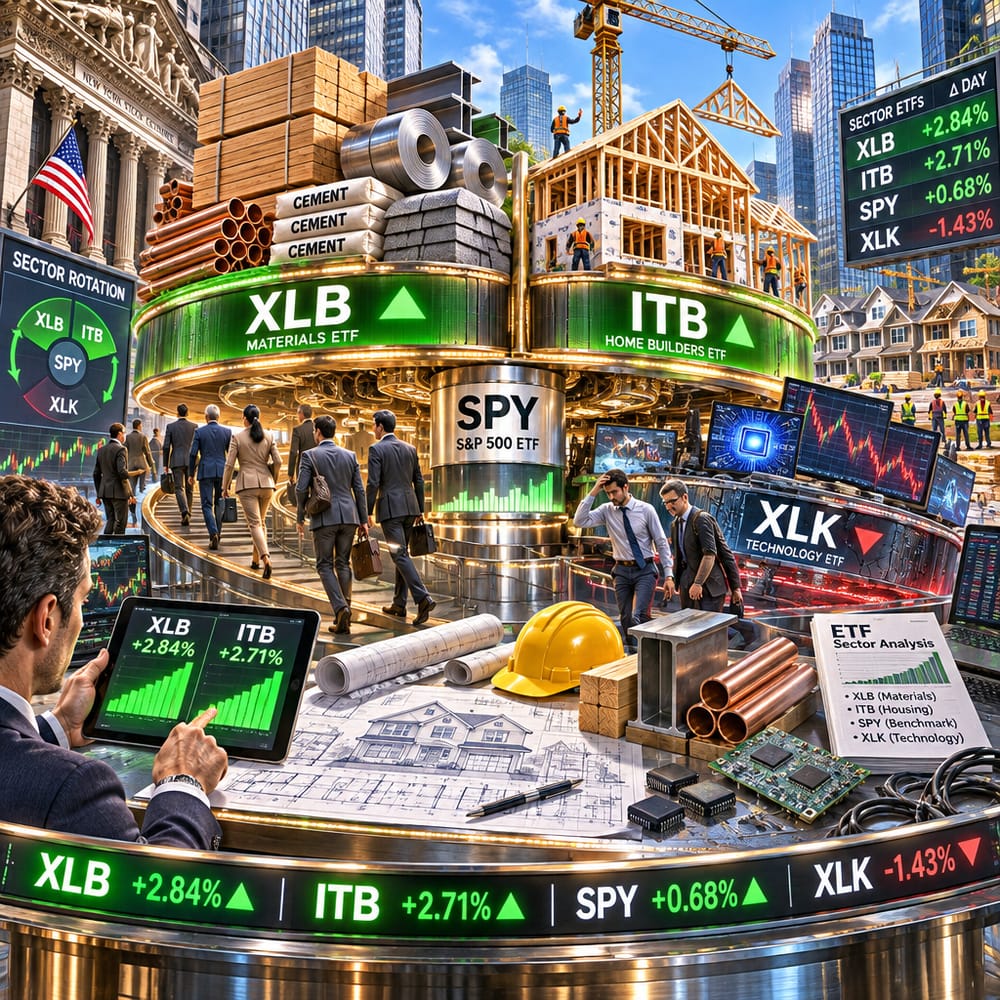
THE GREAT SECTOR ROTATION: WHY MATERIALS AND HOUSING ETFS ARE ALL THE RAGE
Forget about the latest iGadget or AI breakthrough—right now, the smart money is pouring into bricks and sticks. While the tech titans are dealing with a rollercoaster of volatility that makes Space Mountain look like a kiddie ride, something interesting is happening in the markets. Materials and housing ETFs are having a moment, leaving the tech-heavy S&P 500 eating their dust. It's like the tortoise and the hare story, with a Wall Street twist.
But why the sudden love affair with cement and two-by-fours? It turns out, there’s a method to this madness, and it’s all about strategic sector rotation.
THE ART OF SECTOR ROTATION
In the investment world, sector rotation is like trying to pick the fastest lane in rush hour. Investors switch lanes—or sectors—based on what they think will arrive first, or in this case, outperform. Recently, the Materials Select Sector SPDR Fund (XLB) and the iShares U.S. Home Construction ETF (ITB) have been getting the green light, while the tech sector, represented by the Technology Select Sector SPDR Fund (XLK), is stuck in traffic.
The reason? It’s all about finding stability in chaos. As tech stocks have resembled a ping-pong tournament on caffeine, investors are seeking refuge in less volatile, more cyclical areas like materials and housing.
MATERIALS MATTER
Why are materials suddenly the belle of the ball? Think of it as a global treasure hunt for resources. Infrastructure spending is soaring, especially with governments around the world doubling down on construction projects to boost economic growth. From bridges to broadband, these projects need raw materials, and lots of them.
Plus, with geopolitical tensions and supply chain hiccups refusing to quit, investors are eyeing materials as a hedge against uncertainty. XLB has become a favorite for those who believe that the building blocks of the economy will always be in demand.
HOMES ARE WHERE THE HEART IS
Meanwhile, housing is firmly back in vogue. After some turbulence, the housing market seems to be stabilizing, with interest rates that are relatively attractive and a growing demand for homes. If you’ve been scrolling Zillow and dreaming about that open floor plan, you’re not alone. The ITB is capitalizing on this trend, as investors bet on the continued strength of homebuilders.
A SHIFT AWAY FROM TECH?
So, is this rotation away from tech a sustainable trend or just a flash in the pan? While it’s tempting to call it a full-blown tech exodus, it might be more of a tactical retreat. Tech isn’t going anywhere—it’s the bedrock of modern life and commerce. However, after years of riding high, a pause or pullback was almost inevitable. This gives other sectors a chance to shine.
That said, the tech sector's inherent volatility can be both a risk and an opportunity. For the brave hearts among the investment crowd, tech’s dips can be seen as buying opportunities. Remember, the pendulum swings both ways.
RISKS AND OPPORTUNITIES
Let's not kid ourselves—every move in the market comes with its own set of risks. For materials and housing, the question isn’t just about demand, but also about supply. Disruptions in raw material availability or sudden interest rate hikes could put a damper on the party. Moreover, if tech stocks stage a strong comeback, sector rotation could reverse faster than you can say "diversification."
For investors, the current sector rotation offers a compelling narrative: balance your portfolio with a mix of cyclical and defensive plays. Materials and housing ETFs provide exposure to tangible, recession-resistant assets, while keeping an eye on the inevitable tech comeback could provide that high-reward potential.
In the end, the tale of the tortoise and the hare still holds a lesson. Both had their strengths, and in the investment race, diversification might just be the ultimate winner. So, whether you’re dreaming of lumber or laser chips, perhaps the real strategy is to not put all your eggs—or bricks—in one basket.
This article is for informational purposes only and is not investment advice. Always do your own research or consult a licensed financial professional before making investment decisions.
© Copyright 2024. All Rights Reserved.
© Copyright 2024. All Rights Reserved.