

Sector Rotation: Materials and Consumer Staples Outpace Financials
Wednesday, September 23, 2026
WHEN MATERIALS MEET MAIN STREET: THE SECTOR ROTATION STORY
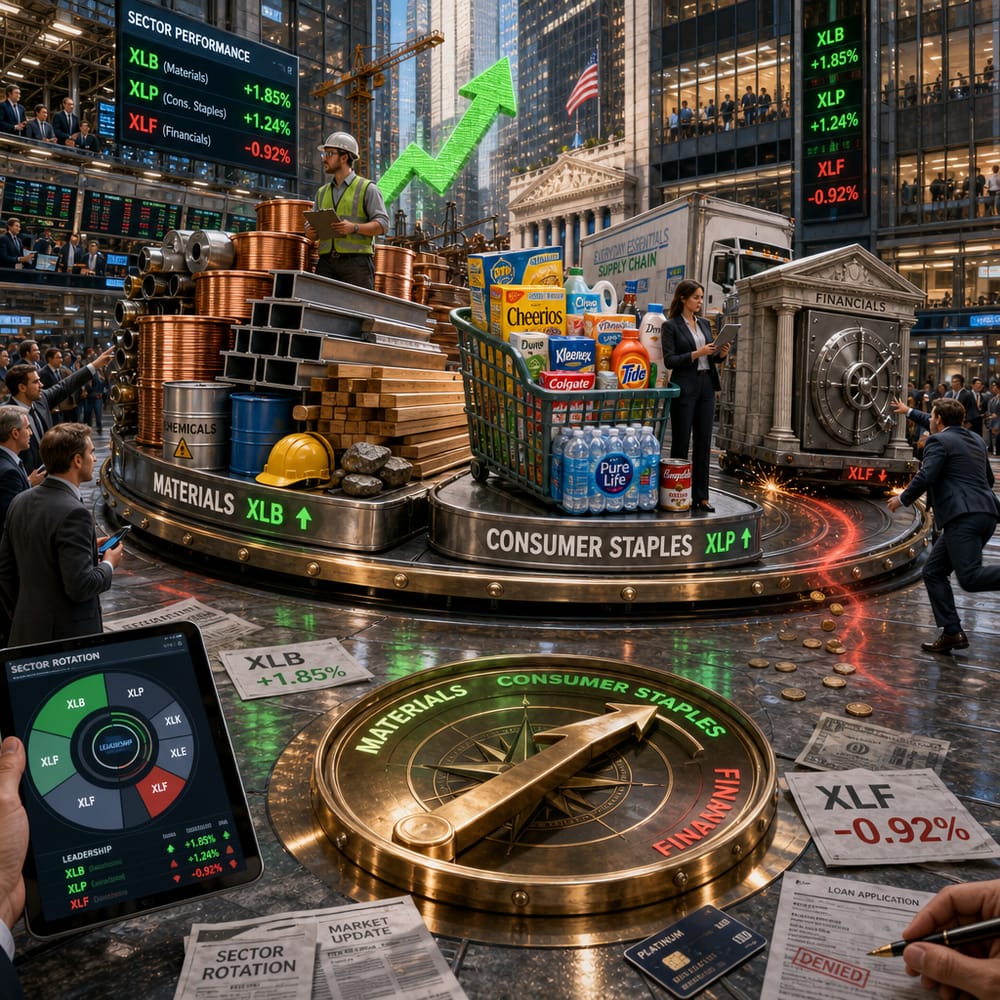
Buckle up, retail investors, because we’re in for a wild ride through the stock market’s latest plot twist. Imagine your investments like a giant game of musical chairs, where the players are sectors, and everyone's scrambling to find the best seat before the music stops. Right now, it’s the materials and consumer staples sectors grabbing the spotlight, leaving financials doing the awkward wallflower shuffle.
For those new to the stock market dance, sector rotation is when investors shift their money from one sector to another. This isn't some Wall Street magic trick; it’s a sign that folks are reacting to changing economic tunes. So, why are materials and consumer staples outpacing financials? Let’s break it down.
MACROECONOMIC RHYTHM
The macroeconomic factors are playing a pivotal role in this shift. Think of this as the background music setting the mood. Interest rates have been the talk of the town, and not in a good way for financials. Higher rates can weigh down banks and financial firms like a lead balloon because they increase borrowing costs. It’s like asking financials to dance with a broken leg.
Meanwhile, materials and consumer staples are basking in the glow of investor affection. There’s chatter about global supply chain disruptions easing, boosting materials. Picture it: factories buzzing back to life, and materials stocks like those in the Materials Select Sector SPDR Fund (XLB) are the stars of the show. And consumer staples, the stuff we can’t live without like toothpaste and toilet paper, are doing their classic “steady as she goes” routine.
STOCKS IN THE SPOTLIGHT
Zooming into individual stocks, the excitement is palpable. In the materials corner, names like Dow and DuPont are riding high. It’s like a renaissance fair, but instead of knights and dragons, it’s mining equipment and chemical formulas making investors’ hearts skip a beat. If your portfolio is sprinkled with these stocks, you might just be smiling all the way to the bank.
On the consumer staples side, think Procter & Gamble and Coca-Cola. These are the stocks you can count on, even if the economy is throwing a temper tantrum. They’re the steady rock in your investment cocktail, ensuring your glass never runs dry.
FINANCIALS IN THE BACKSEAT
Now, let’s talk about financials, the sector that’s feeling a little left out of the limelight. With the Financial Select Sector SPDR Fund (XLF) not exactly tearing up the dance floor, investors are wondering if this is a temporary hiccup or a sign of a longer malaise. Banks are grappling with the dual pressures of higher interest rates and a cautious consumer. It’s like they’re wearing cement shoes while everyone else is waltzing around.
LONG-TERM IMPLICATIONS
So what does this mean for your long-term investing strategy? If you’re holding financial stocks, now might be the time to evaluate your portfolio. Are you in for the long haul, hoping for a rebound when interest rates stabilize? Or is it time to do a little spring cleaning and diversify into materials or consumer staples?
It’s crucial to remember that in the world of investing, nothing stays the same forever. Today’s laggards could be tomorrow’s leaders. That’s the beauty and agony of the market: it’s dynamic, unpredictable, and sometimes downright fickle.
THE FINAL VERDICT
In this grand ballroom of stocks, the dance is constantly changing. Materials and consumer staples are currently stealing the show, but don’t discount financials just yet. As an investor, the key is to stay nimble, keep an eye on the economic indicators, and be ready to adjust your moves as the music changes.
So, dear investors, as you scroll through your phone, pondering your next market move, remember: it’s all about rhythm, timing, and sometimes just a little bit of luck. Stay sharp, and happy investing!
This article is for informational purposes only and is not investment advice. Always do your own research or consult a licensed financial professional before making investment decisions.
© Copyright 2024. All Rights Reserved.
© Copyright 2024. All Rights Reserved.