

Sector Rotation: Investors Shift from Tech to Defensive Stocks
Thursday, August 20, 2026
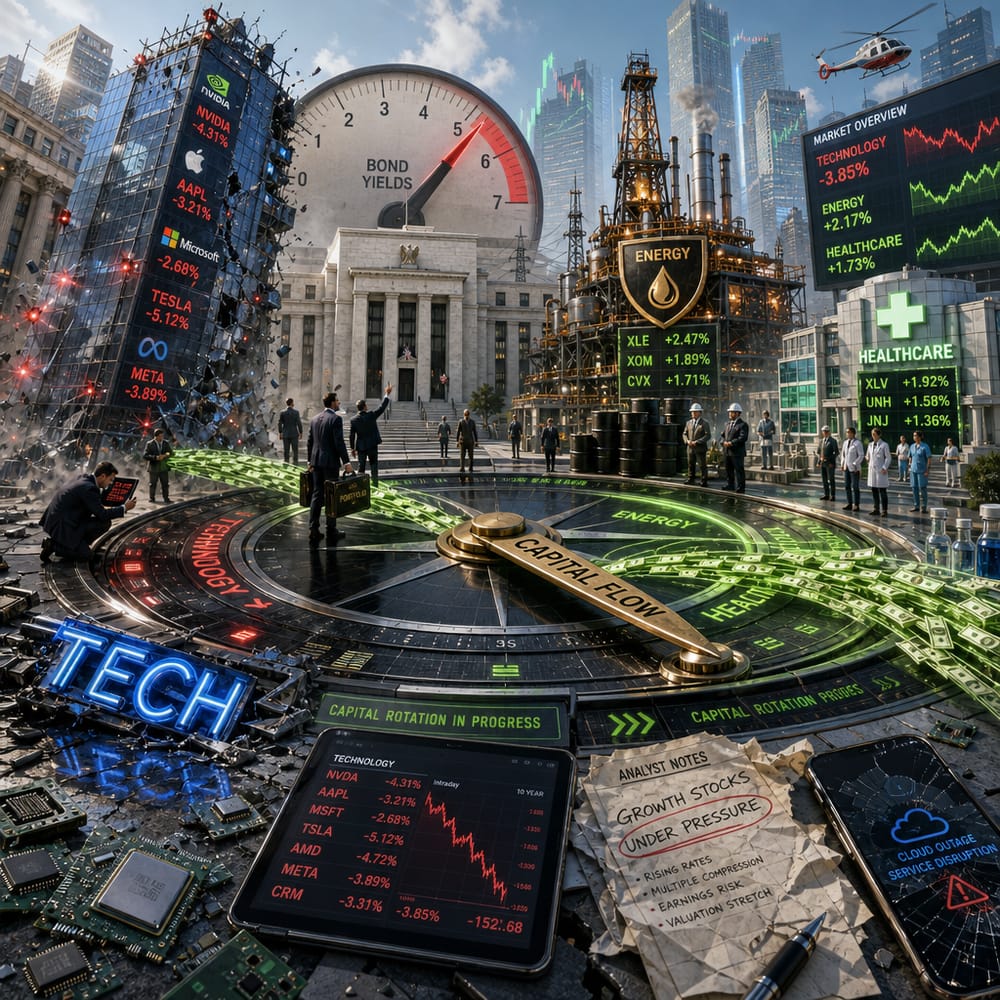
DEFENSIVE STRATEGY: WHY INVESTORS ARE DITCHING TECH FOR SAFER HARBORS
Remember the days when tech stocks were the life of the party, and everyone was scrambling to invest in the latest and greatest silicon valley darling? Well, it seems like the party has come to an abrupt halt, and investors are now making a beeline for the exits, heading towards the more stable and, dare we say, "boring" defensive sectors like energy and healthcare. But why the sudden change of heart?
BLAME IT ON THE BOND MARKET
If you find yourself cursing at your 401(k) statement, the bond market might just be the culprit. Rising bond yields have thrown a wet blanket over the tech sector's once red-hot performance. When the 10-year Treasury yield starts climbing north of 4.7%, investors perk up. They start thinking, "Why should I gamble on tech stocks when I can get a decent return with less risk from good old government bonds?"
RECIPE FOR ROTATION
This shift is what the financial wizards call "sector rotation." It’s like heading to the grocery store with a list of ingredients for a fancy soufflé, only to decide that a comforting bowl of mac and cheese is more your style this week. Investors are rebalancing their portfolios, moving money from high-flying tech stocks to sectors that might not skyrocket but also aren’t likely to plummet.
Healthcare and energy stocks are the comfort food of the investment world — maybe not glamorous, but dependable. Healthcare companies offer a consistent demand, because let's face it, humans will always need doctors and medicine. As for energy, with the world still heavily reliant on oil and gas, these stocks often provide a safe haven during market volatility.
STOCKED UP ON STABILITY
So, what does this sector rotation mean for the broader market? In essence, it's a recalibration. Investors are signaling that they want to tuck away cash in sectors that can weather economic storms, thereby reducing the tech sector's market dominance. This doesn’t just shake up the tech-heavy Nasdaq — it could influence how companies plan investments and strategies, with tech firms possibly feeling the pinch in their innovation budgets.
MORE THAN JUST NUMBERS
For the average investor, this sector shuffle might feel like musical chairs. What's a savvy retail investor to do amidst this market melody? Well, first off, don't panic. Market shifts are as inevitable as your phone running out of battery at the worst possible moment.
One approach is to take a good look at your portfolio and see if it’s time to mix things up a bit. Diversification — think of it as the financial version of not putting all your eggs in one basket — can help cushion the blow during volatile times. Consider spreading your investments across various sectors to balance risk.
Another tip? Keep an eye on bond yields. They’re not just numbers on some Wall Street chart; they’re the fuel driving this whole rotation engine. Understanding where yields are headed can give you a sense of market sentiment and help guide your investment decisions.
THE BIG PICTURE
To sum up, the shift from tech to more defensive stocks is like the financial world recognizing it can't survive on avocado toast and lattes alone; sometimes, you need the solid sustenance of meat and potatoes. While the tech sector isn't going extinct — it’s more like it's taking a breather — the rise of defensive stocks reveals a cautious market mood.
Investors should keep their eyes peeled and ears open. Adaptability is key in this ever-shifting landscape. So, while sector rotation might sound like a complicated dance move, it’s really just about finding stability in an uncertain world. And who couldn't use a little more stability these days?
This article is for informational purposes only and is not investment advice. Always do your own research or consult a licensed financial professional before making investment decisions.
© Copyright 2024. All Rights Reserved.
© Copyright 2024. All Rights Reserved.