

Sector Rotation Intensifies: Defensive and Industrials Outperform as Semis Slip
Sunday, August 16, 2026
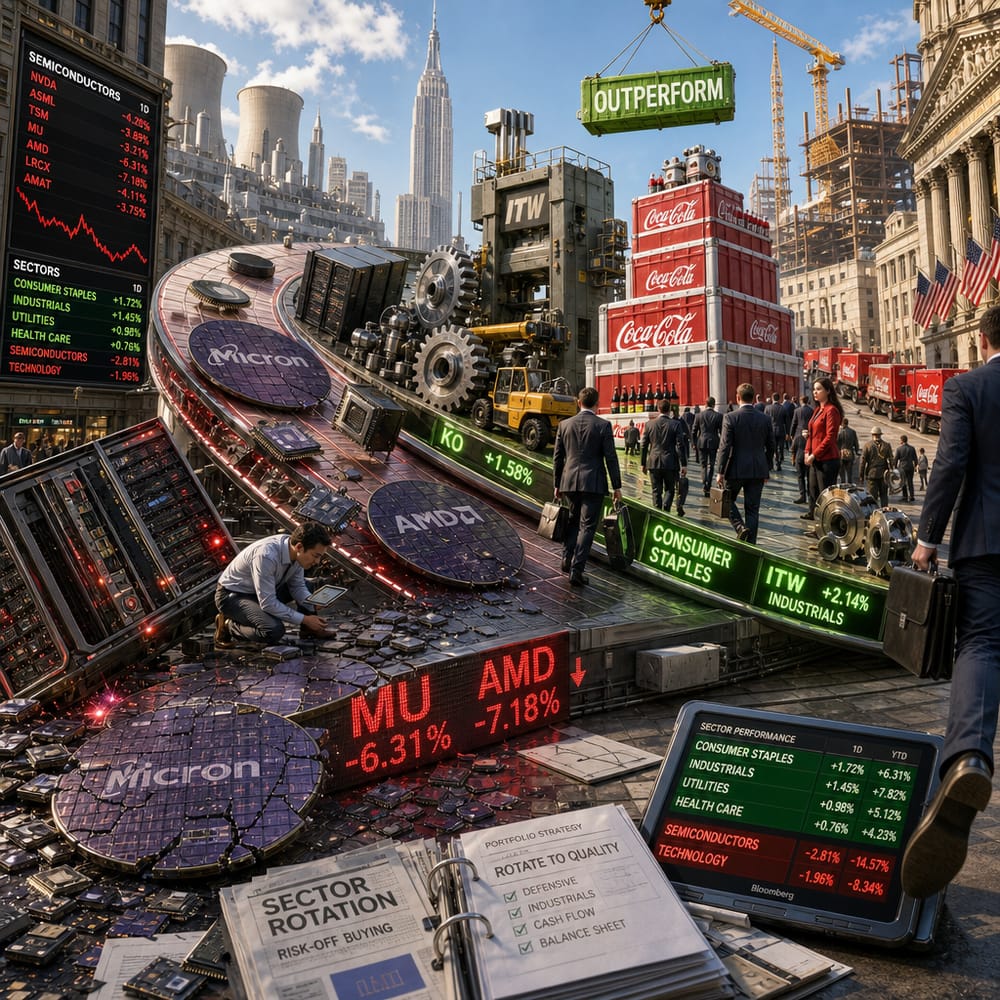
Sector Rotation Intensifies: Defensive and Industrials Outperform as Semis Slip
Remember when semiconductors were the darlings of Wall Street, beaming with promise like kids on the first day of school? Well, it seems like those days are on pause—at least for now. Investors are shaking things up, ditching their love affair with semis like Micron and AMD, and cozying up to the more stable, dependable (dare we say boring?) defensive and industrial sectors.
Why the sudden change of heart? Imagine you're navigating a stormy sea, and you've been riding high on a flashy surfboard made of semiconductors. But now, with waves getting choppier, you're eyeing a sturdy canoe called "defensive stocks" for stability. It's all about trying to stay dry—or rather, preserve capital—when the forecast looks a bit stormy.
So, what's causing the sector shuffle? Wall Street is always a half-step ahead, sniffing out what's coming next. In this case, rising geopolitical tensions, concerns about the economic impacts of ongoing international hostilities, and a potential slowdown in the tech sector's growth are pushing investors to seek shelter in the safe haven of defensive stocks. Think of names like Coca-Cola, which has been quenching investor thirst with steady performance, thanks to its dividend growth streak of 64 years (yes, really). In 2026 alone, it's outshining the hyped "Magnificent Seven" tech stocks, with shares bubbling up more than 25%.
And let’s not forget the industrials, which are having their own moment. Companies like Illinois Tool Works are benefiting as investors pivot to industries that might get a boost from infrastructure spending and economic rebuilding efforts, both domestically and abroad. These sectors offer a predictability that's reassuring when the tech sector's sizzle starts to fizzle.
Meanwhile, semiconductors are facing their own reality check. The likes of Micron and AMD, once rockstars riding the AI wave, are running into obstacles. The AI party, while not over, is facing scrutiny for its breakneck pace of investment versus actual profit realization. Plus, there’s the escalating cost of chip production and potential supply chain disruptions as international tensions mount. Analysts are waving caution flags, suggesting that the high-growth expectations for semiconductors might need to be tempered, at least for the short term.
So how are the defensive and industrial stocks performing relative to our erstwhile tech champions? Well, Coca-Cola's performance is a glowing example. While the tech sector, represented by big swings in semiconductors, is riding out its turbulence, defensive stocks are quietly climbing the ladder, offering a steadier return for those willing to play the long game.
What do analysts have to say about all this? The consensus seems to be one of cautious optimism. Defensive and industrial sectors are viewed as a safer bet in uncertain times, a kind of market comfort food if you will. The prevailing sentiment suggests this rotation is less about a permanent breakup with tech and more about a tactical retreat to mull things over and wait out the volatility.
For retail investors, this shift is a gentle reminder of the importance of diversification. The tech sector will likely rise again, but in the meantime, a balanced portfolio that includes a mix of growth and stability might just weather the storm. In other words, maybe it's time to embrace your inner contrarian—consider the unsung heroes of the market that might not make the headlines, but consistently deliver results.
In short, as semiconductors navigate through this rocky patch, the sector rotation to defensive and industrial stocks isn't just a trend—it's a strategy. It's about finding balance and perspective, like switching from espresso shots to herbal tea. The caffeine rush of high-growth tech stocks is exhilarating, but sometimes, slow and steady wins the race.
This article is for informational purposes only and is not investment advice. Always do your own research or consult a licensed financial professional before making investment decisions.
© Copyright 2024. All Rights Reserved.
© Copyright 2024. All Rights Reserved.