

SEC’s Proposed Crypto Exemptions—Implications for Token Fundraising & Startup Launches
Friday, August 21, 2026
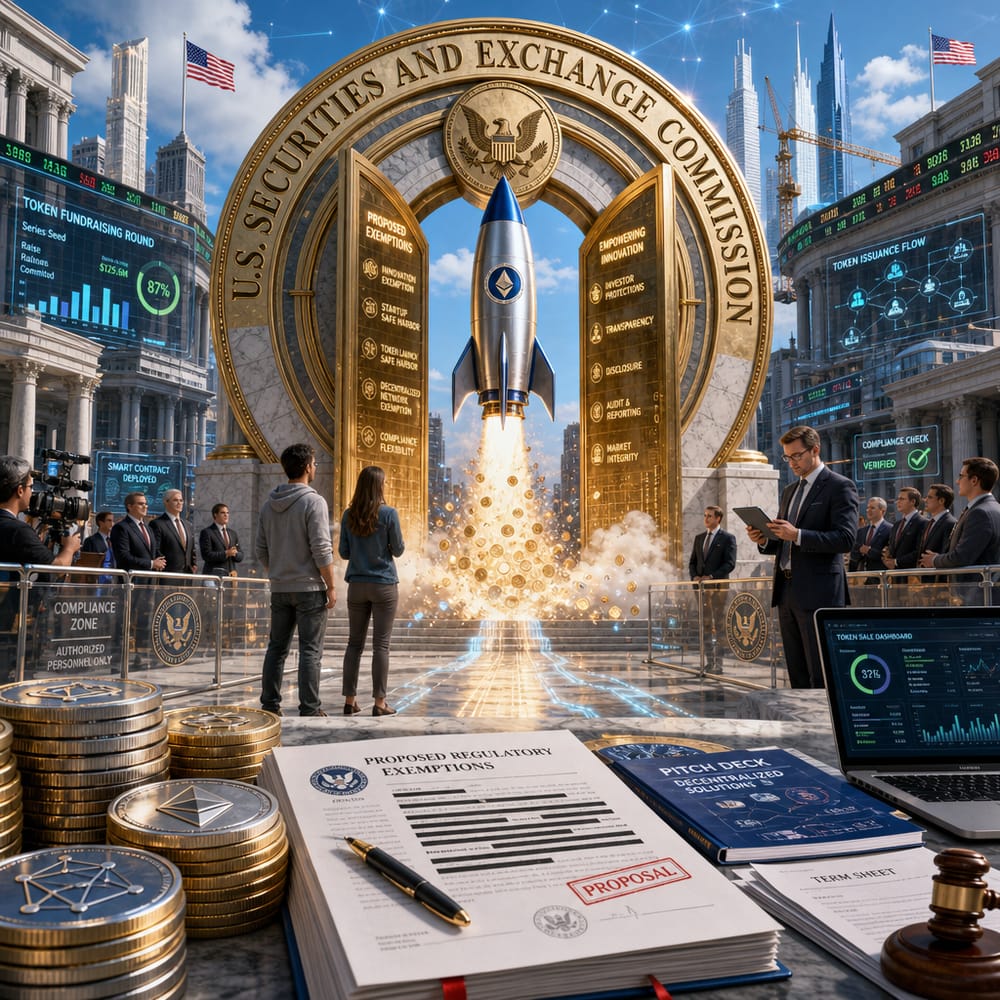
Can you imagine a world where crypto startups could raise money as freely as you drop memes into your group chat? Well, hold on to your digital wallets, because the SEC's latest proposal might just make that a reality.
The U.S. Securities and Exchange Commission (SEC) has rolled out a new proposal for crypto exemptions that could change the way early-stage crypto projects raise funds and navigate the legal landscape. This isn't just a ripple in the crypto pond; it's a potential tidal wave that could reshape the entire startup ecosystem.
CRYPTO’S NEW PLAYGROUND?
So, what’s the big deal? The proposed crypto exemptions could lighten some of the legal handcuffs that currently bind crypto startups. If you've ever dabbled in launching or investing in a crypto project, you know it's not all fun and games. The SEC’s tight regulations have kept many innovators on their toes, forcing them to tiptoe around the legal jungle just to get a project off the ground.
The SEC's new proposal could give these startups a fresher start, providing a more flexible framework for issuing tokens without stepping on regulatory landmines. This could be a game-changer for how these projects raise funds, allowing them to issue tokens more freely and cheaply. It’s like the SEC is saying, "Hey, we see you, crypto innovators. Let's make this a little easier."
LEGAL IMPLICATIONS FOR TOKEN ISSUERS
This proposal isn't a free-for-all, though. Token issuers will still have to comply with certain rules to ensure that investors don't end up holding digital bags of nothing. They'll need transparency around what their tokens actually represent, and they'll have to ensure some level of investor protection. Essentially, it’s about finding a sweet spot between innovation and regulation – making sure the Wild West of crypto doesn't turn into Dodge City.
And let’s not forget the big elephant in the room: security classifications. The SEC has historically scrutinized tokens to determine if they’re securities, which comes with a truckload of regulatory baggage. These exemptions might ease those concerns, offering a more clear-cut path for startups to launch without constantly looking over their shoulders.
THE FEEDBACK LOOP
As with any big regulatory shift, there's a feedback period where everybody and their digital dog gets to voice an opinion. This feedback could significantly shape the final framework. Crypto enthusiasts, skeptics, and legal eagles all have a chance to weigh in. Will they rally behind the proposal, or rip it apart like a dog with a chew toy?
The feedback period is crucial because it allows for the proposal to be refined and polished before it hits prime time. It’s a chance for lawmakers to adjust the dials, ensuring that the final rules support innovation without opening the floodgates to scams and frauds.
THE ROAD AHEAD
The potential impact of these exemptions on the crypto startup ecosystem can't be understated. It could catalyze a new wave of innovation, drawing in fresh talent and ideas eager to capitalize on more favorable conditions. Think of it as a green light for creativity and experimentation in the blockchain space.
In the grand scheme of things, this proposal isn’t just about easing regulations; it's about the SEC recognizing the growing importance and legitimacy of the crypto industry. By proposing these exemptions, the SEC is essentially admitting that crypto isn't just a fad – it's a force that needs a seat at the regulatory table.
So, what's next? Keep an eye on the feedback process and the SEC’s final decision. This could be the dawn of a new era for crypto startups. For now, investors and innovators should stay tuned, stay informed, and maybe, just maybe, start dreaming a little bigger. The SEC’s proposal could be the key to unlocking a more dynamic, innovative, and accessible crypto landscape.
Buckle up – it’s going to be an exciting ride.
This article is for informational purposes only and is not investment advice. Always do your own research or consult a licensed financial professional before making investment decisions.
© Copyright 2024. All Rights Reserved.
© Copyright 2024. All Rights Reserved.