

SEC Proposes Tailored Custody Rules for Crypto Assets
Monday, October 05, 2026
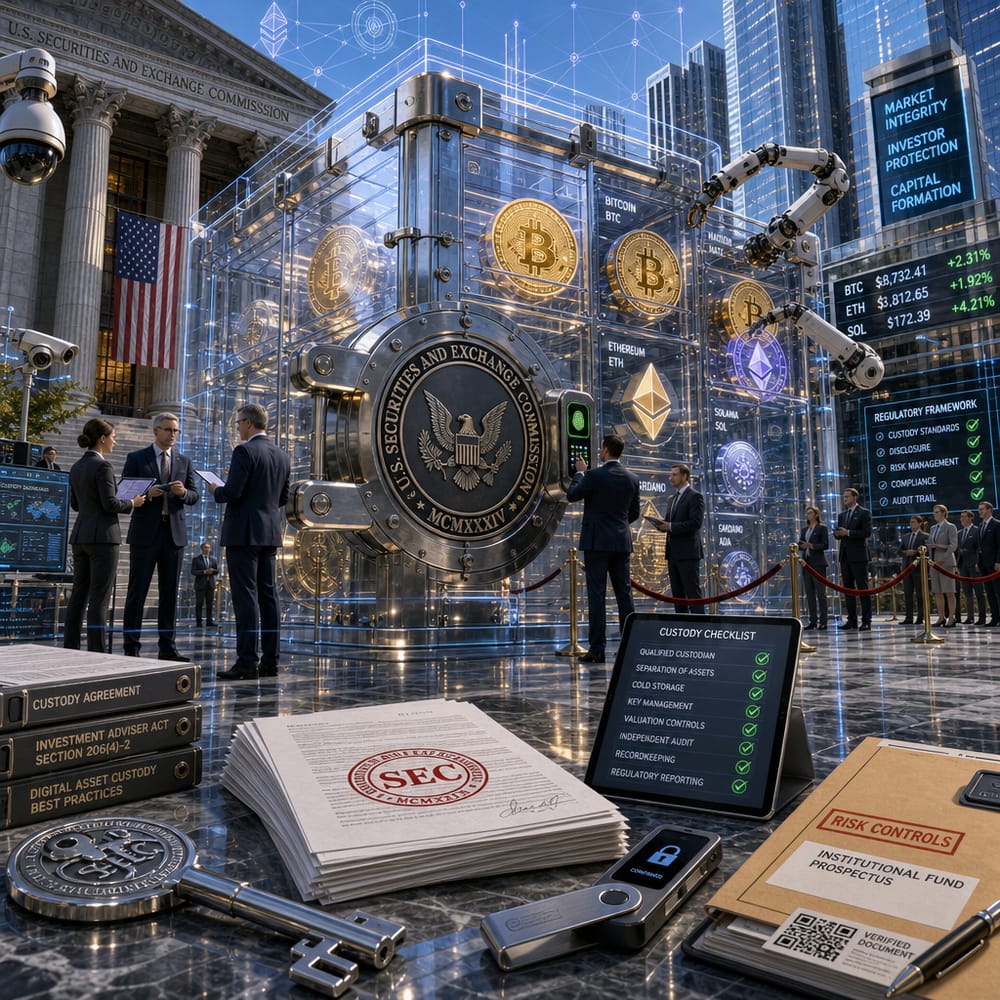
If you think the world of cryptocurrency is a Wild West movie, the SEC just rolled into town with shiny new rules and a mandate to tame the chaos. Last week, the SEC pulled the curtain back on a proposal that's poised to revolutionize how registered investment advisors and funds handle crypto assets. And folks, this isn’t just a dull note scribbled in the margins of securities law—it’s a headline act that could have sweeping implications for the future of institutional crypto adoption.
Imagine for a moment that you're an institutional investor. You have big bucks, and you like to know that your hard-earned cash is nestled safely in the bank, not under a lumpy mattress. Right now, the custody of traditional assets like stocks and bonds is like that bank—standardized, regulated, and generally bulletproof. But when it comes to crypto, it's more like stuffing bills under that aforementioned mattress.
Enter the SEC's new proposal. The star of this show is the tailored custody rule designed specifically for crypto assets. The main plot centers around a few crucial components. First, the rule would require registered investment advisors—those Wall Street wizards who manage your money—to ensure that crypto assets are held by “qualified custodians.” Basically, this is SEC-speak for credible, financially sound entities that you can trust more than your cousin's sketchy basement mining operation.
What makes this different from past practices is its specificity. Previously, the SEC's guidance on crypto was more like a foggy day—you could tell there was something there, but not clearly enough to navigate safely. While there have been some guidelines for crypto custody, they were as clear as mud. This proposal cuts through that with laser precision, outlining exactly how advisors can custody crypto without stepping into legal quicksand.
And how does it stack up against the past? Well, it's a significant shift from previous SEC positions that were more akin to a cautious dip of the toe into the murky waters of crypto. This is a cannonball into the deep end, signaling a readiness to embrace and regulate crypto in ways that leave less room for ambiguity and more room for trust.
So, when can we expect this proposal to come to life? The SEC is opening the floor for public comment, giving everyone from the bigwigs at Wall Street to your crypto-enthusiast neighbor a chance to weigh in. There's a timeline here—a 60-day comment period before any decisions are locked in. After that, we could see these rules in action, potentially reshaping the landscape of crypto investment as we know it.
For institutional investors who’ve been standing at the edge of the crypto pool, unsure whether to dive in, this proposal could be just the lifeguard they need. It aims to clear up that pesky hurdle of uncertainty that’s been keeping them on the sidelines. More clarity equals more confidence, which could pave the way for a wave of crypto adoption among the big leagues.
The implications are broader than just providing a safety net. It could mean more innovation, as funds and advisors find new ways to engage with crypto. It could mean more choice and potentially better returns for retail investors. And let's not forget the ripple effect—once institutions go full-throttle into crypto, other sectors might just follow suit, like dominos in a high-stakes game.
As the SEC steps into the ring to bring order to the chaos, the question isn't just whether investors will follow, but how quickly. Will this be the watershed moment for crypto? The jury is out, but one thing's for sure: the SEC's proposal isn't just a new chapter. It's a whole new book for the world of institutional crypto. Keep your eyes peeled, because the crypto-cowboys might just be riding into town sooner than you think.
This article is for informational purposes only and is not investment advice. Always do your own research or consult a licensed financial professional before making investment decisions.
© Copyright 2024. All Rights Reserved.
© Copyright 2024. All Rights Reserved.