

SEC Proposes 'Regulation Crypto Assets' for Crypto Offerings
Monday, September 28, 2026
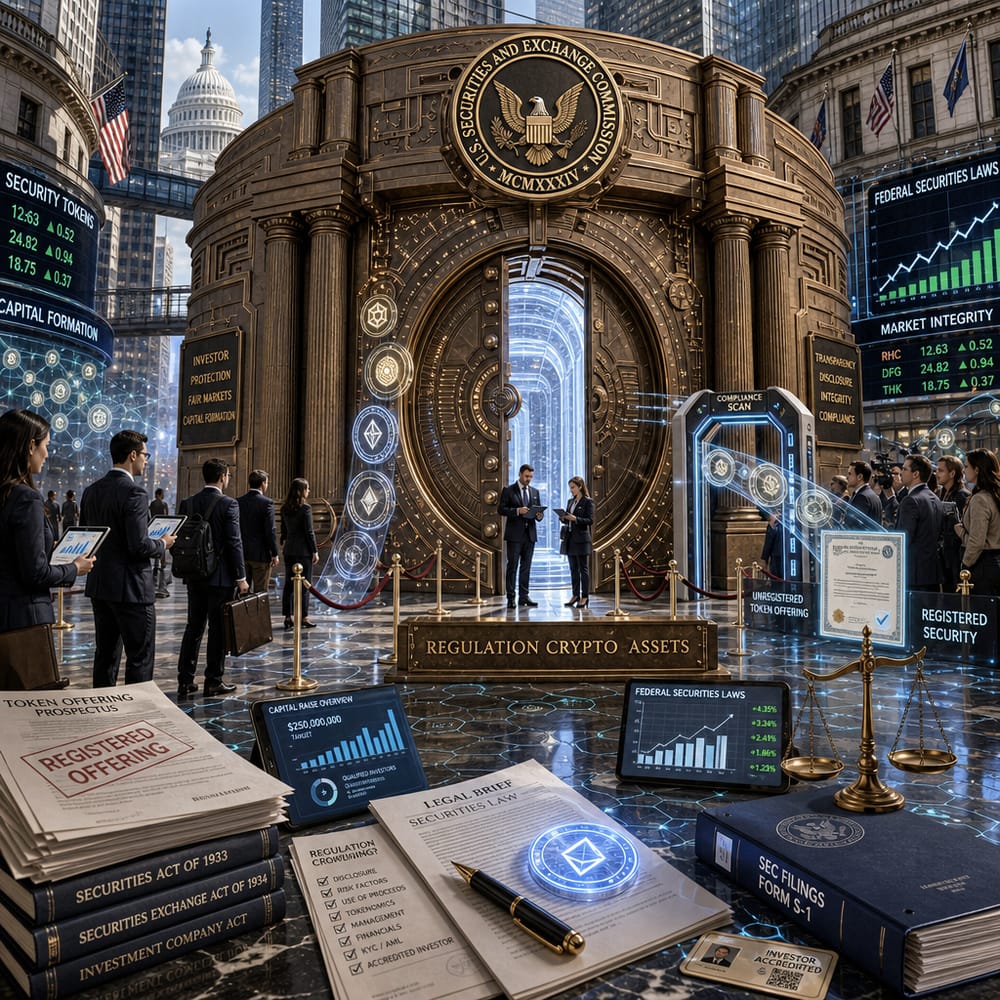
THE SEC'S CRYPTO REGULATION: A NEW ERA OR AN OLD PLAYBOOK?
If you’ve ever thrown a dart at the crypto market, hoping to hit a bullseye, you’ve probably yearned for a map, a guide, or at least a blinking neon sign saying, "This way to untold riches!" Well, the SEC might not offer a treasure map, but it’s certainly trying to light the way with its latest proposal, aptly named “Regulation Crypto Assets.” It’s like the SEC has decided to crash the crypto party, but before you groan, this could actually be a good thing.
Here’s the skinny: the SEC has thrown down a new regulatory gauntlet in the form of a framework designed to bring some legal clarity to crypto offerings in the US. And before you yawn, thinking this is just another dry regulation, remember this: this proposal could reshape how crypto projects raise money, fundamentally impacting token issuers, startups, and investors alike.
WHAT'S IN THE SEC'S GOODIE BAG OF REGULATION?
Imagine a world where crypto issuers walk a legal tightrope without a net. That’s basically the current landscape. “Regulation Crypto Assets” aims to provide that safety net by introducing new exemptions and a safe harbor provision. In plain English, that means crypto projects could get a clearer, less risky path to raising funds while staying in Uncle Sam’s good books.
The SEC’s proposed rules would outline which digital assets qualify as securities — those are basically tradable financial assets like stocks and bonds — and create a framework for registering these assets. It’s like giving crypto the rules of the road so they can drive legally, instead of occasionally getting pulled over by regulators for speeding.
WHAT DOES THIS MEAN FOR THE CRYPTO CROWD?
For existing crypto projects, this could mean a sigh of relief. Finally, a way to raise capital without constantly peering over their shoulders for the SEC. It’s like getting the green light to set up shop legally. But it also means adjusting to fit into this new regulatory puzzle, which could involve some growing pains or, as some might call it, “necessary adulting."
New entrants into the crypto scene might feel like they’ve hit the jackpot. With a clear legal pathway, raising funds could become more straightforward, encouraging more players to join the crypto carnival. But as with any regulatory framework, there’s a flip side. Projects may face increased scrutiny and compliance costs, like suddenly having to pay an entrance fee to the park you used to sneak into.
FOR INVESTORS: BOON OR BUST?
For investors, the SEC's proposal could be a double-edged sword. On the one hand, more regulations could mean more safety. Think of it like a bouncer at the crypto club, weeding out scams and giving investors more confidence to buy a ticket to the show. With clearer rules, you could wave goodbye to the wild west days of rug pulls and shady projects — mostly, anyway.
However, this added security might come with a cost. The new rules could stifle innovation if they box crypto projects into a rigid framework, which might limit the explosive, albeit risky, growth potential that many investors crave. It’s like trading in your BMX for a sedan: safer, but a lot less thrilling.
BETTING ON THE FUTURE
So, what’s next? As the SEC opens this regulatory Pandora’s box, the crypto market is left to speculate. Will this proposal bring about the golden age of crypto fundraising, or will it clip the wings of innovation? It’s too soon to tell, but one thing’s for sure: the SEC’s move has set the stage for a new chapter in the crypto saga.
For now, investors, token issuers, and crypto enthusiasts lie in wait, popcorn in hand, watching to see how this regulatory drama unfolds. Will this be the moment crypto truly grows up, or just another twist in the ever-evolving tale of digital assets? Stay tuned, because the only thing guaranteed in this market is that it’ll keep you on the edge of your seat.
This article is for informational purposes only and is not investment advice. Always do your own research or consult a licensed financial professional before making investment decisions.
© Copyright 2024. All Rights Reserved.
© Copyright 2024. All Rights Reserved.