

SEC Proposes Formal “Regulation Crypto Assets” — Tailored Securities Offering Framework
Saturday, August 29, 2026
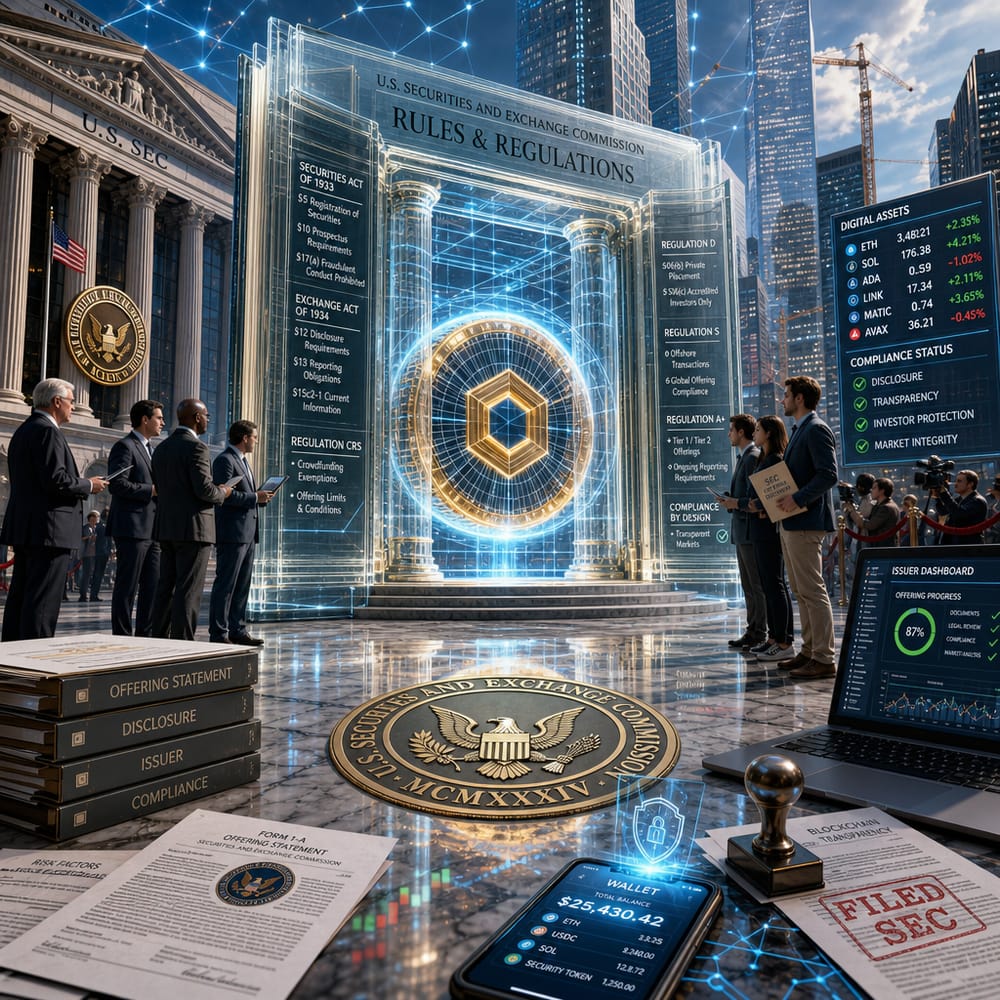
SEC Proposes Formal “Regulation Crypto Assets” — Tailored Securities Offering Framework
Imagine you're on a rollercoaster, and just as you think you’ve learned the twists and turns, someone comes along and says, “Hey, we’re adding a new loop!” Welcome to the world of crypto assets, where the rules are about to change again. Enter the SEC's freshly proposed regulation: a custom-tailored regime for crypto asset securities offerings.
What’s the big deal, you ask? Well, the proposal is like a mix of a traffic light system and a bouncer at your favorite club, deciding who gets in and who doesn't. If you've been cryptographically clueless, here’s your chance to catch up. But if you’re a savvy crypto investor or issuer, you might want to pay extra attention — your world is about to shift.
THE SEC’S NEW PLAYBOOK
At its core, the SEC's plan is to create a comprehensive set of rules specifically for crypto assets. If you’ve ever felt that the crypto world was the Wild West with no sheriff in town, this may be the moment you’ve been waiting for. Key elements of the proposal aim to clarify which crypto assets qualify as securities, meaning they should play by the same rulebook as stocks or bonds.
But it’s not just about slapping labels on assets. The SEC wants to build a framework for how these securities are offered, marketed, and traded. Think of it as a blueprint for crypto issuers to follow, ensuring they are as legitimate as a blue-chip stock firm.
HOW IT IMPACTS ISSUERS AND INVESTORS
Let’s be clear — this isn’t just bureaucratic mumbo jumbo. For crypto issuers, the proposal could mean a seismic shift. They might have to jump through more hoops and face stricter scrutiny. It's like suddenly having to show your ID at every corner after enjoying years of anonymity. On the bright side, a more structured approach could attract institutional money, the kind with enough zeros to make your eyes water.
For investors, particularly those who’ve been hesitant to dip their toes into crypto waters, the potential benefits are huge. More regulation could mean more protection and less chance of waking up to find your investment has evaporated overnight because someone absconded with the digital keys. But it could also mean fewer “moonshot” opportunities, where you invest a pittance and wake up a millionaire — the kind of stories that have turned crypto into a modern-day gold rush.
THE GOOD, THE BAD, AND THE CRYPTIC
So, what’s the upside? The proposal could bring a breath of fresh air. We’re talking about a world where crypto assets don’t just live in the shadows but flourish under the spotlight. A regulated environment could enhance credibility and help separate the genuine innovations from the fly-by-night schemes that give crypto a bad rap.
But hold onto your hats — there are potential downsides. Critics argue that too much regulation could stifle innovation, painting the government as the overbearing parent who just doesn’t “get it.” There’s also the risk of a regulatory patchwork that may not mesh well with international laws, making global transactions as tricky as trying to explain cryptocurrency to your grandparents.
LOOKING AHEAD
The road to regulation is long and filled with debates, consultations, and revisions. But if this proposal finds its way into law, the crypto landscape could look very different in a few years. Some might argue it’s about time the SEC stepped in with more concrete guidelines. Others might lament the loss of an unfettered digital frontier.
In the end, whether you’re a die-hard crypto enthusiast, a cautious investor, or just someone who enjoys watching the financial drama unfold, the SEC’s proposal is definitely worth watching. The crypto rollercoaster isn’t stopping any time soon, and with proposals like these, who knows what loop-de-loops we’ll see next?
This article is for informational purposes only and is not investment advice. Always do your own research or consult a licensed financial professional before making investment decisions.
© Copyright 2024. All Rights Reserved.
© Copyright 2024. All Rights Reserved.