

SEC Launches Scrutiny into AI Claims in Asset Management
Tuesday, August 25, 2026
SEC LAUNCHES SCRUTINY INTO AI CLAIMS IN ASSET MANAGEMENT
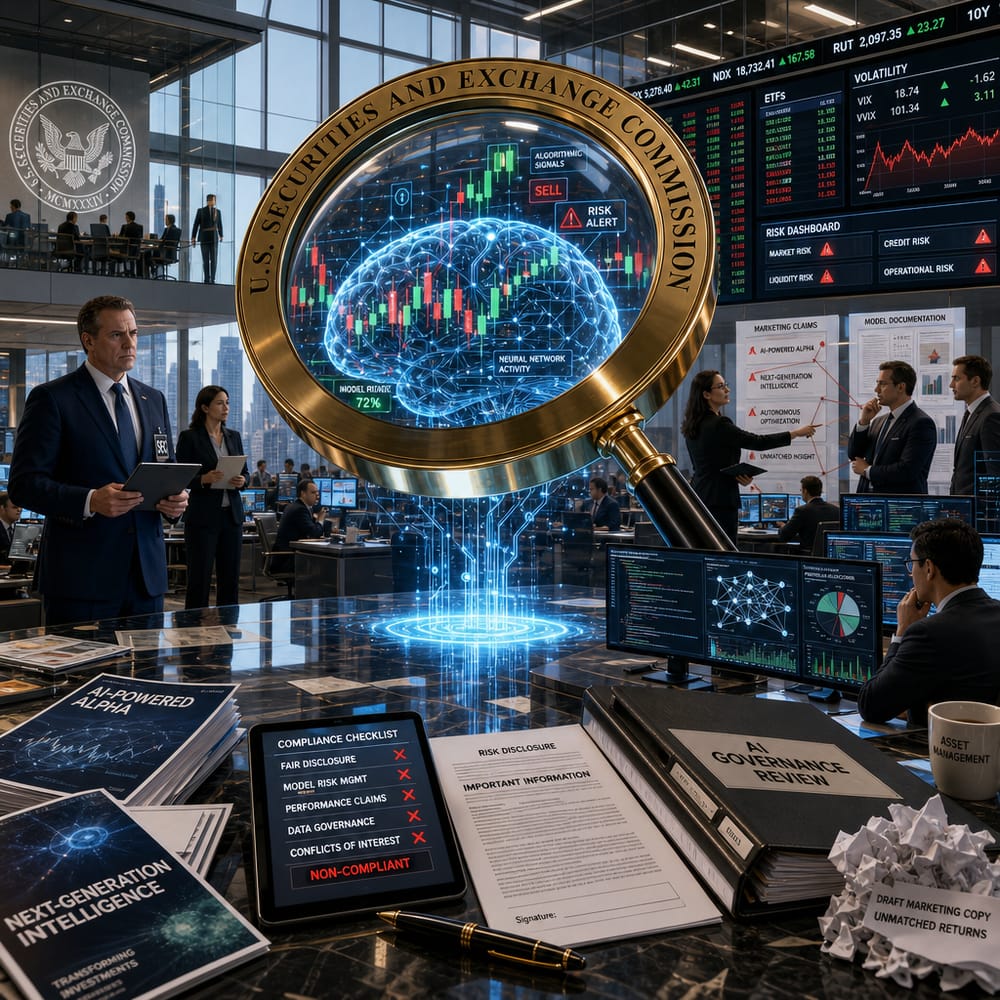
Hold onto your algorithms, folks—because it looks like the AI party in finance might just be getting a stern visit from everyone's favorite regulatory chaperone, the SEC. That's right, the Securities and Exchange Commission has decided to put AI-driven asset management under the microscope, and it's not just a quick glance. They're diving deep into how these high-tech finance wizards spin their tales of algorithmic magic.
Now, you might be wondering: why is the SEC suddenly interested in playing the role of the curious parent? Well, in the glitzy world of asset management, AI is the new black—everyone wants a piece of it. From robo-advisors promising to outsmart human fund managers to marketing campaigns claiming their algorithms can predict market trends like a financial Nostradamus, the allure of AI is undeniable. But with great power comes great responsibility, and the SEC wants to make sure these claims aren't just a lot of hot air.
The implications of this scrutiny are as complex as a neural network. For starters, asset managers who have hitched their wagons to AI could face increased regulatory oversight. Imagine Uncle Sam peering over your shoulder every time your algorithm decides to buy or sell. It's not just Big Brother, it's Big Brother with a calculator and a rule book.
For AI-driven asset managers, this could translate into steeper compliance costs. Keeping everything above board in the eyes of the SEC isn’t cheap. Compliance teams might find themselves working overtime, ensuring every piece of code and every marketing claim passes regulatory muster. And let's not forget the potential for hefty fines if the SEC decides to crack the whip.
But, perhaps the most slippery slope here is how this scrutiny could impact the marketing of AI-based financial products. In a field where jargon-filled promises can make or break a new product launch, the SEC's magnifying glass adds a new layer of complexity. Asset managers will need to rethink how they talk about AI, swapping buzzwords for plain English that won't set off any regulatory alarms.
The knock-on effect? Investors might start seeing more conservative pitches. Gone could be the days of grandiose AI claims that promise to turn your modest investment into a small fortune overnight. Instead, expect a more measured approach—less "trust the robot" and more "we're cautiously optimistic."
This regulatory probe also serves as a wake-up call for investors who have been dazzled by tales of machines crunching numbers faster than a speeding train. It’s a reminder to dig deeper, to look beyond the glossy brochures and investigate what’s really happening behind the curtain.
As the SEC delves further, it could set the stage for new regulations specifically tailored to the wild world of AI in finance. This could lead to a landscape where asset managers need not only the best algorithms but also the best compliance strategies, a blend of tech-savvy and legal acumen that’s currently more the exception than the rule.
There's also an intriguing side plot here: the potential for a shake-up in the asset management sector. Smaller players, who can't afford the sky-high costs of increased compliance, might find themselves squeezed. This could lead to a consolidation wave, with the big dogs gobbling up the smaller pups, tightening their grip on market share.
In essence, what we're seeing is the SEC pulling a classic "trust, but verify" move. They're not against AI per se, but they want to ensure that amidst the AI revolution, transparency and integrity don’t get left in the dust.
So, as the SEC starts its deep dive, the message to AI-driven asset managers is clear: you’d better have your algorithms in a row, and your marketing pitches reality-checked. Because while AI might be able to spot patterns in data, the SEC is here to spot patterns in claims—and they're taking this job very seriously. For retail investors, it’s a timely reminder to keep their eyes peeled and their skepticism sharp. After all, in finance, as in life, if something sounds too good to be true, it probably deserves a closer look.
This article is for informational purposes only and is not investment advice. Always do your own research or consult a licensed financial professional before making investment decisions.
© Copyright 2024. All Rights Reserved.
© Copyright 2024. All Rights Reserved.