

Saudi Aramco Refinery Fire Extinguished
Sunday, August 09, 2026
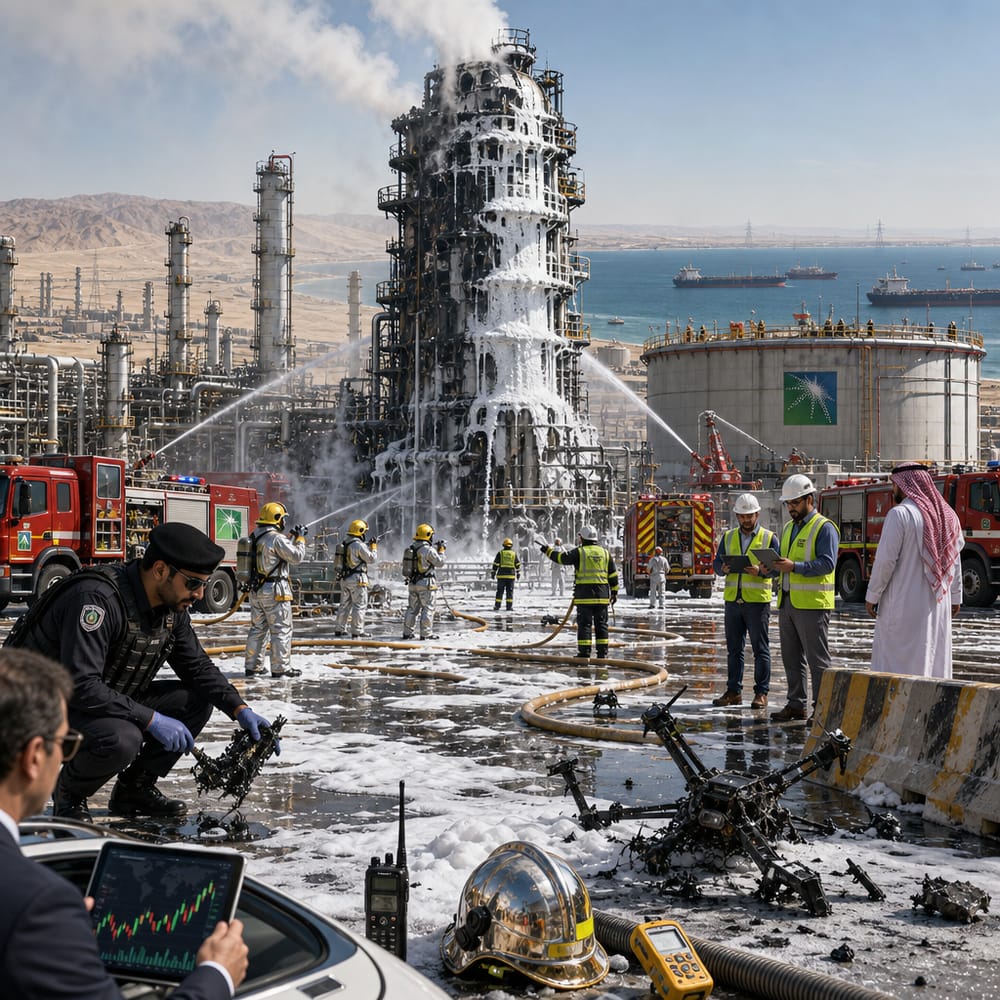
SAUDI ARAMCO REFINERY FIRE EXTINGUISHED — WHAT THAT MEANS FOR YOUR WALLET
Imagine waking up to find your favorite breakfast spot has caught fire, and you’re left eating cold Pop-Tarts for breakfast. That’s how the energy markets felt when a fire at Saudi Aramco’s Jazan refinery erupted following a reported Houthi drone strike. The blaze is now out, but the ripple effects? Oh, those are just getting started.
If you’ve been wondering why oil prices are sticking it to you at the pump, this fiery drama is a big part of the plot. Let’s break down what this means for oil prices, energy markets, and maybe even your next fill-up.
WHAT HAPPENED AT ARAMCO’S JAZAN REFINERY?
Picture the Houthi rebels as the neighborhood kids with firecrackers—except their firecrackers are drones, and the target isn’t a mailbox but a major oil refinery. Early Sunday, these rebels claimed they hit the bullseye on Saudi Aramco’s Jazan facility, leading to a fire that was thankfully extinguished before causing injuries. However, the full extent of the damage is still under wraps, though the headlines alone are enough to send shockwaves through the markets.
As of now, Saudi officials are playing it cool, completing “the necessary procedures to deal with the incident.” But if history teaches us anything, it’s that when Aramco sneezes, the whole energy market catches a cold.
HOW ARE OIL PRICES REACTING?
Now, onto the juicy part—oil prices. Whenever there's action in the Middle East, traders worldwide start biting their nails. Brent crude, the international benchmark for oil prices, and WTI (West Texas Intermediate), its U.S. counterpart, didn’t run for the hills just yet, but they did get a little jittery.
In past scenarios like this, we’ve seen prices spike. Why? Because any potential threat to supply chains kicks traders into overdrive, leading to high-stakes speculation. With a giant like Aramco in the limelight, it’s no wonder every little detail is scrutinized. If the damage assessment reveals significant harm to the refinery’s output capabilities, expect prices to creep up faster than a cat looking for treats.
IMPLICATIONS FOR GLOBAL SUPPLY CHAINS
The fire at Jazan is more than just a PR headache for Aramco. It underscores the ever-present geopolitical risks lurking in the shadows of the Middle Eastern oil industry. In an interconnected world, disruptions in Saudi oil supplies create ripples that can stretch from Wall Street to your local gas station.
Energy sector ETFs (Exchange Traded Funds) are likely to ride this wave of volatility. While these funds can be stable in normal times, geopolitical events have a knack for stirring the pot, offering both risks and opportunities for savvy investors looking to hedge against uncertainty.
So, what could potentially happen in the coming weeks? If the fire causes notable production setbacks, and if tensions escalate, it could mean supply shortages. And we all know what less supply means: higher prices. Essentially, the world might have to brace itself for a tighter oil market if these disruptions persist or escalate.
WHAT DOES THIS MEAN FOR YOU?
If you’re an investor, keeping an eye on energy stocks like Saudi Aramco (2222.SR) might not be a bad idea. Historically, such stocks face volatility post-crisis but can also offer lucrative opportunities in rebounds.
For the average Joe just trying to figure out if they’ll have to budget more for their commute, the answer hinges on how quickly Saudi Aramco bounces back from this. While immediate price spikes at the pump aren't guaranteed, the potential for prolonged tension could lead to more expensive fill-ups down the road.
In the bigger picture, this incident serves as a not-so-gentle reminder of the geopolitical risks clouding the energy sector. The world is watching, and oil traders are busy calculating their next move.
So, whether you’re an investor or a consumer, it’s time to brace for the kind of rollercoaster only the global oil market can provide. Hold onto your hats (and wallets) because the next few weeks might just be a ride.
This article is for informational purposes only and is not investment advice. Always do your own research or consult a licensed financial professional before making investment decisions.
© Copyright 2024. All Rights Reserved.
© Copyright 2024. All Rights Reserved.