

San Francisco Fed Study on Natural Interest Rate
Friday, August 28, 2026
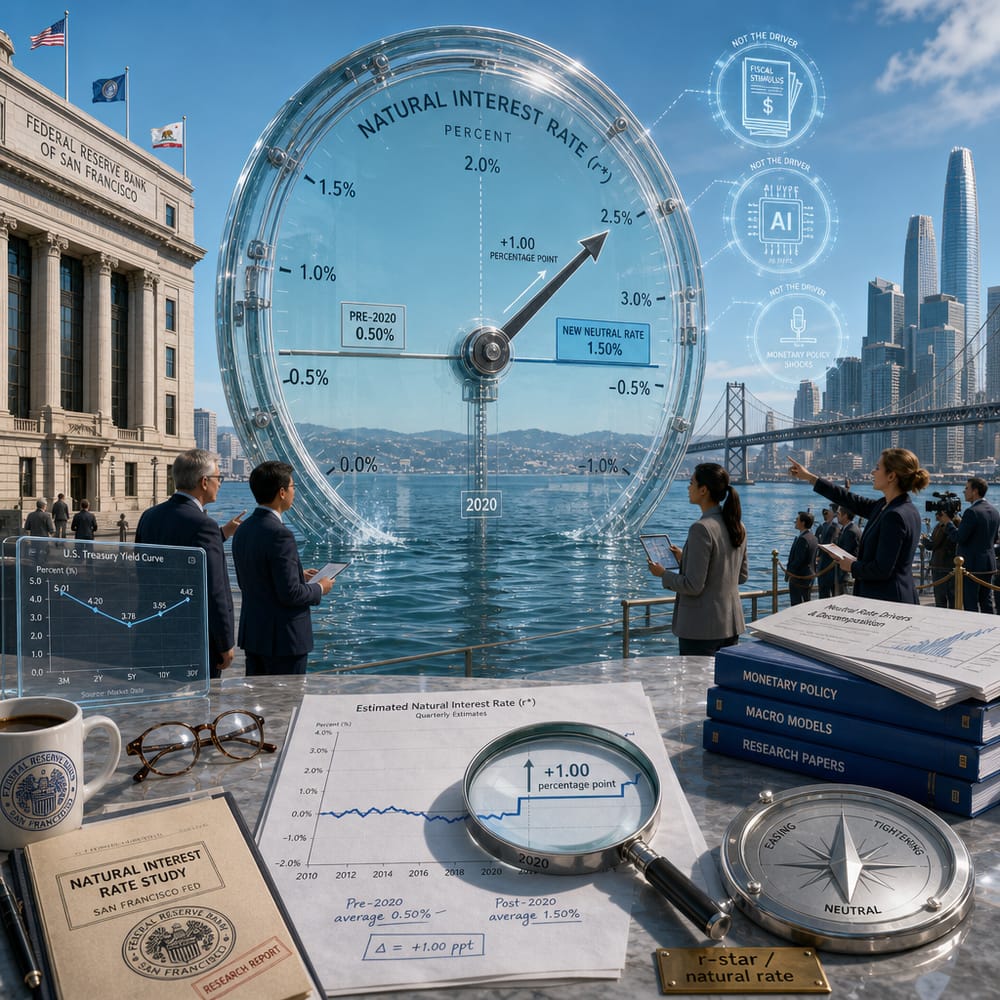
THE QUIRKY DRIVING FORCE BEHIND RISING INTEREST RATES
In the world of high finance, where acronyms rule and jargon reigns supreme, the "natural interest rate" sounds like it belongs in a nature documentary, right next to a grizzly bear catching salmon. But believe it or not, this number is more akin to the Goldilocks solution for our economy: it's the interest rate that keeps things just right—neither too hot (causing inflation) nor too cold (leading to stagnation).
In a recent turn of events, the San Francisco Federal Reserve has proclaimed that this mystical number has been on the rise, up about a percentage point since 2020. This isn't the stork delivering the news, nor is it a side effect of the AI or fiscal policy frenzy. So what's driving this hike? And why should you, the casual investor scrolling through TikTok, care?
THE SECRET LIFE OF STRUCTURAL FORCES
Think of the natural interest rate as the economy's balance point. It's the level where money supply meets demand without creating chaos in the form of rampant inflation or economic slumps. But what happens when this balance point shifts? Enter "structural forces," the unsung heroes—or villains—of economic theory.
Two big players often take the spotlight here: productivity growth and demographics. Productivity, our dear friend, measures how effectively we transform inputs into outputs. When productivity rises, it usually boosts the economy's potential, nudging the natural rate upward. It’s akin to drinking a double espresso before hitting the treadmill—suddenly, everything speeds up.
Then, we have demographics—the age-old factor of birth rates, aging populations, and immigration. An aging population might slow things down, while an influx of younger workers could do the opposite, adding a little Red Bull to the economic mix.
WHAT'S IN IT FOR THE FED?
Now, why does this matter to the Federal Reserve, the cool, calm entity adjusting the nation's monetary thermostat? If the natural interest rate climbs, the Fed might need to adjust their policy framework to keep everything in harmony. Imagine trying to bake a soufflé in an oven that suddenly gets hotter—you've got to tweak the settings to avoid a deflated disaster.
Kevin Warsh, the Federal Reserve Chairman, recently gave a nod to inflation concerns in his Jackson Hole speech, hinting at the possibility of rate hikes if inflation doesn't behave itself. This ties into the rising natural rate by suggesting the Fed needs to be proactive. If the base level shifts upward, the Fed's interest rate policies need to follow suit, or we risk letting inflation take the driver's seat.
WHAT DOES THIS MEAN FOR YOU?
So, what’s the takeaway for the everyday investor? Well, if the Fed leans towards hiking rates in response to these structural shifts, borrowing could become more expensive. Mortgages, car loans, and even those sneaky credit card balances might give your wallet a run for its money. On the flip side, savings rates might inch upwards, giving your rainy-day fund a slight boost.
For the stock market, it's a mixed bag. Rising rates can dampen the mood for growth stocks, as future profits look less attractive when discounted back to present value. However, financial stocks might find a silver lining, as banks stand to benefit from wider interest margins.
In short, while the concept of a natural interest rate might seem like a topic better suited for an economic symposium, its real-world implications are anything but dull. It's a reminder that in the world of finance, even the most arcane metrics can have tangible impacts on our day-to-day lives. So, whether you're a seasoned investor or just trying to figure out where your next cup of cold brew is coming from, it's worth keeping an eye on how these economic forces play out.
This article is for informational purposes only and is not investment advice. Always do your own research or consult a licensed financial professional before making investment decisions.
© Copyright 2024. All Rights Reserved.
© Copyright 2024. All Rights Reserved.