

Samsung’s AI-Fueled Memory Windfall: A Record-Breaking Profit Play
Thursday, October 08, 2026
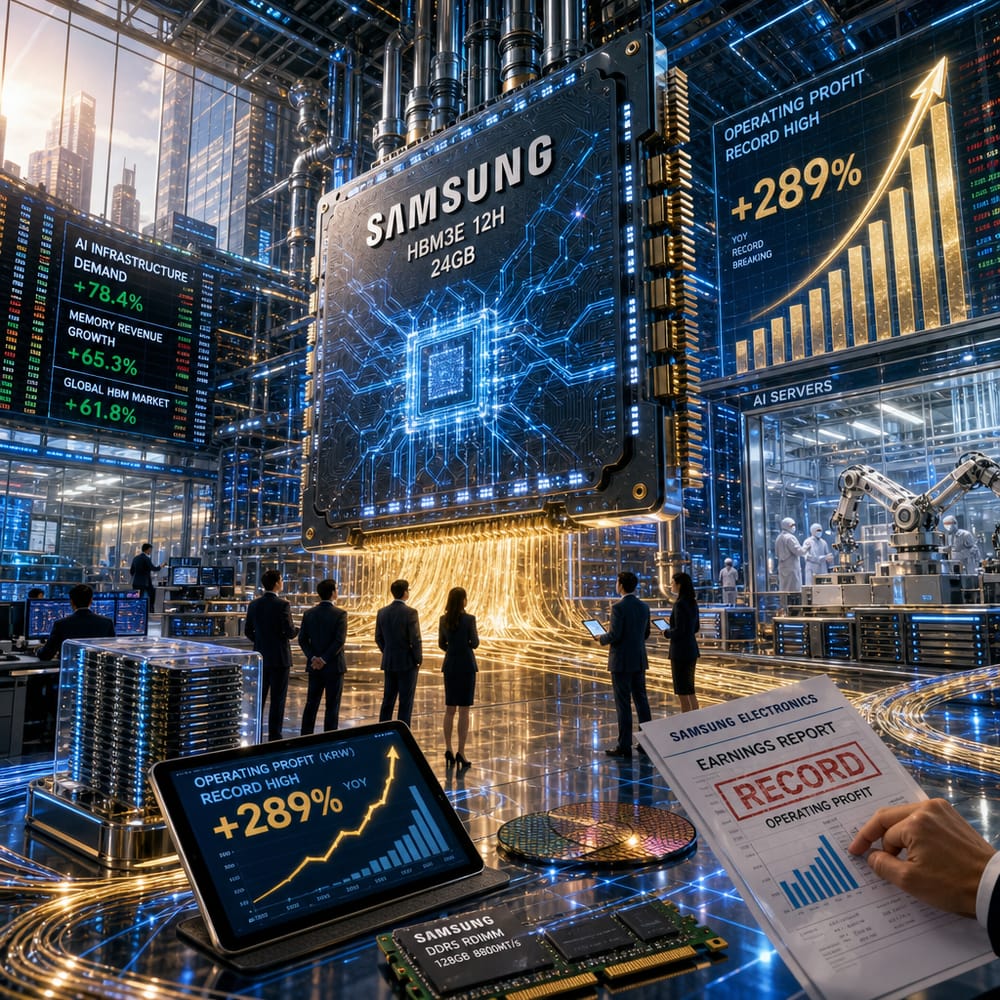
SAMSUNG’S AI-FUELED MEMORY WINDFALL: A RECORD-BREAKING PROFIT PLAY
Samsung’s latest earnings report is like a fireworks show for the tech world—full of explosive growth and dazzling results. The South Korean titan just posted its highest-ever operating profit, turbocharged by a booming demand for memory chips used in artificial intelligence (AI) infrastructure. But what's behind this surge, and could U.S. semiconductor tariffs or Chinese competition rain on Samsung's parade? Buckle up, folks. We're diving in.
THE AI WAVE: WHY MEMORY CHIPS ARE HOTTER THAN EVER
Picture this: AI is like that overachieving student who’s suddenly in every school club and winning all the awards. It’s managing data better, faster, and smarter, and for that, it needs a ton of memory chips. And that's precisely where Samsung comes into the picture.
AI applications chew through data like a kid in a candy store, and this ravenous appetite requires memory chips by the bucketload. These chips, specifically DRAM and NAND flash memory, are the backbone of AI systems. Imagine trying to play the latest video game on a ‘90s computer—it’s not happening. Similarly, AI needs cutting-edge memory to handle its complex computations efficiently.
Samsung, as the world's leading memory chip maker, is reaping the rewards of this tech renaissance. But just how long will this golden era last for the chip behemoth?
A TARIFF TANTRUM: COULD U.S. DAMPEN SAMSUNG'S PARADE?
Now, enter the not-so-glamorous world of tariffs—those pesky, government-imposed taxes that can turn a hot profit into lukewarm soup. The United States, in its ongoing spat with China, has slapped tariffs on a slew of semiconductor products. Although South Korea hasn't been hit with the same fervor, any disruption in global supply chains can ripple through Samsung's operations.
If the U.S. decides to extend its tariff love affair further into semiconductor components or if there’s collateral damage in the U.S.-China squabbles, Samsung could find itself in murky waters. It’s like being at a party where the neighbor's drama suddenly spills over into your living room—not ideal, but manageable if you're prepared.
THE DRAGON IN THE ROOM: CHINESE COMPETITION
Speaking of China, let’s talk competition. While Samsung is currently basking in the AI-driven chip demand sunshine, Chinese firms are eyeing a slice of that lucrative pie. China’s ambition to become a semiconductor powerhouse means increasing investment in domestic chip production. Imagine someone setting up a burger joint right across from your blockbuster burger stand; it's competition you can't ignore.
Companies like Yangtze Memory Technologies are ramping up efforts to produce high-quality memory chips, and with heavy government backing, they could become formidable rivals. If these companies manage to churn out chips that can compete with Samsung’s in quality and price, it might force Samsung to rethink its strategies.
THE BIG PICTURE: A MEMORY GIANT IN THE AI AGE
But let’s not get too carried away with the doom and gloom. Samsung isn’t just sitting back, twiddling its thumbs. It's investing heavily in R&D to stay ahead of the technological curve. Plus, with its substantial global market share, Samsung has leverage that newbies can only dream about.
The real story here is the overarching importance of AI in shaping the future of technology markets. As AI continues to evolve and integrate into more aspects of life—from self-driving cars to speech recognition and beyond—the demand for advanced memory technology is only going to grow.
For retail investors looking to get a piece of the action, the semiconductor sector, with Samsung leading the charge, is like a thrilling rollercoaster—filled with highs and lows, but ultimately aimed upward. Just keep an eye on those tariffs and the rising dragon on the horizon. Because in the fast-paced world of tech, staying informed is half the battle. And in this battle, Samsung is a name you’ll want to remember.
This article is for informational purposes only and is not investment advice. Always do your own research or consult a licensed financial professional before making investment decisions.
© Copyright 2024. All Rights Reserved.
© Copyright 2024. All Rights Reserved.