

Samsung Projects Record Profit Amid AI Demand, Faces Market Skepticism
Monday, October 12, 2026
Samsung Projects Record Profit Amid AI Demand, Faces Market Skepticism
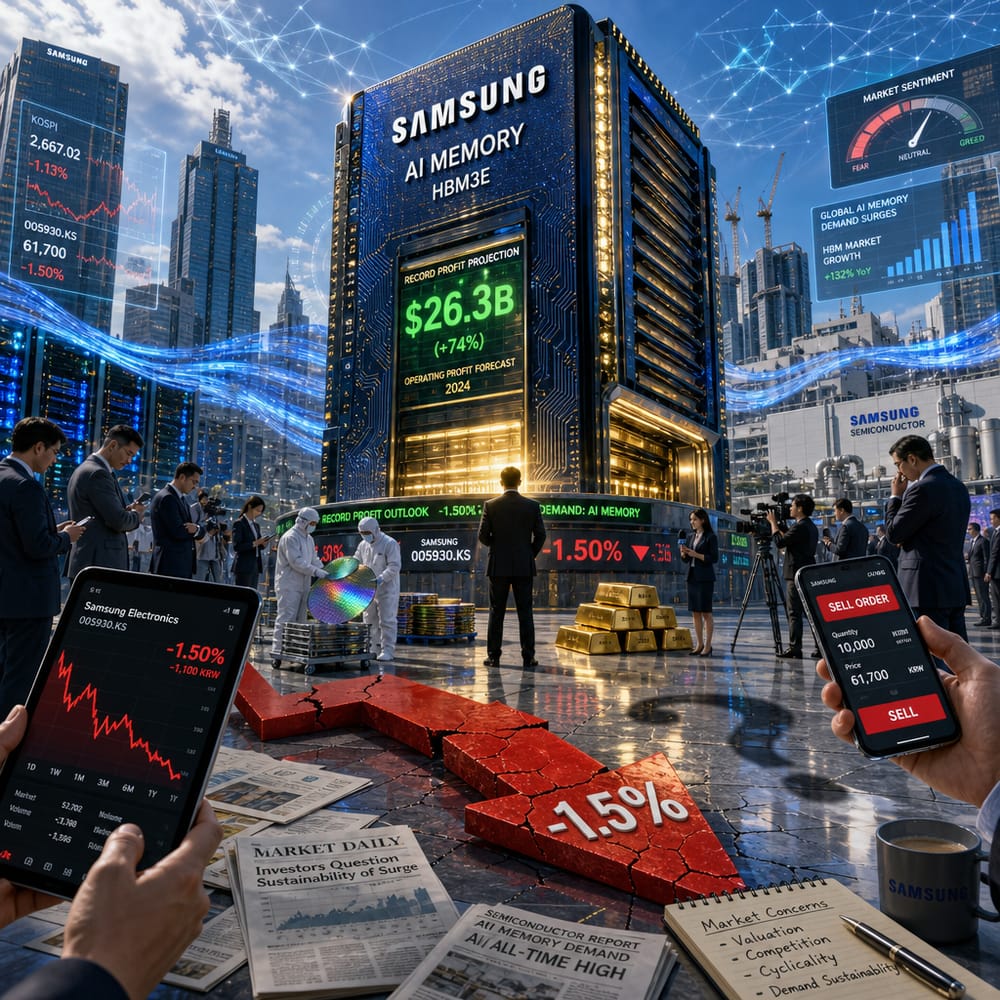
Samsung Electronics just flexed a jaw-dropping $80 billion quarterly profit forecast thanks to a surge in demand for AI memory chips. You’d think this financial bonanza would send investors into a frenzy, tossing cash at Samsung's stock like confetti at a parade. Yet, instead of popping champagne, Samsung's shares took a 1.5% nosedive. Let me walk you through the economic whodunit and figure out why this tech juggernaut got side-eyed by the market.
So, Samsung's latest earnings forecast is a bit like someone announcing they’ve struck gold, and then everyone around starts selling shovels. How did we get here? The answer lies in the fickle world of investor sentiment — a realm where “sell the news” reactions are the party poopers at seemingly good news galas. When a company broadcasts outstanding prospects, it ironically triggers a wave of selling as investors cash in on past gains. This is exactly what happened to Samsung: good news already baked into the stock price led to a collective meh from the market.
But there’s more brewing beneath the surface. Investors are jittery, and not just about Samsung. The tech sector as a whole is on shaky ground. Yes, AI is the current belle of the ball, but the market's recent dance with overvaluation has folks trying to avoid a nasty hangover. The specter of past tech bubbles haunts the corridors of Wall Street, making investors trigger-happy at the slightest whiff of overpricing. When you add in some geopolitical uncertainties, it’s clear why even strong earnings forecasts can’t always guarantee smooth sailing.
This skittishness extends beyond Samsung. Investors are casting a wary eye on other tech titans as well. Take Microsoft, for example. It might post strong earnings next week, but will it suffer the same fate? The truth is, strong earnings projections alone might not be enough to light a fire under tech stocks if the market remains skeptical about longer-term valuation. It's a bit like getting straight A's but still worrying about making honor roll because the criteria keep shifting.
What does this all mean for the tech sector at large? The current climate suggests that companies boasting strong earnings forecasts might not see immediate boosts in their stock prices, especially if investors are concerned about overheating valuations or cyclical downturns. It’s like being in a relationship where you're doing everything right, but your partner is still having second thoughts about long-term compatibility.
For Samsung, the task now is to prove that this AI-driven windfall is sustainable and not just a flash in the pan. If they can convince investors that this isn't a one-quarter wonder, they might be able to shake off today’s market skepticism. This means navigating potential supply chain hiccups, geopolitical rumblings, and the always looming tech cycle downturns with finesse.
Other tech players should watch and learn. Companies like Apple, Nvidia, and even newcomers like Palantir should be cautious, especially if they’re riding high on current trends like AI, blockchain, or whatever the next tech Eldorado might be. Diversification and tangible, long-term growth strategies will be key to keeping investors loyal and optimistic, rather than suspicious.
In this era of tech stock volatility, the game has changed. It’s not just about crushing earnings estimates — it's about proving your staying power in a market that's quick to punish any whiff of overconfidence. Samsung's story is a classic tale of market expectation versus reality, and a reminder that in the stock game, nothing is ever truly certain. So, keep your seatbelts fastened and your expectations grounded. It’s a wild ride in the tech world, and Samsung just showed us how quickly fortunes can flip in the blink of an investor’s eye.
This article is for informational purposes only and is not investment advice. Always do your own research or consult a licensed financial professional before making investment decisions.
© Copyright 2024. All Rights Reserved.
© Copyright 2024. All Rights Reserved.