

S&P and Nasdaq Climb Near Records Ahead of Key Data Despite Volatility
Monday, August 24, 2026
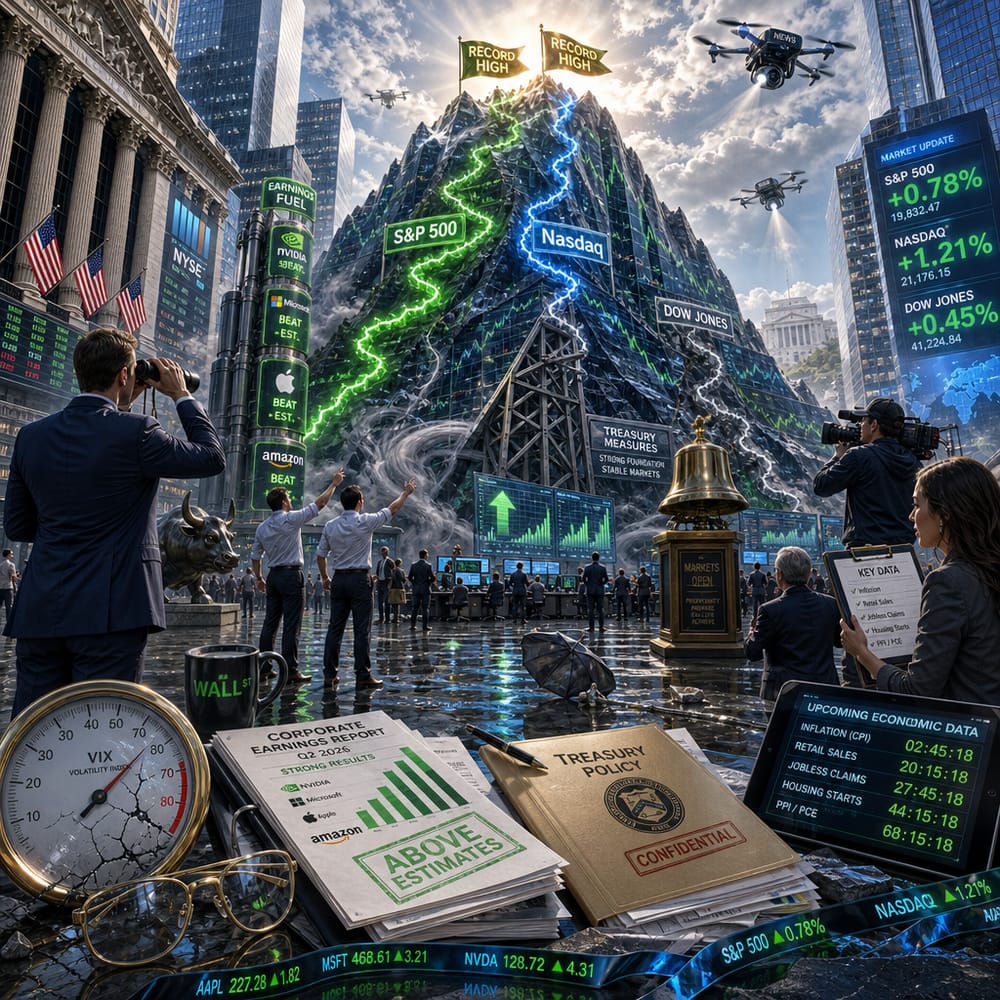
THE MARKET’S MAGIC TRICK: HOW THE S&P AND NASDAQ RALLIED BACK FROM THE BRINK
Picture this: The stock market, that capricious beast, has spent the last few weeks throwing fits like a toddler denied candy. Yet here we are on a fine August 19, 2026, and rather than clutching pearls and bracing for impact, investors are seeing the S&P 500 and Nasdaq tiptoe tantalizingly close to record highs. How did we get from doomsday to dollar bills? Grab your popcorn, because this plot twist is worth the watch.
WHAT’S BEHIND THE WHIPLASH?
First, let’s talk about corporate earnings, the market’s favorite reality show. This earnings season has been the financial equivalent of a Netflix series with soaring ratings. Despite some scattered disappointments, major players have largely reported numbers that leave investors salivating. Big names have been dishing out profit reports that are as juicy as gossip at a family reunion, injecting a much-needed dose of optimism into a market that’s been teetering on the edge of existential dread.
Companies are not just meeting expectations; they’re exceeding them. And when businesses perform well, investors get the warm fuzzies, translating into market gains that would make any bull proud. So, corporate America, take a bow.
THE TREASURY TO THE RESCUE
But earnings aren’t the only hero in this story. Enter, stage right: the U.S. Treasury Department, with a plot twist worthy of applause. They’ve been waving around a cool $1 trillion General Account — think of it as their secret stash — to fund a ramp-up in government bond purchases. This move has been a soothing balm on market nerves, lowering Treasury yields and making stocks look far more appealing in comparison.
The 10-year Treasury yield slipped more than 3 basis points to 4.7%, a small but mighty shift that’s been enough to tickle investors’ fancy. Lower yields mean bonds aren’t as attractive compared to stocks, prompting a pivot back to equities and sending indices like the S&P 500 and Nasdaq northbound.
STABILITY AMID THE STORM
So, what about the overall market mood? With inflation reports looming like a test you forgot to study for, the market remains a cautious creature. Yet, it seems to have found its Zen, drawing strength from these undercurrents of positivity. The Treasury’s moves and the buoyancy of earnings reports are acting like a market-sized security blanket, keeping the specter of volatility at bay, at least for now.
Investors are still keeping one eye on the crystal ball, waiting for Nvidia’s earnings and the ever-crucial inflation report. But, much like a cat balancing on a ledge, the market’s managing to hold its poise.
THE SECTORS IN SPOTLIGHT
In this uneven landscape, tech has been having a bit of a meltdown, with chip stocks dragging down broader indices. Yet, other sectors are playing the part of the gallant knight, rescuing the market from a tech-induced slump. Notably, the Dow has been the cooler, wiser elder sibling, posting a respectable gain, even as its flashier counterparts falter.
And let’s not forget about small-cap stocks as represented by the Russell 2000. These scrappy underdogs are often overlooked, but when they rally, it’s a sign of robust investor confidence across the board.
WHERE DO WE GO FROM HERE?
It seems that for now, investors are content to let earnings and treasury measures steer the ship, with both proving effective in calming the market’s more frantic impulses. But in the world of finance, peace can be as fleeting as a celebrity marriage.
The takeaway? Never underestimate the power of a good earnings season or a well-timed governmental financial maneuver. They’ve managed to infuse some much-needed optimism and stability into what could have been a bleak August day in the markets. As the saying goes, when life gives you lemons, make some stock market lemonade. Cheers to that!
This article is for informational purposes only and is not investment advice. Always do your own research or consult a licensed financial professional before making investment decisions.
© Copyright 2024. All Rights Reserved.
© Copyright 2024. All Rights Reserved.