

S&P 500 Surpasses All-Time High Amid Payroll Weakness
Thursday, August 13, 2026
WHEN JOB CUTS MAKE STOCKS POP
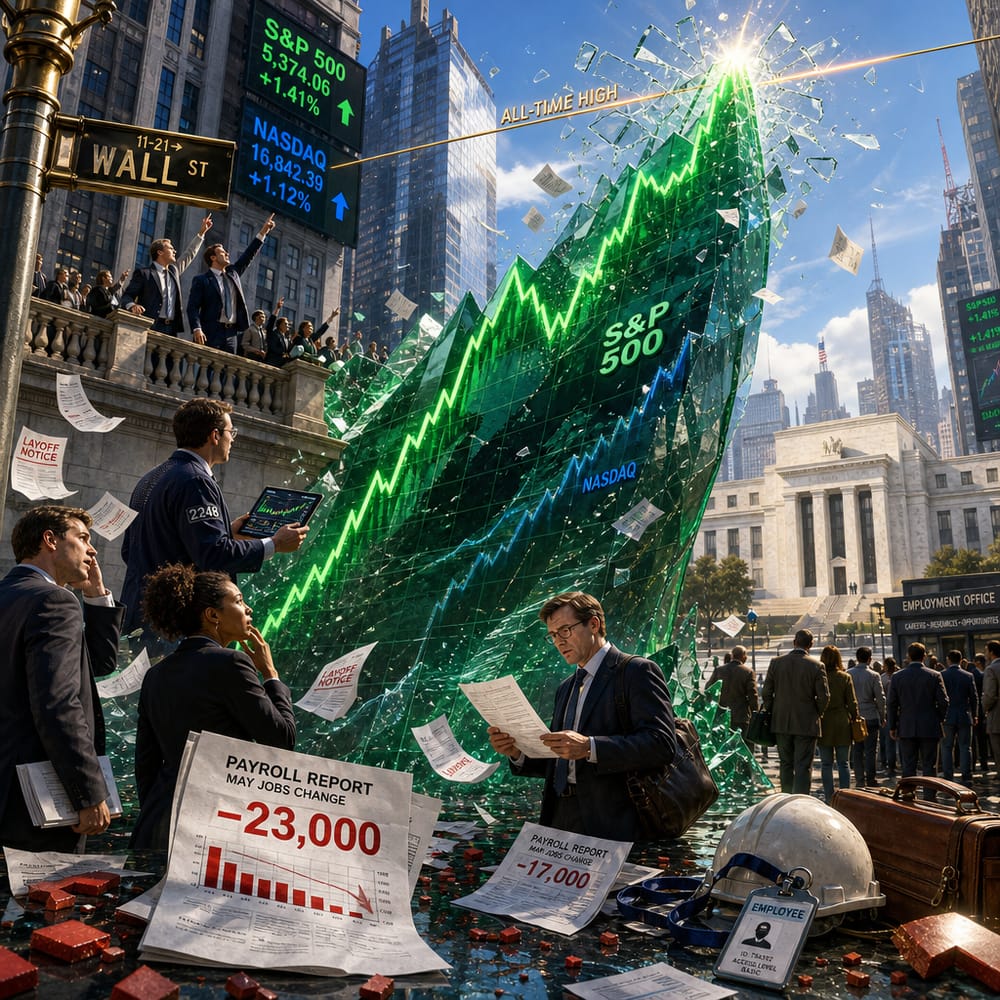
Think of the labor market as a dance floor. When the music's upbeat and people are swirling, businesses hire more, wages rise, and the Federal Reserve sits in the corner, clutching its interest-rate wand like a fairy godmother ready to curtail the party. But what happens when the DJ drops a slow tune and 23,000 people sit down? The S&P 500 takes a victory lap, apparently.
Yes, you read that right. Wall Street went full confetti cannon after U.S. employers unexpectedly trimmed their payrolls by 23,000 jobs last month. Think of it as economic yoga – a moment of zen that could lead the Federal Reserve to hold off on those dreaded rate hikes. Investors are raising their glasses to the possibility of lower interest rates, which are like catnip for stock bulls living in a concrete jungle.
WHY THE MARKET REACTED
You might be asking, "Why would stocks spike when jobs are lost?" In Wall Street's topsy-turvy world, bad news can be good news. Fewer jobs can mean less inflation pressure and a Fed less likely to spike rates. Higher interest rates typically mean more expensive loans and credit, gate-crashing economic growth. Investors are betting that this job market hiccup could be their golden ticket to a more dovish Fed, and they’re not wrong to think so.
Fed officials have been playing 'hard-to-get' with their interest rate policy, akin to a cautious dater not wanting to overcommit. But trimming jobs might just be the nudge they need to keep their powder dry and rates steady.
IMPLICATIONS FOR FED RATE DECISIONS
In the world of central bankers, the Fed's next moves are all about inflation and employment. With inflation showing signs of chilling out and a surprise job cut, the Fed might just slide into a comfortable 'wait-and-see' mode. Markets are reading the tarot cards and seeing fewer rate hikes in their future.
But let's not get too carried away. Even if the Fed pauses, future rate cuts aren't guaranteed. This could be more of a tactical pause than a full stop. It’s as if the Fed's saying, "We'll pause, but we’re keeping a close watch on you."
INVESTOR SENTIMENT AND PORTFOLIO TWEAKS
As the S&P 500 hit a new high, investors started rejigging their portfolios faster than a DJ drops beats. Everyone’s looking for stocks that can ride the wave of a more forgiving interest rate environment. It’s a party, and tech stocks, especially in the Nasdaq, are the life of it. Why? Because lower rates mean cheaper borrowing for companies, translating to fatter margins and happier shareholders.
While sectors like technology are basking in this new sun, others like energy are keeping a watchful eye on falling oil prices. The International Energy Agency recently dialed down its demand forecast, adding another layer to the ever-complex decision-making matrix for investors.
THE BROADER CONTEXT
There’s more in the mix than just jobs and stocks. Other sectors are making headlines too. For instance, Workday surged like a caffeinated squirrel on news of a potential buyout by Silver Lake. Meanwhile, Cisco tumbled despite rosy earnings because, as investors put it, the future guidance felt too safe—like a rollercoaster without the loops.
And let's not forget the oil markets, which have been moving like a soap opera plotline. Lower demand projections and geopolitical jitters are weighing on prices, throwing another piece into the global economic puzzle.
THE TAKEAWAY
The key takeaway for retail investors? Stay agile. Keep an eye on the Fed, but don't let it rule your world. Diversify your portfolio to hedge against volatility, and keep those ears to the ground for any shifts in economic tone. Markets are unpredictable beasts, but with a well-balanced portfolio, you can dance to whatever tune the economy decides to play next.
This article is for informational purposes only and is not investment advice. Always do your own research or consult a licensed financial professional before making investment decisions.
© Copyright 2024. All Rights Reserved.
© Copyright 2024. All Rights Reserved.