

S&P 500 Suffers Worst Day of July Amid Tech and Oil Turmoil
Sunday, July 26, 2026
S&P 500 Suffers Worst Day of July Amid Tech and Oil Turmoil
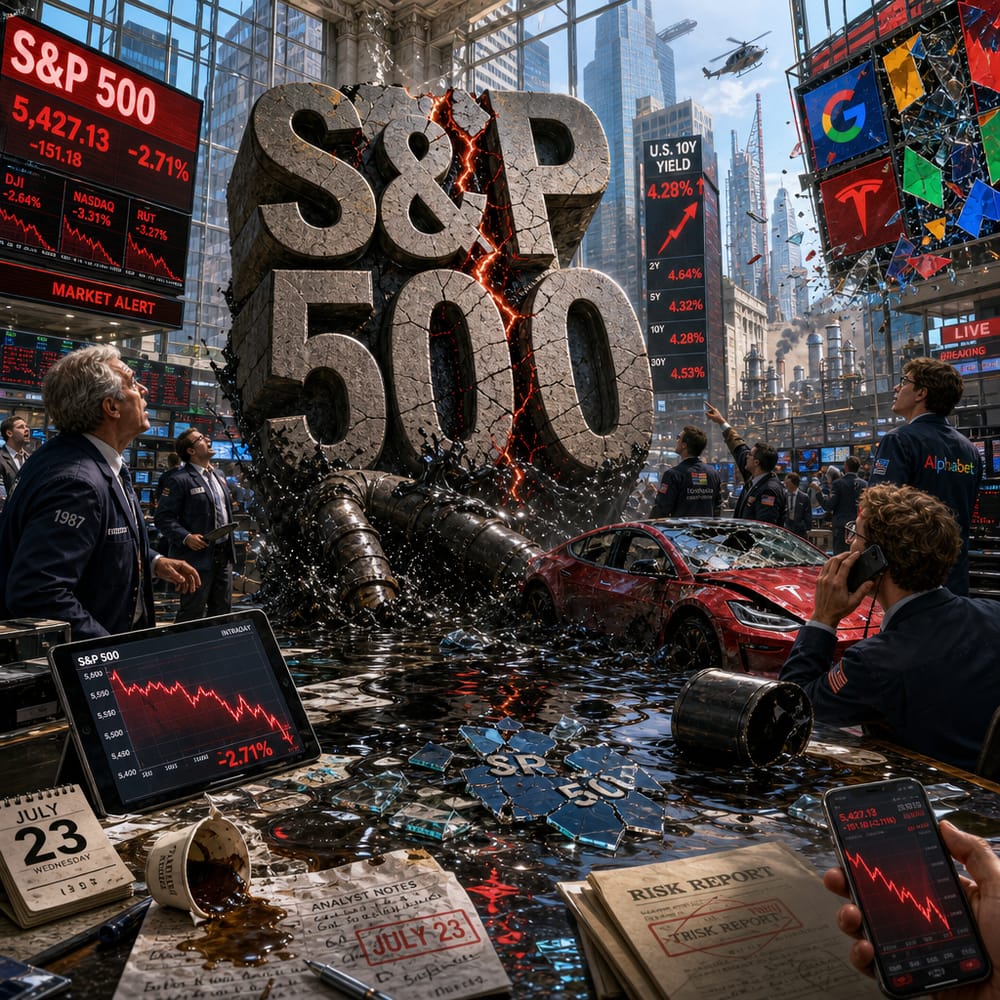
If you thought your Monday was rough, just wait till you hear about the S&P 500. On July 23, the index took a nosedive, experiencing its biggest single-day drop of the month. The villain in this tale of market woe? A cocktail of chaos served up by big tech blues stirred with a hefty shot of surging oil prices.
Let’s start with the tech heavyweights. Alphabet and Tesla, usually the darlings of Wall Street, suddenly turned into the event's head scratchers. Alphabet came under pressure amid whispers of regulatory crackdowns and increased competition in the AI space. Turns out, when you're top dog in the tech world, everyone wants a bite out of you. Meanwhile, Tesla's stock took a hit after its quarterly earnings didn't quite match the sky-high expectations. Their production numbers might have been on point, but with margins tighter than spandex leggings, investors started heading for the exits.
Now, you might be wondering, what do oil prices have to do with a bunch of tech stocks? It’s all about the ripple effect, dear reader. Surging oil prices have an uncanny ability to spook the broader market. When prices at the pump spike, people start tightening their belts, which doesn't bode well for the economy at large. It's like the universe is saying, “You thought tech was your only problem? Hold my gas can."
These oil price leaps are largely fueled by geopolitical tensions—yes, we're looking at you, Middle East—and supply chain hiccups. Imagine a game of economic Jenga where pulling one block makes the whole tower tremble. Investors, seeing the writing on the wall, start questioning how these rising costs might affect everything from transportation to manufacturing. When oil prices rise, it’s a chain reaction, hitting companies' cost structures and corporate profits across the board.
But what really got investors hot under the collar was the combo deal of spiking oil and rising bond yields. Bond yields are like the nagging voice in the back of a finance geek’s mind, reminding them that interest rates might soon take a hike. As yields rise, so do fears that borrowing costs will follow suit, potentially putting a damper on economic growth.
This particular market melodrama underscores a critical reality: the S&P 500 isn't just a collection of numbers; it's a reflection of market confidence. And right now, that confidence is a bit like a nervous cat perched on a ledge.
You see, the tech sector has a way of setting the tone for the entire market. When giants like Alphabet and Tesla stumble, it's the financial equivalent of a tambourine player dropping out of a band—everyone notices. Tech has been the growth darling of the market for years, buoying the S&P 500 to new heights. But when tech falters, the market starts to panic, questioning whether the party is over.
So, what’s the takeaway for you, the savvy retail investor scrolling through this rollercoaster update? For starters, don't panic and sell everything. Market fluctuations are as predictable as a soap opera plot twist. Today it's oil and tech; tomorrow, it could be something else entirely.
Keep an eye on the bigger picture. Diversification is your best friend in these turbulent times. Spreading your investments across sectors can help cushion the blow during rocky patches. Remember, it's not just about weathering the storm, but dancing in the rain.
As we move forward, all eyes will be on the Fed's next move and whether oil prices will simmer down. Will the tech sector rebound and reclaim its glory days? Or will rising costs keep giving the market gray hairs? Only time will tell. But one thing's for sure: the S&P 500 isn't for the faint-hearted, and neither is playing the investment game.
In the meantime, buckle up and enjoy the ride. After all, in the world of investing, a little drama is par for the course.
This article is for informational purposes only and is not investment advice. Always do your own research or consult a licensed financial professional before making investment decisions.
© Copyright 2024. All Rights Reserved.
© Copyright 2024. All Rights Reserved.