

S&P 500 Snaps Losing Streak Amid Bond Turbulence
Friday, October 02, 2026
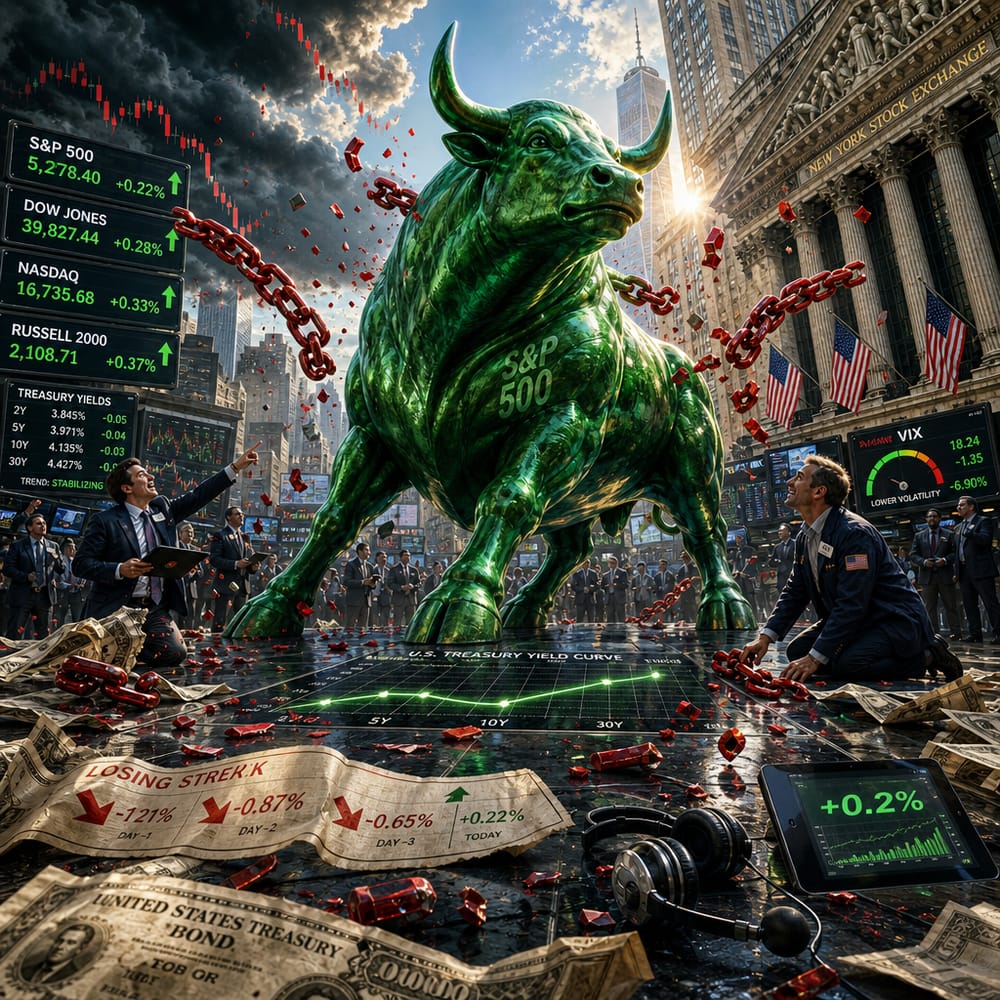
Is your wallet feeling a little lighter from the bond market rollercoaster ride? Well, you're not alone. The good news is that the S&P 500 managed to scrape up a meager 0.2% gain on October 1, ending a three-day losing streak. This slender victory came as the bond market took a breather from its recent turbulence, offering the S&P, along with its market buddies Dow Jones, Nasdaq, and the Russell 2000, a much-needed sigh of relief. But what’s with this connection between bond yields and equity markets, and why should you care? Buckle up, because we’re about to dive into the thrilling world of market domino effects.
THE BOND-EQUITY DANCE
First, let's talk about why bond yield movements send ripples through the stock market. Imagine bonds as the well-heeled, conservative elder sibling that everyone trusts, while stocks are the rebellious youngster with dreams of grandeur. When bond yields go up, the returns on these steady, reliable instruments look more enticing, making the risky equity markets less appealing. Investors often swap stocks for bonds in search of these safer returns, which can send stock prices dipping.
So, when we say bond market volatility has eased, it's a bit like saying the teenager has stopped throwing wild parties while the parents are out of town. Stock investors, relieved, come back to the market, ready to dip their toes back in the water.
WHAT COOLED THE BOND FRENZY?
You might be asking yourself, "What caused this bond market temper tantrum to subside?" Well, a couple of factors played their part. First, some gutsy moves in the options market gave bond bulls a reason to cheer. Traders were hedging their bets that the bond bloodbath might finally be ending, setting off a modest rally.
At the same time, the Federal Reserve’s signals of a “steady as she goes” approach to future interest rate hikes provided reassurance. This calmed investors’ nerves, as they realized that the Fed isn't slamming on the economic brakes too hard.
All these elements combined to bring a dose of calm to the bond market, allowing equities to catch their breath and inch up from their recent slump.
IMPLICATIONS FOR RETAIL INVESTORS
Now, what does all this mean for the average Joe (or Jane) scrolling through Robinhood and wondering how to manage their portfolio? In the short term, this easing of bond market volatility generally spells good news for your stock investments because it allows those equity markets to stabilize.
However, as with any temperamental teen, don’t expect bonds to stay calm indefinitely. Keep an eye on the Fed’s next moves and economic data releases. The relationship between bonds and stocks is like a high-stakes chess game, where one wrong move can tip the balance.
Diversification remains your best friend. Spread your investments across different asset classes so you’re not caught in a potential storm. Keep an eye on sectors sensitive to rate movements, like utilities, which have been hit hard recently due to the rising rates.
THE BIGGER PICTURE
Let’s zoom out for a second to see the forest for the trees. This whole situation underscores a critical fact: markets are interconnected in a big way. Changes in one area can ripple through the system, affecting the value of your 401(k), your stocks, and even what’s left for those avocado toasts.
So, while the S&P 500’s recent gain might seem minor, it serves as a reminder of the dance between bonds and stocks. As investors, staying informed and agile amidst this interplay can be the difference between watching your portfolio grow or feeling the sting of a market correction.
In conclusion, pay attention to the bond market and those signals from the Fed. They might be the secret sauce to understanding the next moves of the stock market. And remember, the market dance is never dull, so keep those investing shoes polished and ready for the next turn on the floor.
This article is for informational purposes only and is not investment advice. Always do your own research or consult a licensed financial professional before making investment decisions.
© Copyright 2024. All Rights Reserved.
© Copyright 2024. All Rights Reserved.