

S&P 500's Short-Lived Rebound Signals Fragile Sentiment
Thursday, August 20, 2026
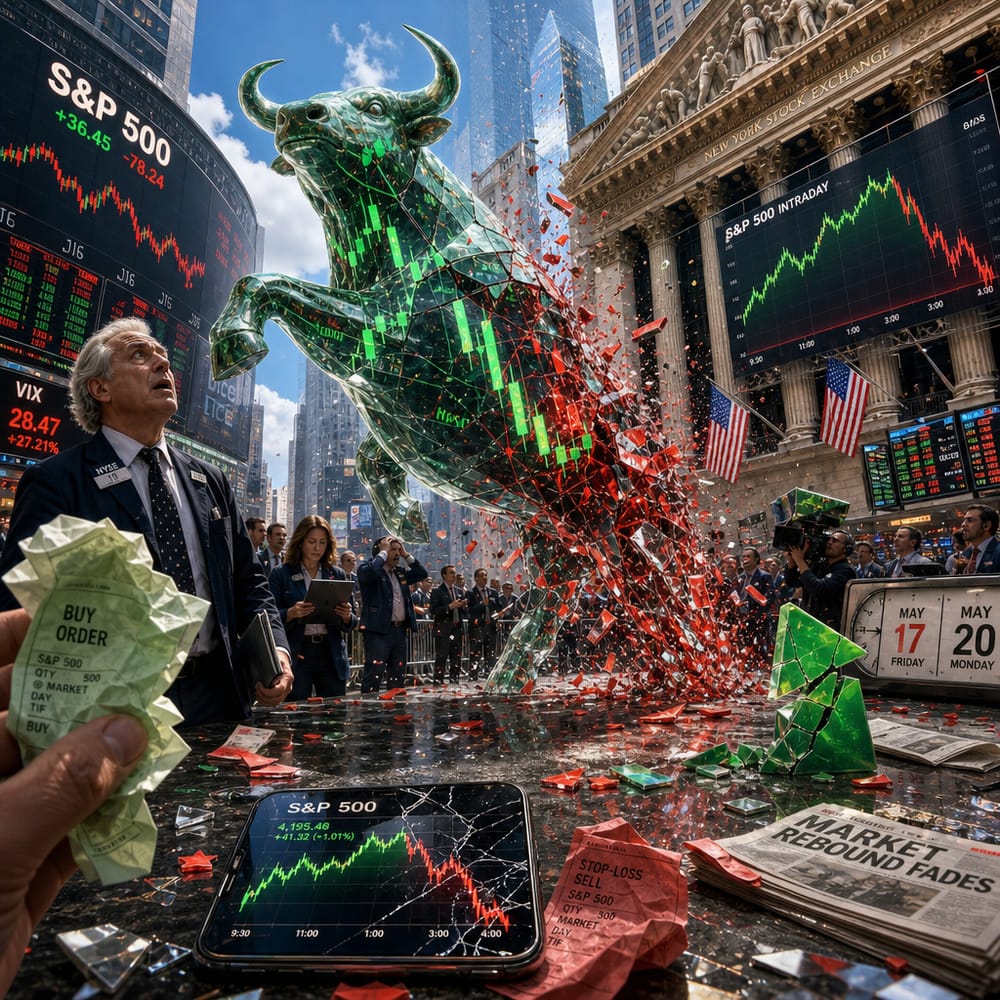
THE S&P 500'S WILD RIDE: A REAL-LIFE ROLLERCOASTER FOR INVESTORS
Well folks, the S&P 500 just treated us to a sneak peek of what would happen if Wall Street opened its own amusement park—a rollercoaster ride of a market that’s left investors feeling more seasick than entertained. One moment we're cruising up on an optimistic August 19, and the next, we're plummeting back to earth on August 20. So, what on earth is going on with this wild financial carnival, and what should you do about it?
To start, let's talk about that brief happy moment on August 19. The S&P 500 had a little spring in its step, buoyed by whispers of optimism surrounding the Treasury Department's bold plan to buy back a mountain of government debt. Imagine Treasury Secretary Scott Bessent as a modern-day financial magician, promising to make those pesky high yields disappear with a snap of his fingers. For a hot minute, investors bought into the illusion, and there was a sense that maybe, just maybe, this economic Houdini had pulled it off.
But alas, the magic was short-lived. Fast forward to the next day, and the S&P 500 was back to its moody ways, erasing gains faster than you can say "buyback." What gives? The culprit here is rising bond yields. Despite the Treasury's ambitious buyback announcement, those yields started climbing again like an over-caffeinated mountain goat. Higher yields mean borrowing gets pricier across the board, and that sends shivers down the spines of businesses and consumers alike. No surprise, investors reacted accordingly, sending stocks into retreat.
But there’s more to this tale of financial woe than just bond yields. Enter Walmart, stage right, with a quarterly report that left Wall Street feeling a bit queasy. Sure, they managed to beat sales estimates, driven by e-commerce growth so strong it could almost bench press a small car. But, and there’s always a “but,” their forward-looking statements were less than thrilling, leading to a hefty 9% drop in their stock price. For an index like the S&P 500, which Walmart is a part of, that's akin to a heavyweight boxer taking a gut punch.
So what does all this mean moving forward? Buckle up, because the road ahead is looking quite bumpy. As long as bond yields keep their upward march, they’ll likely act as a wet blanket on market rallies. Higher yields make safe, income-generating options like bonds more attractive, meaning stocks have to put on a really good show to compete for investor cash.
And don’t forget, the specter of inflation still lurks in the shadows, potentially spooking investors further if the Fed decides to play hardball with interest rates. Plus, geopolitical tensions and supply chain hiccups continue to swirl around faster than your news app can handle.
But hey, it’s not all doom and gloom. For those willing to brave the stormy seas of the market, there's a silver lining. Volatile markets mean opportunities to pick up quality stocks at discounted prices. Think of it like shopping for designer clothes at a thrift store; you might have to sift through a lot of questionable fashion choices, but you could end up finding a hidden gem.
For investors, staying nimble is key. Diversify that portfolio like it's your favorite cocktail—mix it up to suit your taste and risk appetite. Keep an eye on economic indicators, but don't forget to look at corporate fundamentals too. And maybe keep a little cash on hand, just in case the market throws a surprise sale your way.
In the end, the S&P 500's recent flirtation with volatility is a wake-up call. The market isn’t the sure thing investors might wish it to be. It's a living, breathing beast with a mind of its own. While the short-lived rebound was a reminder of the market’s potential, the subsequent dip was a warning that it never pays to get too comfortable. So hang tight, stay informed, and maybe keep the Dramamine handy—this ride is far from over.
This article is for informational purposes only and is not investment advice. Always do your own research or consult a licensed financial professional before making investment decisions.
© Copyright 2024. All Rights Reserved.
© Copyright 2024. All Rights Reserved.