

S&P 500's Broad-Based Rally: A Technical and Sector Analysis
Wednesday, November 11, 2026
S&P 500's Broad-Based Rally: A Technical and Sector Analysis
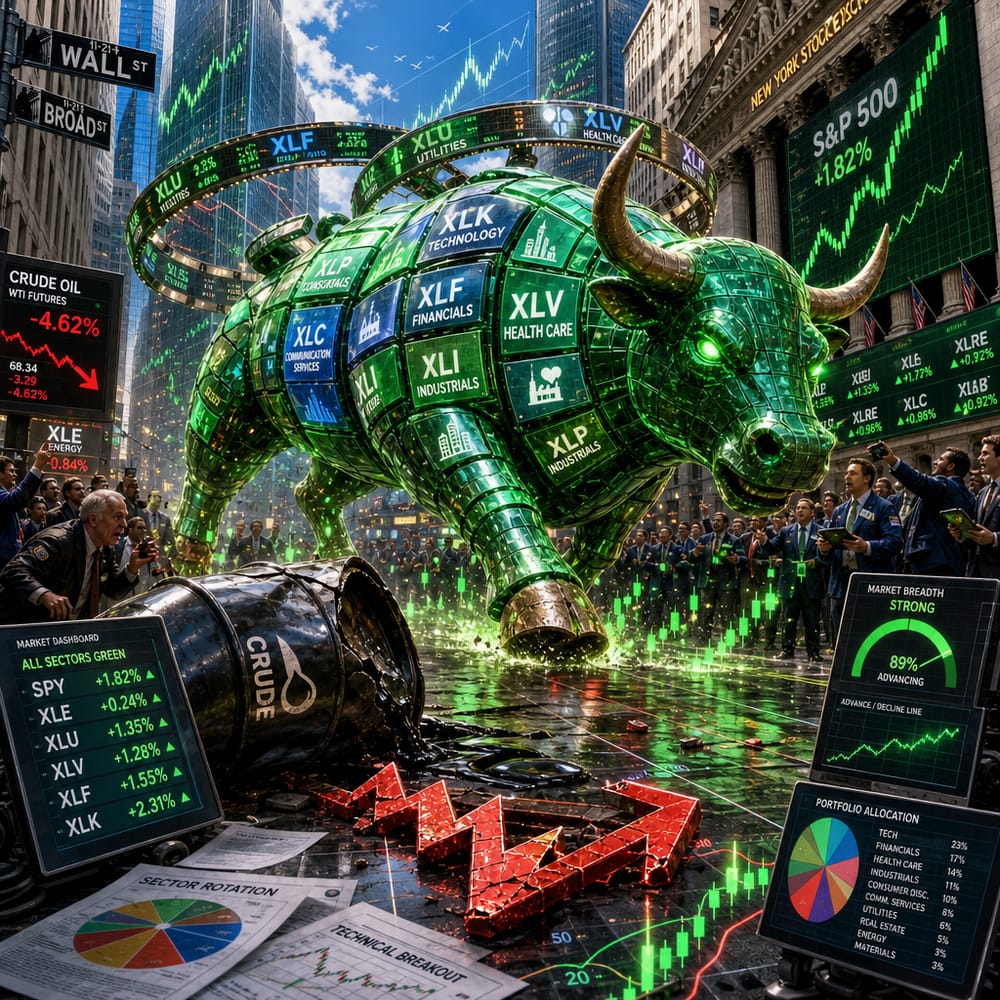
If you've been snoozing on the latest stock market action, it’s time to wake up and smell the rally. The S&P 500 just pulled off its most impressive leap in over seven months, and the market is buzzing with chatter like a high school cafeteria after a food fight. So, what’s driving this sudden surge? It’s part sector shuffle, part oil price plummet, and wholly intriguing. Buckle up, because we're diving headfirst into the dynamics behind this market move and what it could mean for your portfolio.
First up, the technicals. If you’re not a chart geek, don't sweat it—you just need to know that the S&P 500 has punched through some key levels like a boxer on a comeback trail. Technical analysts love talking about "support" and "resistance" levels, kind of like speed bumps that slow down or accelerate price moves. Lately, the index has broken through several of these roadblocks, suggesting there might be room to run further. But before you start dreaming of new peaks, remember that markets love to keep us humble. The next resistance level is like that elusive last puzzle piece—it could fit beautifully, or it could slip right off the table.
Taking a turn from the technical to the tactical (as in, where’s the money really moving?), sector rotation is the name of the game. Curious which stocks are leading this parade? Think renewables, utilities, and tech—oh my! While the energy sector, as represented by ETFs like XLE, typically dances in tandem with oil prices, the recent drop in oil hasn’t exactly left them in the dust. Instead, utilities and clean energy are stepping into the spotlight. Utilities (as tracked by XLU) are having a moment, and for good reason—investors are craving stability like a toddler after candy.
Why the rotation, you ask? Well, it’s like the market playing a strategic game of musical chairs. With oil prices taking a nosedive, thanks to new global outlooks and geopolitical tango, sectors that were previously overlooked are now in vogue. Energy companies might not be crying in their gas tanks just yet, but the drop does make alternatives like renewables shine brighter. It’s like choosing between pizza and salad—sometimes, you just want the greens.
But let’s not forget the risks lurking in the shadows. If oil prices rebound, or if the Fed suddenly channels its inner hawk, this rally could hit a speed bump. Plus, geopolitical fireworks—whether it’s bickering over tariffs or AI-related espionage in tech—could send investors running for cover faster than you can say “volatility.”
Speaking of global drama, the interplay of tariffs and trade tensions is a subplot worth watching. Canada and the U.S. are locked in a tariff tango, and while it might sound like background noise, these trade spats can ripple through sectors like manufacturing and tech. If you’re in the business of making things, higher costs are a buzzkill. Investors will want to keep an eye on how this unfolds, especially for sectors heavily reliant on cross-border supply chains.
So, what’s the bottom line for retail investors? Stay nimble and informed. The S&P 500's current rally is a cocktail of technical breakouts and sector rotations, with a twist of falling oil prices. Investors should keep a close eye on both the broader indices and sector-specific movements to spot opportunities—and potential pitfalls—before they hit the mainstream.
In the end, market rallies aren’t just about numbers and charts; they’re about narratives. Whether it’s the promise of clean energy, the pull of stable utilities, or the tech sector's endless innovation, each story offers its own potential for profit—or peril. So, as you scroll through your market news feed, remember: the more you know, the better you can navigate this thrilling, unpredictable game of stocks.
This article is for informational purposes only and is not investment advice. Always do your own research or consult a licensed financial professional before making investment decisions.
© Copyright 2024. All Rights Reserved.
© Copyright 2024. All Rights Reserved.